
Punishment for a Governor with a Luxurious Lifestyle
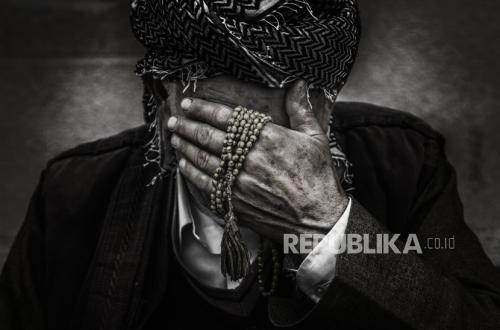
REPUBLIKA.CO.ID, JAKARTA – The leadership of Umar bin Khattab left an indelible mark in the history of Islamic civilisation. Indeed, the prophecy of the Prophet Muhammad (peace be upon him), as indicated by the title he bestowed upon him, proved true. The companion was called by the Messenger of Allah (peace be upon him) al-Faruq, meaning the one who distinguishes truth from falsehood.
As a caliph, Umar bin Khattab was known for his firmness. His stance was harsh against injustice but gentle towards the oppressed and suffering. This conqueror of the Sassanid Persian dynasty lived simply.
For him, the prayers of his people who felt wronged were more frightening than threats from the two superpowers of the time: the Roman Empire and the Persian Empire. This was the soul of a defender of justice always embedded in Caliph Umar.
As the supreme leader, the Amir al-Mu’minin desired justice to be upheld and felt evenly throughout his ranks. At that time, the Muslim territories had expanded to the west and east, encompassing North Africa to parts of Persia.
To manage administration, each region had a governor whose duty was to serve public interests as fairly as possible and obey the orders of Caliph Umar in Medina. So, how did the Caliph control and supervise his subordinates in the regions? The book Fatawa wa Aqdhiyah Amiril Mu’minin ’Umar bin Khaththab by Muhammad ’Abdul ’Aziz al-Halawi explains this.
Al-Halawi includes a narration from Abu Yusuf. That Umar bin Khattab, when appointing a governor, would take the oath of office in front of the Ansar and the companions of the Prophet (peace be upon him).
There were at least four matters always mentioned in the text of the oath for every governor in Umar’s era. First, a governor should not ride a packhorse carrying heavy goods. This means that a leader would not flaunt his wealth.
Second, a governor would not wear clothes made of fine and expensive fabric. This means a leader would not appear more luxurious than his people.
Third, not eating white bread. This means a governor would not prioritise his own stomach over that of the people.
Finally, a governor must not close the door of his house. This is so he can attend to the needs and complaints of his people. To keep regional leaders always close to society, Umar stipulated that all governors should not appoint aides.
The following story illustrates how harsh Caliph Umar was towards a governor proven to have violated one of these four points. One day, the Amir al-Mu’minin was walking in Medina after inaugurating an official.
Suddenly, a man ran up to him and called out, “O Amir al-Mu’minin! Is it true that these four conditions can save you from the punishment of Allah, while your own governor in Egypt (Ayyadh bin Ghanam) has worn fine clothes and appointed an aide?”
Caliph Umar was shocked to hear this man’s statement. To investigate the truth of his words, Umar then summoned the state courier, Muhammad bin Maslamah. Ibn Maslamah was specifically tasked to always be ready whenever the Amir al-Mu’minin needed to correspond with his governors.
“You, go to Ayyadh’s place. Bring him to me in exactly the state as you witness him yourself when you meet,” ordered Caliph Umar.
So, Ibn Maslamah set off for Egypt. After a journey of some time, he arrived at the residence of Governor Ayyadh bin Ghanam. Indeed, Ayyadh appeared luxurious.
He wore clothes made of high-quality fine fabric. Not only about the clothing. Now, the Governor of Egypt had even employed a personal aide.
Governor Ayyadh welcomed Muhammad bin Maslamah well. Without further ado, the courier conveyed the purpose of his visit.
“O Governor Ayyadh. You are summoned by the Amir al-Mu’minin to Medina,” said Ibn Maslamah.