
Pump Stations Operated 24 Hours to Tackle Tidal Flooding on Surabaya Coast
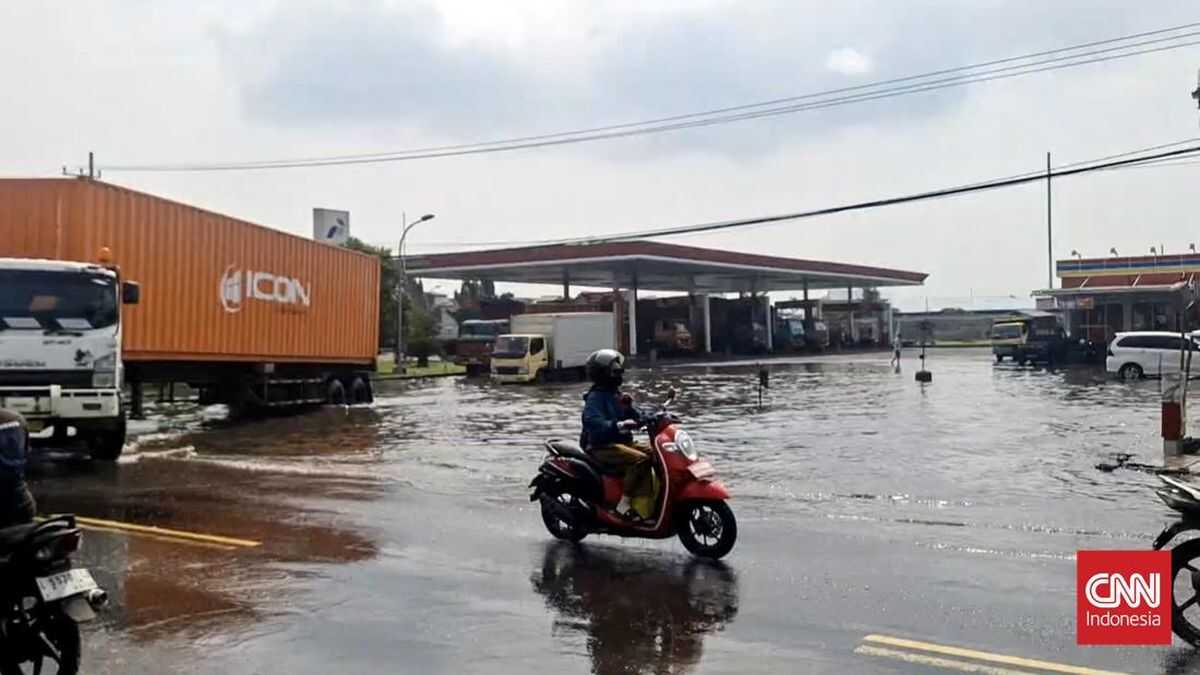
The Surabaya City Government is optimising the operation of pump stations to address flooding and tidal inundation in the northern part of the city in East Java, including the Osowilangun area.
Head of the Surabaya City Water Resources and Highways Agency (DSDABM) Hidayat Syah explained that the Osowilangun area is situated in a zone connected to a number of river networks and main channels, including those under the authority of the central government. Consequently, flood management in the area requires cross-agency coordination for optimal results.
“For major channels such as the Kalianak River, Kandangan River, and several waterways leading to the sea, we continue to coordinate with relevant national-level agencies. In principle, the Surabaya City Government is always ready to assist, as this concerns the safety of Surabaya’s residents,” said Hidayat on Monday (16/2).
He added that, in accordance with directives from Surabaya Mayor Eri Cahyadi, all DSDABM personnel have been mobilised by deploying field teams and operating all available pump stations. A number of pumps in the Balong I, Balong II, Kandangan and surrounding areas have been activated from morning until night on a rotating basis.
“We keep the pumps running continuously, with a 24-hour shift system for personnel. Morning, afternoon and night teams are all on standby. This includes waste clearing crews at channels and screens, as well as fuel readiness and other supporting facilities,” he said.
According to Hidayat, flooding is generally caused by two main factors: high rainfall and environmental conditions. Therefore, beyond technical efforts such as operating pumps, sluice gates and channel dredging, the role of the community is also crucial.
“We urge the public to work together in keeping the channels clean, particularly by not disposing of rubbish indiscriminately, especially during rain. If channels are clean, water can flow more smoothly,” he said.
He confirmed that all pumps continue to operate and field conditions are being monitored regularly, so that standing water can recede promptly and residents’ activities can return to normal.
For the long term, the Surabaya City Government is also carrying out various strategic programmes, ranging from the construction and addition of pump stations, widening and dredging of rivers, to cross-sector coordination with provincial and central governments.
“Flood management efforts are not only short-term but also medium and long-term. All parties must support one another, as the flooding problem cannot be resolved by a single agency alone,” he explained.
The northern coastal area of Surabaya was hit by tidal flooding ahead of Chinese New Year celebrations. One of the worst-affected points was Jalan Tambak Osowilangon, which disrupted residents’ activities and road users.
Tidal floodwaters on the national road reached knee height for adults. This triggered lengthy traffic congestion stretching to the Margomulyo three-way junction and the area around the Margomulyo Toll Gate.
A considerable number of motorcyclists suffered the misfortune of their vehicles stalling whilst attempting to wade through the water.
“Stalled, stalled. If I’d known, I would have turned back and gone via Pakal,” complained one motorcyclist.
To address the vehicle congestion, the Traffic Division of Tanjung Perak Port Police immediately took action by diverting traffic flow at several critical points.
The police urged the public to remain calm and follow the instructions of officers in the field for the sake of smooth traffic flow.
According to information from the BMKG Juanda meteorological agency, during the period of 13–20 February 2026, coastal residents of Surabaya have been advised to be alert to the potential for tidal flooding due to maximum sea tide levels.