
Public Urged Not to Swallow Social Media Narratives Whole, But to Read the Indonesia-US Cooperation Agreement First
Public Urged Not to Swallow Social Media Narratives Whole, But to Read the Indonesia-US Cooperation Agreement First
Jakarta, VIVA – The polemic surrounding the Reciprocal Trade Agreement, or The Agreement on Reciprocal Trade (ART), between Indonesia and the United States continues to escalate on social media.
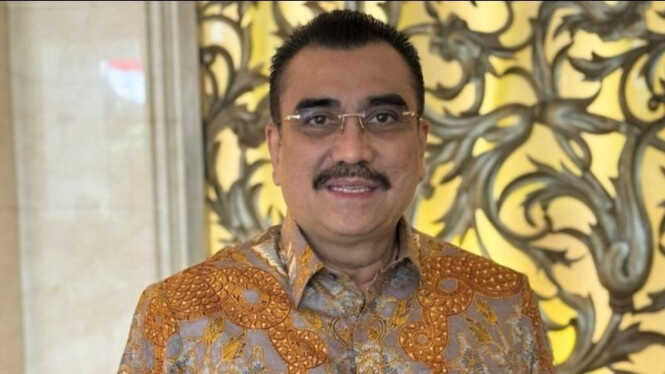
Issues such as data breaches and the alleged removal of halal certification are widely circulating, sparking public unrest. Amidst the heated debate, Professor of Law at the State University of Makassar, Harris Arthur Hedar, has spoken out.
He reminds the public not to be easily swayed by incomplete snippets of information.
“It seems our nation is increasingly engaging in debates not because of a lack of information, but because of an excess of fragmented information. One person reads a headline and is convinced. Another watches a 30-second video and becomes angry. However, if we truly want to safeguard our sovereignty, the first step is to read the complete and balanced document,” he said on Wednesday, 25 February 2026.
According to him, the government, through relevant ministries, has already published explanatory documents or Frequently Asked Questions (FAQ) regarding the ART. Although not the official agreement document, this document can serve as an initial gateway to understanding the substance of the cooperation.
“It is true that the FAQ is an explanation, not the agreement document, but the FAQ helps to understand the policy direction, although legal certainty still lies in the text of the ART and its appendices,” he said.
The issue of personal data protection is one of the main concerns. Harris emphasizes that the legal framework is clear, namely the Personal Data Protection Law (UU PDP). However, he stresses the importance of effective oversight.
“A fair narrative is not ‘100 percent safe, and that’s it,’ but rather ‘subject to the UU PDP and therefore must comply with the requirements of the UU PDP’,” said the Vice-Rector of Jayabaya University.
In addition to data issues, the issue of halal certification has also raised concerns. Although the government, through the FAQ document, states that the halal requirement remains in effect, Harris requests that technical transparency be clarified.
“The key question is, is the MRA a recognition of process or an automatic recognition? Will Indonesian standards remain the reference for the Indonesian market? What is the mechanism for audit, supervision, and sanctions?” he said.
He also highlighted the issue of the Domestic Content Level (TKDN). According to him, safeguarding industrial sovereignty is not enough by simply restricting imports, but it must also ensure technology transfer and real investment for the national industry.