
Public Services in Jakarta Not Fully Digitalised, Physical Documents Still the Mainstay
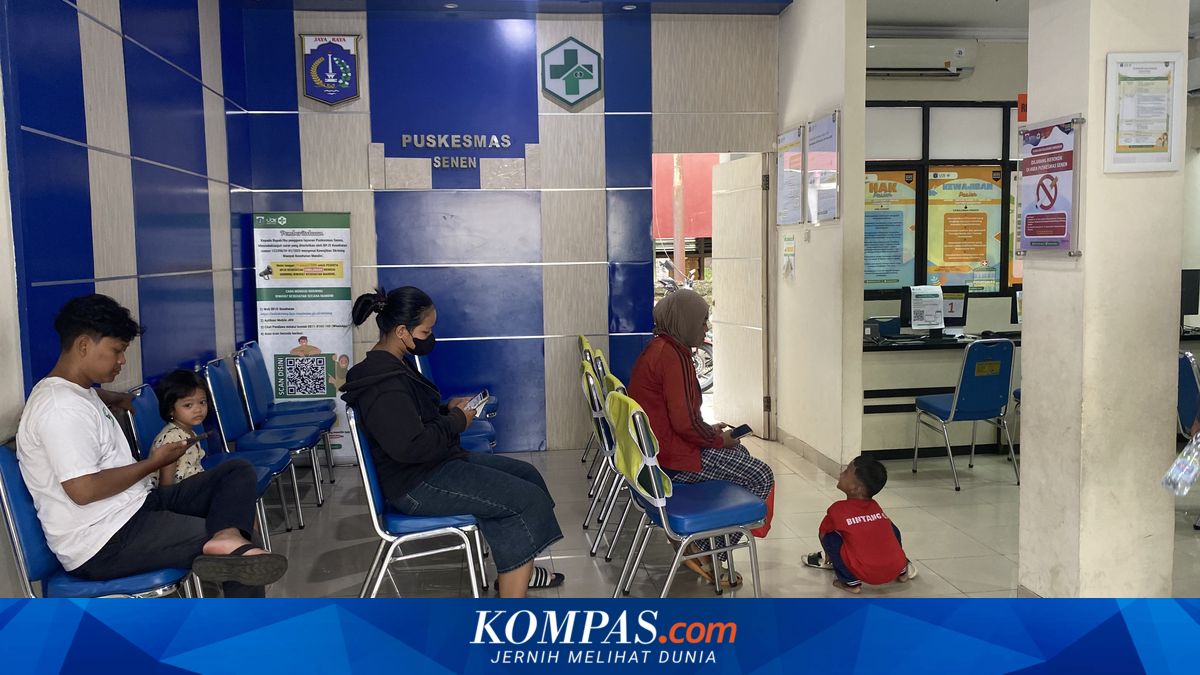
In the midst of efforts to digitalise public services and government appeals for agencies to stop requesting e-KTP photocopies, paper-based administrative practices remain common in Jakarta. Several public service offices lack e-KTP chip readers or card readers, resulting in identity verification processes that depend on document photocopies, manual matching, and stacks of paper archives. This situation was observed during Kompas.com’s investigation at various public service points in Central Jakarta on Tuesday (12/5/2026). Meanwhile, in the private sector such as vehicle dealerships, identity photocopies are still a primary requirement, especially for credit applications. At Puskesmas Kenari in Central Jakarta, counter staff admitted that the health facility does not yet have a card reader for reading e-KTP chips. As a result, residents’ identities are still verified manually by matching KTP data, whether original or photocopied. “If registering manually, residents still have to bring identification, either original or photocopy. The aim is for staff to ensure that patient data in the system is not mixed up,” said a counter staff member at Puskesmas Kenari when approached by Kompas.com. The staff explained that patient registration can actually be done through the Mobile JKN or JakSehat applications. However, manual registration services remain open, especially for residents without smartphones or those who have difficulty using apps. According to the staff, elderly residents generally still prefer to bring physical documents, even in the form of complete photocopies. Besides health services, some administrative processes at the puskesmas also still require identity photocopies. For example, for local government BPJS processing, residents are still asked to attach photocopies of KTP and KK. Similar conditions were observed at Puskesmas Menteng. On the standard service information board displayed in the front area, e-KTP photocopies are still listed as requirements for administration in several services. Kompas.com’s observations showed that for the Death Report Certificate (SKMK) service, residents are asked to attach photocopies of the deceased’s KTP, the reporter’s, and witnesses’. For pre-marital examination services, photocopies of the prospective bride and groom’s KTPs are also part of the required documents. Nevertheless, staff said that long-time patients whose data is already recorded in the system only need to provide their Population Registration Number (NIK). “For long-time patients, if they don’t bring the original KTP, just mentioning the NIK is enough; the data is already in the system,” said the staff. However, photocopies are still used as administrative archives. Similar practices were also found in the private sector. At one vehicle dealership in the Senen area of Central Jakarta, an administration staff member named Setya said that vehicle credit applications still require e-KTP and KK photocopies. “For credit purchases, photocopies of KTP, KK, and sometimes NPWP are usually still requested, depending on the leasing company’s needs,” said Setya. “We don’t have an e-KTP reader device yet. So, we just check manually,” he added. After the process is complete, customer files will be stored as dealer archives or submitted to the leasing company. “Once the files are processed, they usually go into archives because they might be needed again at any time,” he said. In contrast to puskesmas and dealerships, several sub-district offices in Central Jakarta are beginning to show the implementation of digital-based services.