
Puan Supports Mandatory Waste Sorting in Jakarta, Calls for It to Become a National Movement
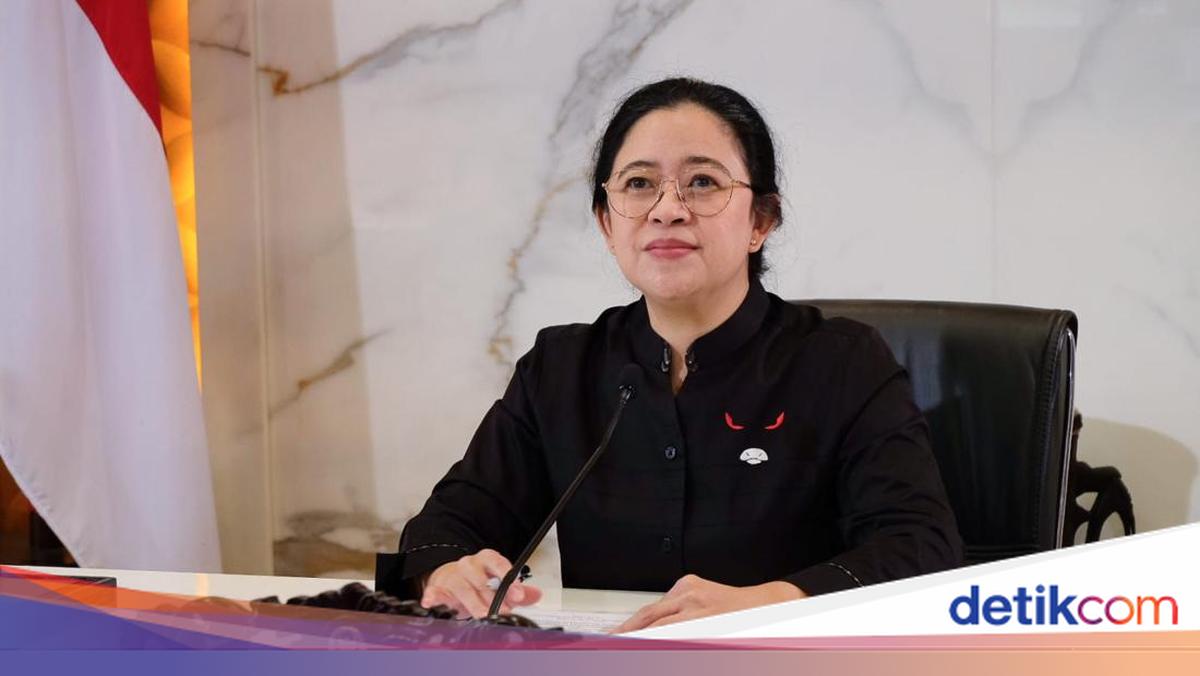
The culture of waste sorting must become a national movement to protect public health and the future of our cities or environment,” said Puan Maharani in her statement on Friday (8/5/2026).
For information, the DKI Jakarta Provincial Government has issued Governor’s Instruction (Ingub) Number 5 of 2026 on the Waste Sorting and Processing Movement from the Source. According to DKI Jakarta Governor Pramono Anung, the regulation will be enforced starting Sunday, 10 May.
The regulation mandates all Jakarta residents to sort household waste into four categories: organic waste, inorganic waste, hazardous and toxic materials (B3), and residue.
Each type of waste has a different subsequent processing mechanism. Organic waste such as food scraps and leaves is directed for processing through composting, maggot, or biodigester.
Meanwhile, inorganic waste such as plastic, paper, and metal is encouraged to enter waste banks or be recycled. Hazardous and toxic waste and residue require special handling. This Ingub also emphasises that waste sorting must be done from the source, namely households, offices, to business areas.
Not only that, the role of regional apparatus up to the neighbourhood level (RW) is strengthened, where RW can impose administrative sanctions on residents who do not sort waste according to the provisions.
Puan views the mandatory waste sorting policy that will begin to be implemented in Jakarta as an important step that needs to be supported together, not just as a technical environmental management programme.
“This policy is also part of the urban community’s lifestyle change that is increasingly urgent to be carried out,” said the first woman to serve as Chair of the Indonesian House of Representatives.
According to Puan, the waste problem in big cities is no longer just synonymous with environmental cleanliness.
“What is at stake today is the quality of public health, the quality of living space for the young generation, and the ability of Indonesia’s big cities to survive the pressures of urbanisation and long-term environmental crises,” added Puan.
“Therefore, the waste sorting policy needs to be seen as an initial step in building collective awareness that the community’s consumption patterns and waste disposal habits so far are no longer commensurate with the environment’s capacity to accommodate them,” continued the former Coordinating Minister for Human Development and Culture.
Puan also assessed that the biggest problem in national waste management is not merely the increasing volume of waste, but the habit of viewing waste as something that ‘disappears’ after being collected from the home.
“In fact, waste that is not managed properly ultimately returns as a health problem, pollution, flooding, and a decline in the quality of life,” explained Puan.
Therefore, Puan supports the local government’s steps that are beginning to encourage direct community involvement in the waste management process.
“And I hope that the habit of sorting waste can develop to other regions until it finally becomes a national policy as done by advanced countries,” she said.
Nevertheless, Puan reminded that changes in public behaviour cannot be built only through administrative obligations. According to her, support and real commitment from regulators are needed.
“The state also needs to ensure that the public obtains systemic convenience, ongoing education, and certainty that the sorted waste is truly managed well and properly,” clarified Puan.
Furthermore, Puan stated that the waste sorting policy aligns with the targets in the Sustainable Development Goals (SDGs) or Sustainable Development Goals, which is a global agenda, particularly SDG 11 (Sustainable Cities and Communities), SDG 12 (Responsible Consumption and Production), and SDG 14 (Life Below Water).
“And it must be remembered that Indonesia also supports the SDG achievement targets in 2030, including in reducing and managing waste,” she said.
On the other hand, Puan highlighted the importance of making environmental issues part of public social education from an early age. She views waste management as needing to be placed as part of the public health protection agenda.
“The culture of sorting waste, reducing household waste, and maintaining the environment also needs to be built as a habit for the young generation, not just a temporary response to landfill problems that are full,” said Puan.
In addition, Puan assessed that environmental issues ultimately become social justice issues.
“Because the groups most affected by poor waste governance are almost always low-income communities living in dense areas and near final disposal sites,” she added.
Regarding this, Puan assessed that the success of the waste sorting programme must be measured not only by public compliance in sorting waste, but by whether the environmental quality truly improves, the waste volume decreases significantly, and the public feels a healthier quality of life change.
“And of course, the Indonesian House of Representatives will support environmental policy steps that have a long-term orientation and directly impact the quality of life,” emphasised Puan.
However, at the same time, Puan stated that the Indonesian House of Representatives will also ensure its implementation runs consistently, measurably, and sustainably.
“The waste issue is no longer a peripheral city problem. This is about how the state maintains the living space of the people and ensures that future generations do not inherit an increasingly worse environment due to delays in change today,” Puan concluded.