
Puan Has Slammed the Gavel! Domestic Workers Must Have BPJS, Will Employers Pay?
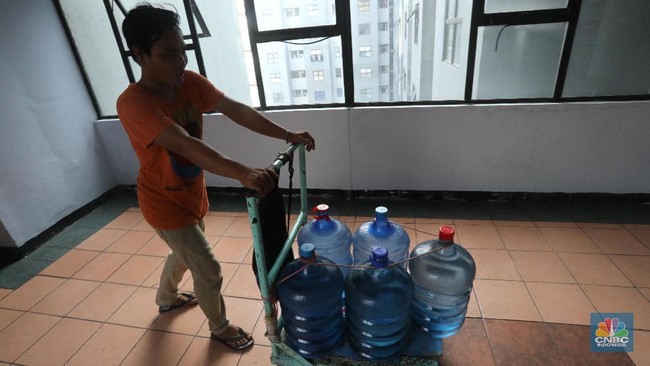
Jakarta, CNBC Indonesia - The ratification of the Domestic Workers Protection Act (UU Perlindungan Pekerja Rumah Tangga) by the Indonesian House of Representatives (DPR RI) not only changes the status of domestic workers but also has the potential to add cost burdens for employers, particularly middle-class households.
Under this legislation, employers are obligated to fulfil various rights of workers that were previously often ignored. These include religious holiday allowances (THR), social security, and leave entitlements, which now become mandatory obligations.
“Domestic workers are entitled… to receive religious holiday allowances in the form of money… to receive health social security… and employment social security in accordance with applicable laws and regulations,” states Article 15.
With these provisions, the employment relationship for domestic workers now increasingly resembles that of formal workers, directly impacting household expenditure structures.
Who is Responsible for Paying Domestic Workers’ BPJS Health and Employment Contributions?
BPJS Health
Article 16 paragraph 1 states that the health social security contributions (BPJS Health) as referred to in Article 15 letter g are provided to domestic workers as contribution assistance recipients covered by the Central Government or Regional Government in accordance with applicable laws and regulations.
“In the event that domestic workers are not included as contribution assistance recipients as referred to in paragraph (1), the health social security contributions shall be borne by the Employer based on the Work Agreement or Contract and acknowledged by the Neighbourhood Head (RT/RW),” states Article 16 paragraph 2.
BPJS Employment
Article 16 paragraph 3 states that the Employment Social Security contributions as referred to in Article 15 letter h shall be borne by the Employer in accordance with the Work Agreement or Contract.
“Further provisions regarding health social security contributions as referred to in paragraph (1) and paragraph (2) as well as employment social security contributions as referred to in paragraph (3) shall be regulated in a Government Regulation,” states Article 16 paragraph 4.
Domestic Worker Placement Companies
Article 28 contains several strict prohibitions that must not be carried out by domestic worker placement companies (P3RT). One of them relates to wage deductions:
“P3RT is prohibited… from deducting Wages and/or collecting fees in any form or for any reason from prospective domestic workers and domestic workers,” states the Act.
In addition, companies are prohibited from withholding workers’ personal documents.
“Withholding original personal documents and/or obstructing communication access from prospective domestic workers and domestic workers,” states Article 28 (b).
Other prohibitions include placements that do not match the job and coercive contract practices.
“Placing domestic workers with business entities or other institutions that are not individual Employers; and/or forcing… to remain bound by the Placement Agreement after the agreement period has ended,” states the Act.
For companies that violate these rules, the government has prepared layered administrative sanctions, ranging from warnings to revocation of business licences.
This step is a strong signal that the government wants to regulate the domestic worker placement industry, which has previously often operated in a “grey area”.