
Puan Hammers Through Domestic Workers' Protection Bill in DPR, Assigning Special Duties to RT/RW
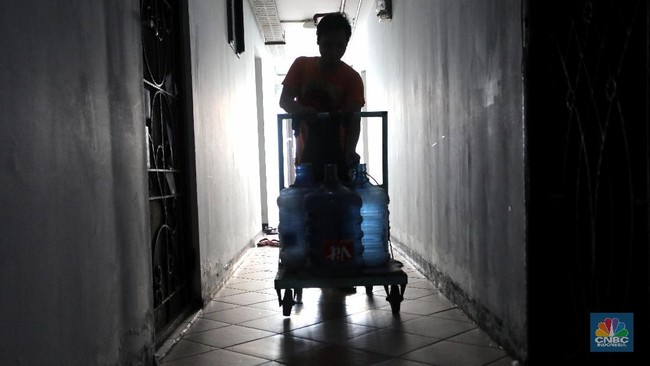
Jakarta, CNBC Indonesia - The enactment of the Domestic Workers’ Protection Law (UU PRT) represents a major advancement, but the greatest challenges now lie in its implementation. The government cannot operate alone, as oversight also involves community officials down to the RT/RW level.
Under the regulations, the role of the community and local environment is strengthened, including in resolving employment conflicts.
“Dispute resolution shall be conducted through mediation by the RT/RW head or equivalent at the location where the domestic worker is employed,” states Article 32(1).
This means that if a conflict arises between a domestic worker and their employer, the first recourse is not directly to the courts, but through community-based mediation. Beyond disputes, RT/RW also play a role in monitoring the presence of domestic workers.
“Employers are obliged… to report the presence of domestic workers employed in their homes to the RT/RW head,” states Article 19.
Through this scheme, the government aims to introduce social control at the grassroots level, given that domestic workers’ workplaces are in private spaces that are hard to reach with formal oversight.
On the other hand, central and local governments still hold the primary roles in guidance and supervision.
“The Central Government and Regional Governments shall provide guidance and supervision over the implementation of Domestic Workers’ Protection,” states Article 30.
This oversight includes data collection, policy evaluation, and enforcement against recruitment agencies that violate the rules.
However, with millions of households serving as “workplaces,” direct supervision presents a significant challenge. The system heavily depends on community reports and awareness among the parties involved.
The nature of domestic work, which takes place inside homes, makes potential violations difficult to detect. The law’s explanatory notes even acknowledge that cases such as unpaid wages, excessive working hours, and violence remain prevalent.
Therefore, the community-based approach is seen as a realistic solution, though not entirely without gaps.