
PTPN IV relies on two biogas power plants in Riau to reduce dependence on fossil energy
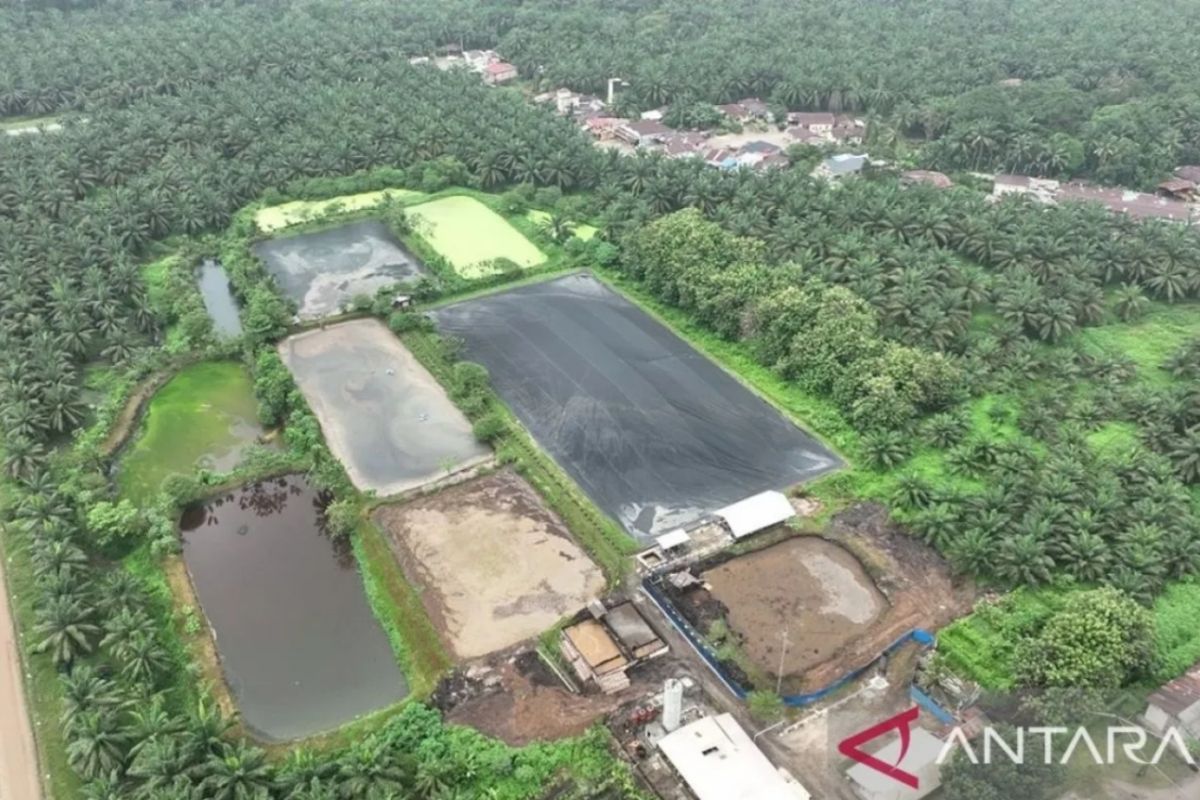
PT Perkebunan Nusantara IV PalmCo is relying on renewable energy (EBT) based on palm oil waste by operating two biogas power plants (PLTBg) in Riau Province to reduce dependence on fossil fuels.
The President Director of PTPN IV PalmCo, Jatmiko K Santosa, stated in a release received in Pekanbaru on Wednesday that the company’s initiative to use palm oil mill effluent (POME) to run the plants is not a short-term response to energy price surges, but part of a long-term strategy that has been underway for some time.
“The current global fluctuations in fossil energy prices actually prove that our development of renewable energy is the right step. The PLTBg helps us reduce dependence on diesel while maintaining operational cost efficiency,” said Jatmiko.
Currently, he said, PalmCo operates two power plants using palm oil liquid waste, namely PLTBg Terantam and PLTBg Tandun. Both use covered lagoon technology to process liquid waste into biogas, which is then converted into electricity.
All the energy produced is directly absorbed to support the operations of the Palm Oil Mill (PKS) at PPIS Tandun. Based on company data, the utilisation of energy from both biogas plants has significantly replaced the use of diesel-fuelled generators.
“In the period from 2023 to 2025 alone, diesel consumption has been reduced by more than 2.6 million litres. This efficiency directly impacts the company’s expenditure, with energy cost savings reaching around Rp 39.5 billion over the last three years,” he said.
Director of Strategy & Sustainability at PalmCo, Ugun Untaryo, views the utilisation of POME as an energy source as also reflecting the application of sustainability principles in the palm oil industry.
“This is not just about efficiency, but part of the circular economy. Liquid waste that was previously an environmental challenge is now processed into a valuable energy source,” said Ugun.
He explained that in 2025, both PLTBg facilities will be able to process more than 293,000 cubic metres of liquid waste. From this process, millions of cubic metres of methane gas are produced, which is used as energy while preventing the release of greenhouse gas emissions into the atmosphere.