
PSHK Explains Reasons Why TNI Soldiers Attacking Andrie Must Be Processed in General Courts
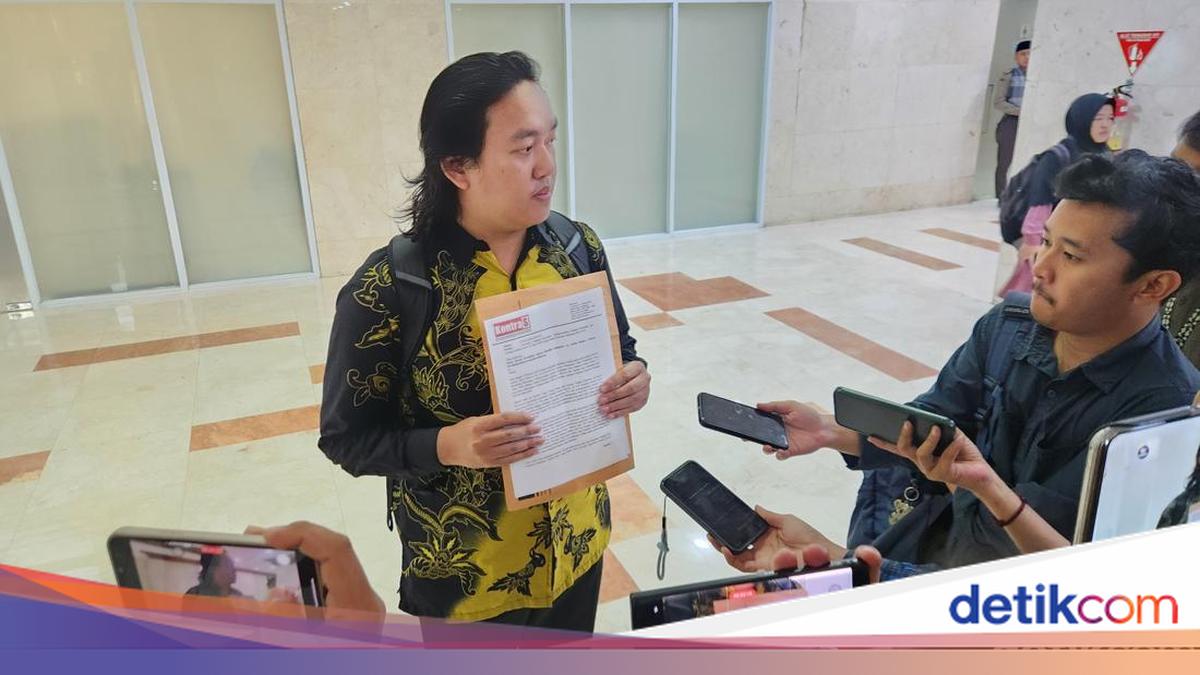
The Indonesian Centre for Law and Policy Studies (PSHK) is urging that four TNI soldiers suspected of throwing acid on KontraS activist Andrie Yunus be processed in civilian courts. PSHK has outlined the reasons why the suspects, who are from the TNI ranks, must be tried in general courts.
PSHK explains the principle of functional jurisdiction, stating that the determination of the court for military personnel is based on the nature of the criminal act committed, not solely on the perpetrator’s status as an active military member. PSHK states that throwing acid on an activist is not a criminal act related to military functions and duties.
“There is no element of military discipline, breach of service obligations, or crimes stemming from military functions and duties. This case is entirely a common criminal offence committed by individuals who happen to hold TNI status,” PSHK stated, as quoted on Monday (23/3/2026).
PSHK notes that this principle of functional jurisdiction has developed and is widely accepted in international law as well as practices in other countries. The UN Human Rights Committee affirms in General Comment No. 32 (paragraph 22) that military court jurisdiction must be strictly limited and not used for common criminal cases, especially those involving civilians.
“Throwing acid at a human rights activist is clearly not one of them,” it said.
PSHK then refers to Article 3 paragraph (4) of TAP MPR No. VII/MPR/2000, which states that TNI soldiers are subject to general courts for common criminal law violations. Article 65 paragraph (2) of Law No. 34 of 2004 on the TNI also regulates the same matter.
PSHK mentions that the only shield often used is Article 74 of the TNI Law, which states that Article 65 only applies after the enactment of a new Military Justice Law. However, according to PSHK, this transitional provision should no longer be allowed to serve as an indefinite excuse.
PSHK also refers to Article 198 of Law No. 31 of 1997 on Military Justice, which regulates that cases involving military perpetrators and civilians should be examined and tried in general courts.
“Military courts are only an option if there is a special decision from the Minister of Defence with the approval of the Minister of Law. This means that even the old pro-military legal instruments do not automatically grant authority to military courts to pull this case into their jurisdiction,” PSHK said.
PSHK expresses concern over impunity in military courts becoming commonplace. “When the military institution is given the authority to investigate, arrest, detain, examine, and try its own members, there is a conflict of interest that cannot be resolved by the institution itself,” it said.
PSHK views that in the context of the Andrie Yunus case, this concern is strengthened because the attack is suspected to be organised and targeted Andrie, who has recently been vocal in criticising remilitarisation.
“Questions about who ordered it and what the real motive is will never be answered if the judicial process takes place under the control of the institution suspected to be involved,” PSHK said.
Four Soldiers Handed Over to Puspom TNI
Previously, Puspom TNI revealed that there are four BAIS TNI soldiers who are suspected perpetrators. The four perpetrators are initialled NDP, SL, BHW, and ES.
TNI Danpuspom Major General TNI Yusri Nuryanto stated that the four perpetrators are members of Denma BAIS TNI from the Navy (AL) and Air Force (AU) branches.
He said that the suspects are currently secured. They are also still being investigated further by Puspom TNI.