
PSEL Deemed Insufficient; Government Drives Small-Scale Waste Technology Innovation
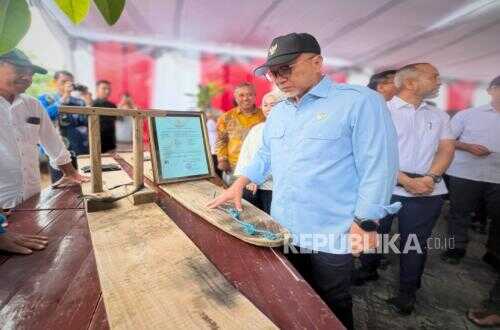
Jakarta — Coordinating Minister for Food, Zulkifli Hasan, has instructed the National Research and Innovation Agency (BRIN) and the Ministry of Higher Education, Science and Technology (Kemdiktisaintek) to identify waste management technologies at the most basic level. During a Waste Management Coordination Meeting for 2026 in Jakarta on Wednesday 25 February 2026, Zulkifli Hasan stated that in addition to constructing Waste-to-Electricity Processing (PSEL) facilities at 33 locations, the government is also targeting waste management at the most grassroots level, namely villages.
“In our last meeting we gave one month for technology development beyond waste-to-energy, but also for smaller-scale waste. We need research support from BRIN and technology innovation to address the waste emergency,” he said.
“PSEL has already begun operation but is only effective for large cities,” said the minister, commonly known as Zulhas.
Beyond BRIN, the government has also asked Kemdiktisaintek and the Ministry of Environment (KLH) to promptly formulate the types and specifications of technology suited to regional needs, both in rural and urban areas.
This follows from PSEL technology’s capacity to only manage 20 per cent of national waste and its effectiveness being limited to urban areas or agglomerations with waste volumes exceeding 1,000 tonnes per day.