
PSEL Becomes Emergency Waste Solution, Government to Build Two Facilities in Banten
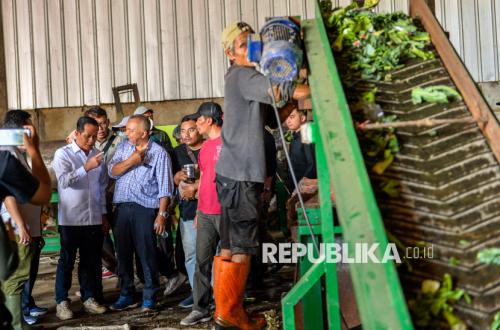
The government is accelerating the handling of emergency waste through the development of Waste-to-Electricity Processing (PSEL). This commitment is marked by the signing of a cooperation agreement between the Ministry of Environment and Forestry/Environmental Control Agency (KLHK/BPLH), the Banten Provincial Government, and the city and regency governments in the Greater Serang area.
Minister of Environment and Forestry/Head of BPLH, Hanif Faisol Nurofiq, stated that the construction of two PSEL facilities in Banten Province is targeted for completion in about three years. The two locations to be built are in Jatiwaringin, Tangerang Regency, and Cilowong, Serang City.
“The construction of this PSEL is a strategic step taken to address the emergency waste problem in various regions, including Banten Province,” said Hanif on Friday (27/3/2026).
In its statement, the Ministry of Environment and Forestry revealed that the target volume of waste that can be processed into electricity at the two facilities is around 4,000 tonnes per day. This project will be funded by Daya Anagata Nusantara (Danantara) as part of efforts to accelerate the provision of energy-based waste management infrastructure.
Hanif emphasised that although PSEL construction is an important solution downstream, waste handling from upstream remains the main key. He stressed the importance of waste sorting by the community to reduce management costs.
“No matter what technology is used, the basic foundation is sorted waste. Without sorting, management costs will be high and potentially burden the community,” Hanif asserted.
After the signing of the cooperation, the documents will immediately be submitted to Danantara to start the project tendering process. This process is estimated to take several months considering the large scale of financing and its national implementation.
Banten Governor Andra Soni affirmed that local governments will continue to intensify waste sorting socialisation during the PSEL construction period.
“The PSEL construction process will take up to three years, so during that period, waste sorting socialisation must be carried out massively,” said Andra.
The PSEL facilities in the Greater Serang area will be developed as a regional-based waste management centre. This programme adopts the Greater Serang agglomeration concept which covers Serang City, Serang Regency, and Cilegon City.
Through this cooperation, the central government together with local governments is committed to strengthening an integrated waste management system, from reduction at source, sorting, to utilisation of processing technology through PSEL to address Indonesia’s emergency waste problem.