
PRR Task Force Accelerates Recovery, Hands Over 120 Permanent Houses in South Tapanuli
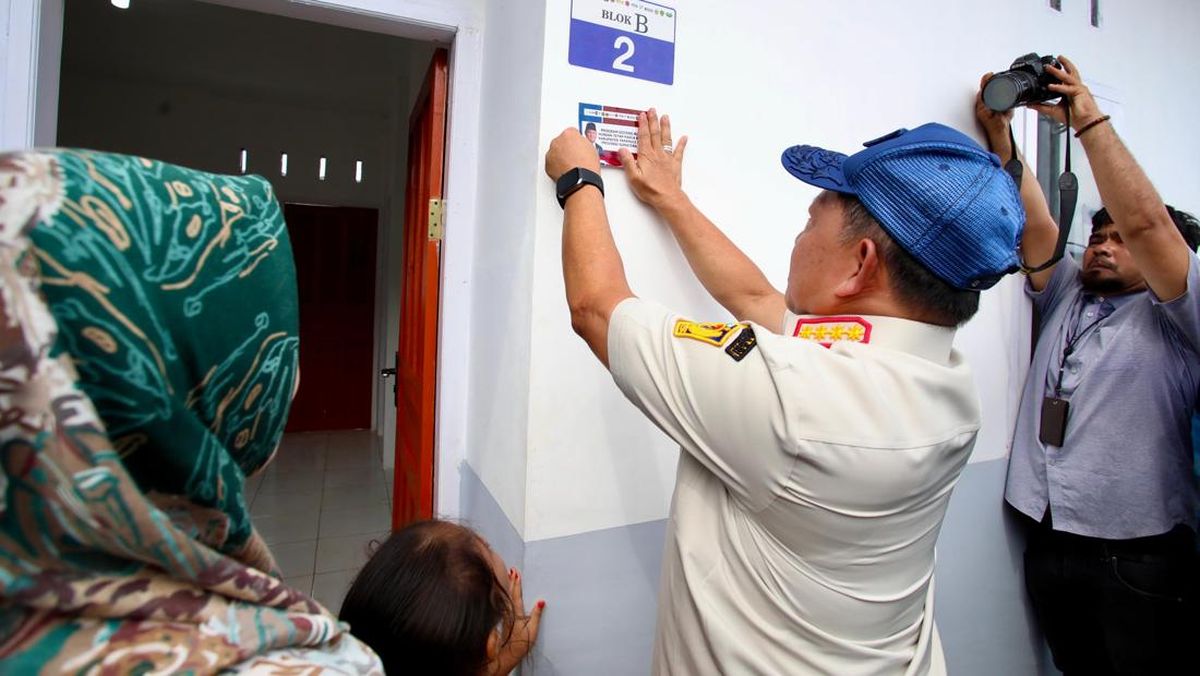
The government, through the Task Force for Accelerating Rehabilitation and Reconstruction (PRR Task Force) Post-Sumatra Disaster, has officially handed over 120 permanent housing units (huntap) to disaster survivors in South Tapanuli Regency (Tapsel), North Sumatra (Sumut). The handover took place in Hapesong Baru Village, Batang Toru Subdistrict, on Friday (27/3).
The Minister of Home Affairs and Chairman of the PRR Task Force, Muhammad Tito Karnavian, personally attended the handover of the housing keys alongside the Minister of Housing and Settlement Areas (PKP), Maruarar Sirait. This step is part of the government’s efforts to accelerate the recovery of social and economic conditions for communities in the Sumut region.
The handover of permanent housing was conducted early during the transition from the emergency response phase to the rehabilitation and reconstruction stage. In fact, the official start of the rehabilitation and reconstruction phase is scheduled for 1 April 2026.
Tito stated that the provision of this housing is the result of very rapid collaboration between the government and non-governmental parties.
“Well, this is the fastest mutual cooperation, the fastest I can say. The quickest,” he emphasised in a written statement on Saturday (28/3).
For information, these huntap units are intended for residents who lost their homes or suffered severe house damage due to the disaster. In their construction, the government applied a communal scheme with full support from the Tzu Chi Buddhist Foundation.
The Tzu Chi Buddhist Foundation is committed to building a total of 2,603 permanent housing units spread across Aceh Province, North Sumatra, and West Sumatra. This synergy aims to ensure that all disaster survivors in the Sumatra region soon receive decent and safe housing.
Tito explained that there are two main schemes for providing housing to survivors: the in-situ scheme and the communal scheme. In the in-situ scheme, communities are given the freedom to rebuild their homes independently in locations deemed safe.
The government, through the National Disaster Management Agency (BNPB), provides financial support of Rp60 million for each house built independently. The aid funds will be disbursed in stages over two construction terms to the homeowners.
Residents also have the option to hand over the entire physical construction process of their permanent housing to BNPB. This option is available for residents who prefer to receive a completed building at their verified original location.
Meanwhile, the communal scheme is implemented by centralising house construction in an integrated area on land owned by the regional government. The construction is directly managed by the Ministry of PKP or through cooperation schemes with other institutions and private parties.
The speed of construction in Tapsel received special appreciation from the Home Affairs Minister due to the completeness of data provided by the regency government. The Regent of Tapsel, Gus Irawan Pasaribu, was commended for his swiftness in compiling detailed data on residents’ house damage along with complete addresses.
The accuracy of this data facilitated the central government in verifying and distributing various types of social assistance to affected communities.
“This is all because of the most complete data from Mr Regent, Mr Gus Irawan,” said Tito.
Thanks to the valid data, disaster survivors in this region have received Life Assurance (Jadup) and Housing Waiting Funds (DTH) accurately. In addition, assistance in the form of Housing Filling Assistance (BIH) and Social Economic Stimulus Assistance (BSSE) has also been well distributed.
The government hopes that this pattern of rapid and accurate data reporting can be emulated by other regional heads whose areas are affected by disasters. The speed of data submission from the regions greatly determines the duration of field verification conducted by the Central Statistics Agency (BPS).
This bureaucratic efficiency is the main key so that relevant agencies can immediately execute aid programmes in the field.
“The faster, then BNPB can move. Minister Ara PKP [can] also move immediately,” added Tito.
The PKP Minister, Maruarar Sirait, also praised the precision in selecting the permanent housing locations, which he deemed very strategic for residents’ livelihoods. He emphasised the importance of building housing close to public facilities such as markets, schools, and hospitals.
This integrated location selection is expected to accelerate the recovery of economic and social activities for survivors in their new environment.
“This location is spot on, chosen by Mr Gus Irawan Pasaribu. The location’s ecosystem is excellent,” he praised.
This community-oriented construction concept aligns with the President’s directives in handling national disaster impacts.
“This is in line with the President’s instructions. Mr Prabowo said that in making decisions, we must facilitate the people,” Maruarar stressed.