
PRR Task Force Accelerates Permanent Housing Construction, Bireuen Disaster Survivors Enthusiastic
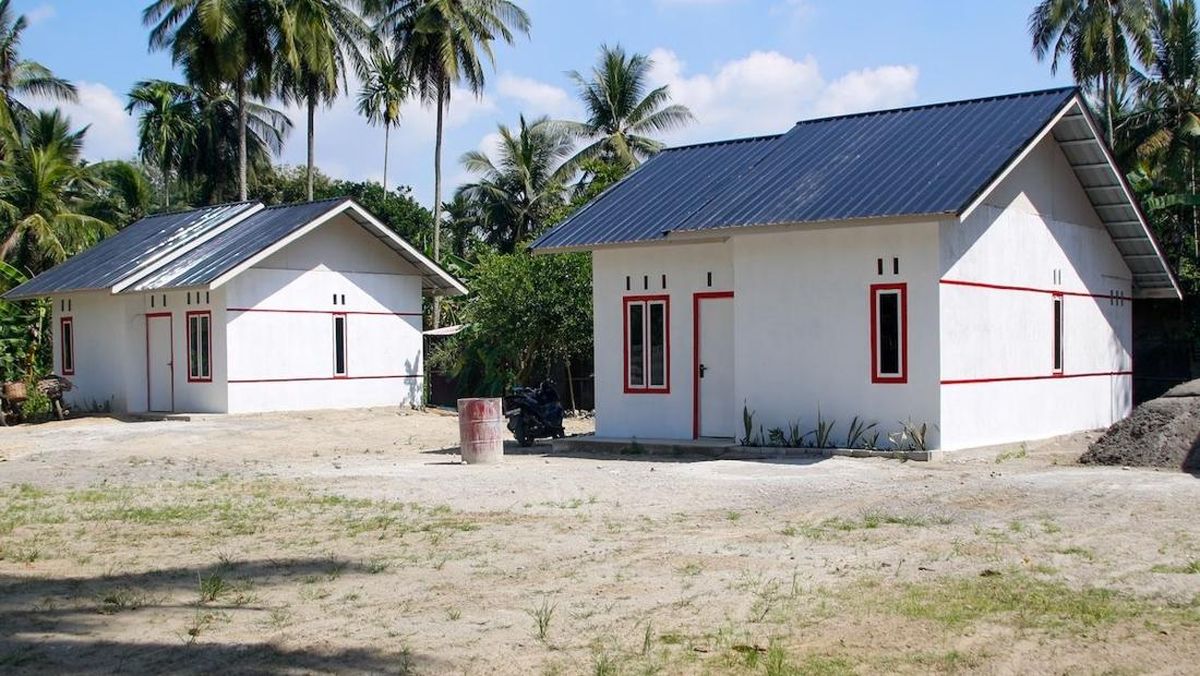
The Post-Disaster Rehabilitation and Reconstruction Task Force (Satgas PRR) following the Sumatra disaster continues to intensify the construction of permanent housing (huntap) for survivors of hydrometeorological disasters in Aceh, North Sumatra, and West Sumatra. The programme targets residents whose homes were severely damaged or swept away by floods.
A total of 36,669 huntap units are projected to be built in the three affected provinces. To date, around 110 units have been completed, and 1,359 others are still under construction.
The construction involves various ministries and agencies, including BNPB, the Ministry of Public Works and Housing (Kementerian PKP), Polri, the Ministry of Home Affairs (Kemenkopolkam), Danantara, and local governments. Several private entities and individuals are also participating in the programme.
One construction site is in Balee Panah Village, Juli Subdistrict, Bireuen Regency, Aceh. The huntap in this area is being built by BNPB with earthquake-resistant specifications.
The Type 36 houses use stone foundations, lightweight brick walls, lightweight steel roof frames, spandex roofing, and PVC ceilings. The prototype unit that has been erected is painted white, equipped with a main room, two bedrooms, one bathroom, and LED lighting.
One survivor in Balee Panah Village, Suryani, welcomed the huntap construction. She recounted that her home was submerged and collapsed when the hydrometeorological disaster struck her village at the end of last year.
She is now awaiting confirmation to soon occupy the huntap and reorganise her life. The huntap construction in the village is scheduled to be accelerated after Eid al-Fitr 1447 H/2026, according to information received by local residents.
“It is said that construction will start after Lebaran. We hope it can be quick, so it can be occupied immediately,” she said in a written statement on Friday (20/3).
Suryani also expressed her appreciation for the government’s assistance during the post-disaster period. Aid in the form of basic necessities such as rice, cooking oil, and instant noodles was deemed very helpful for her daily life after the disaster.
Her desire to soon occupy the huntap is not just about comfort. For her, moving from place to place since the disaster has been exhausting enough.
“We really want the huntap right away so we don’t have to move around anymore,” she said.
Based on BNPB data, huntap construction in Juli Subdistrict uses an in-situ scheme, meaning it is built near the original disaster-affected location. A similar scheme will also be applied in two other subdistricts in Bireuen, namely Jangka Subdistrict and Peudada Subdistrict.
For information, huntap is a continuation of the temporary housing (huntara) programme and the Housing Waiting Fund (DTH) prepared by Satgas PRR. Both programmes were previously used to relocate evacuees from emergency tents to more decent accommodation before huntap is ready to be occupied.