
PRR Post-Disaster Rehabilitation and Reconstruction Acceleration Task Force Urges Local Governments to Complete Victim Data After Sumatra Disasters
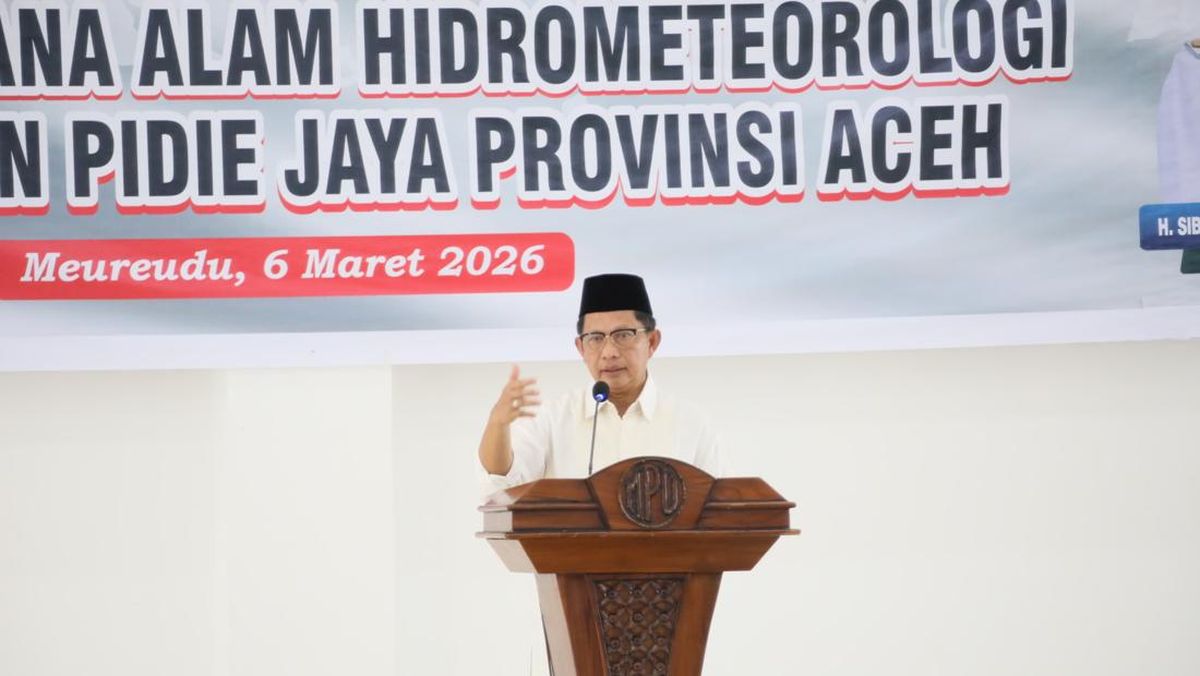
The head of the Post-Disaster Rehabilitation and Reconstruction Acceleration Task Force (PRR), Tito Karnavian, said that the speed and completeness of data from regional governments are the key to disbursing aid to victims in Aceh, North Sumatra, and West Sumatra. He said this during the handover of aid and condolences to hydrometeorological disaster victims in Pidie Jaya, Aceh, on Friday 6 March. According to Tito, the central government prioritises areas that submit victim data fastest. ‘The strategy is simple: whoever submits data the fastest is the one we will fastest send social assistance to,’ he said. The first phase of aid amounts to almost Rp900 billion, with Pidie Jaya receiving the largest allocation, because it submitted the data of affected residents the fastest and most completely. ‘From almost Rp900 billion in aid for the first phase, about half is for Aceh. Of the funds for Aceh, more than Rp200 billion is disbursed to Pidie Jaya because its data was the fastest and most complete.’ Based on data from the Ministry of Social Affairs, the aid distributed includes survivor allowances for 56 deceased people amounting to Rp840 million, aid for 23 severely injured amounting to Rp115 million, and living allowances (jadup) for 66,629 people for 90 days with a total value of around Rp89.9 billion. In addition, the government provides temporary housing (huntara) for 18,839 households worth Rp56.5 billion, and social and economic stimulus for 18,839 households worth Rp94.1 billion to support post-disaster community economic recovery, in total Rp241.6 billion. All aid is channelled through PT Pos Indonesia. The Ministry of Home Affairs (Kemendagri) also distributed 250 packages of worship equipment, 20 dump trucks, seven excavators, and three backhoe loaders to help accelerate relief and recovery in the affected areas. In addition to direct aid, the government is preparing permanent housing (huntap) for residents whose homes were heavily damaged or destroyed by the disaster. Moreover, Tito emphasised that the acceleration of huntap construction also depends on the completeness of data from regional governments, including residents’ choices whether to build on their own land or in a communal housing area. He then urged regional heads to form teams to document residents in detail so that the construction of permanent housing can proceed promptly. ‘If the data is complete, we can execute directly with BNPB and the Ministry of Housing,’ Tito concluded.