
Provision of large sacks as temporary solution to waste problem in Rusun Angke
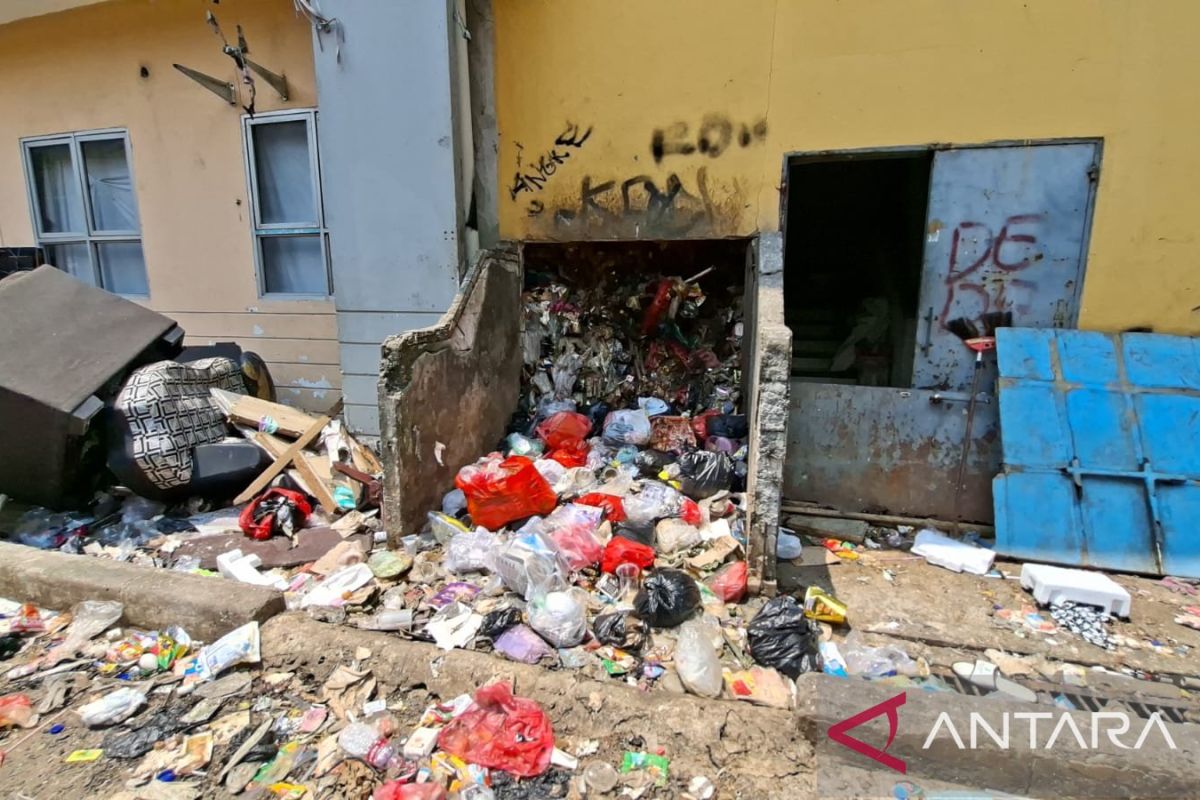
Jakarta (ANTARA) - The West Jakarta Environment Sub-Department (Sudin LH) is endeavouring to provide sacks with capacities of two to three cubic metres to temporarily address the waste problem at Rusunawa Angke, Tambora. The Head of Sudin LH West Jakarta, Achmad Hariadi, stated that the sacks would be used according to the types of waste produced by residents. “We are working on providing large bags or sacks to hold organic waste such as leaves or plant branches, besides SOD (kitchen organic waste),” said Hariadi when contacted by ANTARA in Jakarta on Tuesday. Once collected, Hariadi said, the waste would be utilised as compost fertiliser or planting medium. Furthermore, he continued, large sacks would also be provided to hold worthless plastic waste, such as beverage powder wrappers (sachets). “So those plastics are no longer discarded, like worthless screen plastics, such as beverage sachets. Just put them in the sack and later they can be used for RDF (refuse-derived fuel) or alternative fuel from waste processing,” Hariadi explained. Additionally, specific handling would be given to SOD due to the odour it produces. “Then SOD is indeed relatively smelly. We are trying to put it into Solo biopori holes. If there are maggots, we give maggots, or if there are catfish owners, give it to the catfish,” Hariadi added. As for waste like plastic bottles, cans, or dry cardboard/paper, his side is proposing the procurement of a waste bank unit to the Tambora I Flats Management Unit (UPRS). “We are pushing for a waste bank to be built inside the Rusun, not outside. We are proposing to UPRS I Tambora to create a permanent waste bank,” said Hariadi. The Rusun basement or lower level is targeted as the location to place the waste bank to facilitate waste collection services from Rusun residents. “In the Rusun basement, we have a spot, a good location for the waste bank. So the waste bank is safe, not exposed to rain, not to heat. So the items are also safe, not damaged,” Hariadi stated. Thus, the waste supplied to the waste bank remains marketable. “So it still has economic value. That’s what we’re pushing for,” he said. According to him, procuring a waste bank unit at Rusunawa Angke could benefit RT/RW parties, but it must still be considered by the Rusun management. This, Hariadi said, relates to aesthetics or Rusun environmental management. “For RT/RW, it might be beneficial, but for the management, it needs to be socialised again so that the presence of the waste bank in the TPS looks more aesthetic,” said Hariadi. The provision of large sacks is accompanied by waste sorting workshops that Sudin LH Jakbar is intensively conducting for Rusunawa residents and managers. In the waste sorting movement, Hariadi said, Rusun Angke residents, especially cleaning staff, will be taught to sort organic and inorganic waste. It is known that this solution serves as an alternative to handling the waste problem in the Rusunawa Angke area. The restriction on West Jakarta’s daily waste disposal quota to the Integrated Waste Processing Site (TPST) Bantar Gebang, from 308 trucks to 190 trucks per day, has prompted Sudin LH to seek alternative waste handling methods. Previously, waste in the vertical disposal channels or trash chutes of Rusunawa Tambora, West Jakarta, piled up to the sixth floor of the building on Tuesday. The pile-up occurred due to delays in transporting waste to the Integrated Waste Processing Site (TPST) Bantar Gebang. This hindered the removal of waste from the first-floor trash chute exit. Observations at the site on Tuesday afternoon showed that the trash chute is integrated with the building from the first to the 16th floor. The vertical disposal channel has a corridor approximately 30x60 centimetres wide and functions to drop household waste from the 16th floor to the ground floor. Each floor has one trash chute door that can be opened and closed to drop waste to the ground-floor disposal. However, the waste containment area on the ground floor appeared full and uncollected due to limited garbage truck fleets. This condition caused newly discarded waste from above to clog in the channel and pile up, especially in the discharge channels of Towers B and C. In the discharge channel of Tower B, waste had been clogged for about a month, resulting in piles up to the third floor of the Rusun. Meanwhile, a worse situation occurred in Tower C, where waste had piled up to the sixth floor. As a result, residents on the lower floors could no longer dispose of waste through the shaft and had to go down to carry their waste directly to the ground floor.