
Protecting Medical and Health Workers, Ministry of Health Issues Circular on Measles Alert
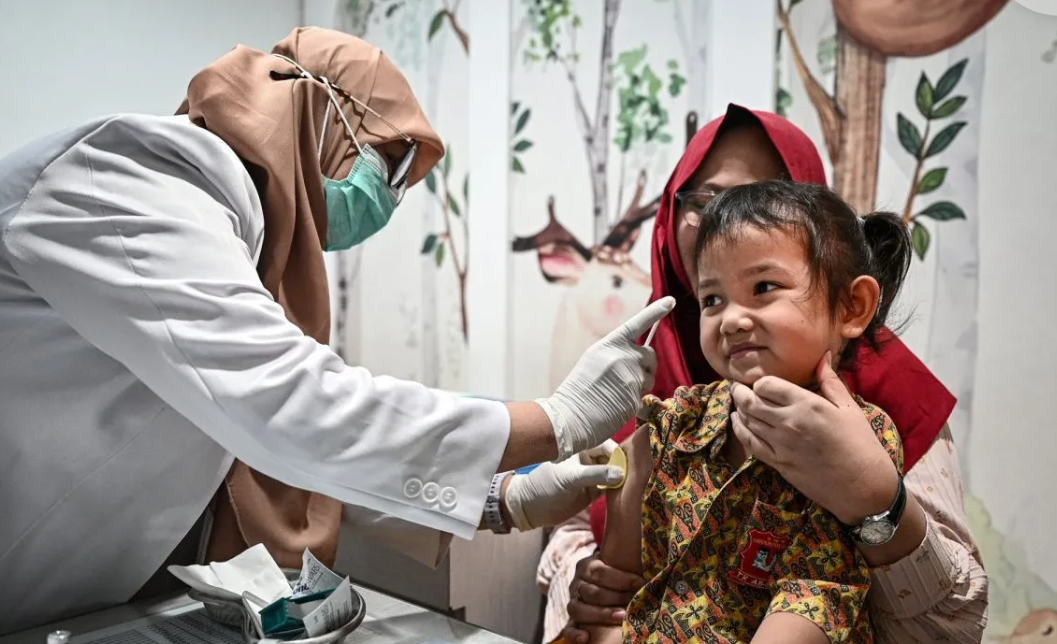
The Ministry of Health (Kemenkes) has issued Circular No. HK.02.02/C/1602/2026 on Vigilance against Measles for Medical and Health Personnel. This step was taken in response to the increasing number of measles cases and the occurrence of Extraordinary Events (KLB) in several regions in Indonesia.
Based on data up to week 11 of 2026, there have been 58 measles KLB in 39 districts/cities spread across 14 provinces. The number of cases once reached 2,740 at the beginning of the year, although it now shows a downward trend to 177 cases.
Acting Director General of Disease Control and Prevention, Andi Saguni, emphasised that medical and health personnel are a group vulnerable to infection due to the intensity of contact with patients.
“With the increase in measles cases and the high number of hospitalisations, medical and health personnel are a high-risk group. Therefore, vigilance and protection measures must be strengthened in all health service facilities,” said Andi Saguni in his statement on Sunday (29/3).
As an effort to control the outbreak, Kemenkes has implemented Outbreak Response Immunisation (ORI) as well as the Catch-Up Campaign (CUC) for Measles/MR in 102 districts/cities targeting children aged 9 to 59 months. Nevertheless, vigilance still needs to be increased, especially in health facility environments.
Through this circular, Kemenkes instructs hospitals and health service facilities to strengthen preventive measures, including conducting early screening and triage, preparing isolation rooms, ensuring the availability of personal protective equipment (PPE), and strengthening infection control systems.
In addition, medical and health personnel are also urged to strictly adhere to infection prevention protocols and to immediately report if they experience symptoms indicative of measles.
“We urge all health personnel to remain disciplined in implementing prevention protocols and to immediately report if they find suspected cases. A rapid response is very important to prevent wider transmission,” he added.
Kemenkes also emphasises that all suspected measles cases must be reported within a maximum of 24 hours through the established surveillance system.
With the issuance of this circular, it is hoped that all stakeholders can increase readiness and work together to suppress the spread of measles, while also protecting health personnel as the frontline of services.
Kemenkes has confirmed that up to mid-March 2026, there were 13,046 suspects with 10,301 confirmed measles cases. In addition, there were 8 deaths due to measles.