
Protecting Large Oil and Gas Assets, SKK Migas Relies on Insurance Consortium
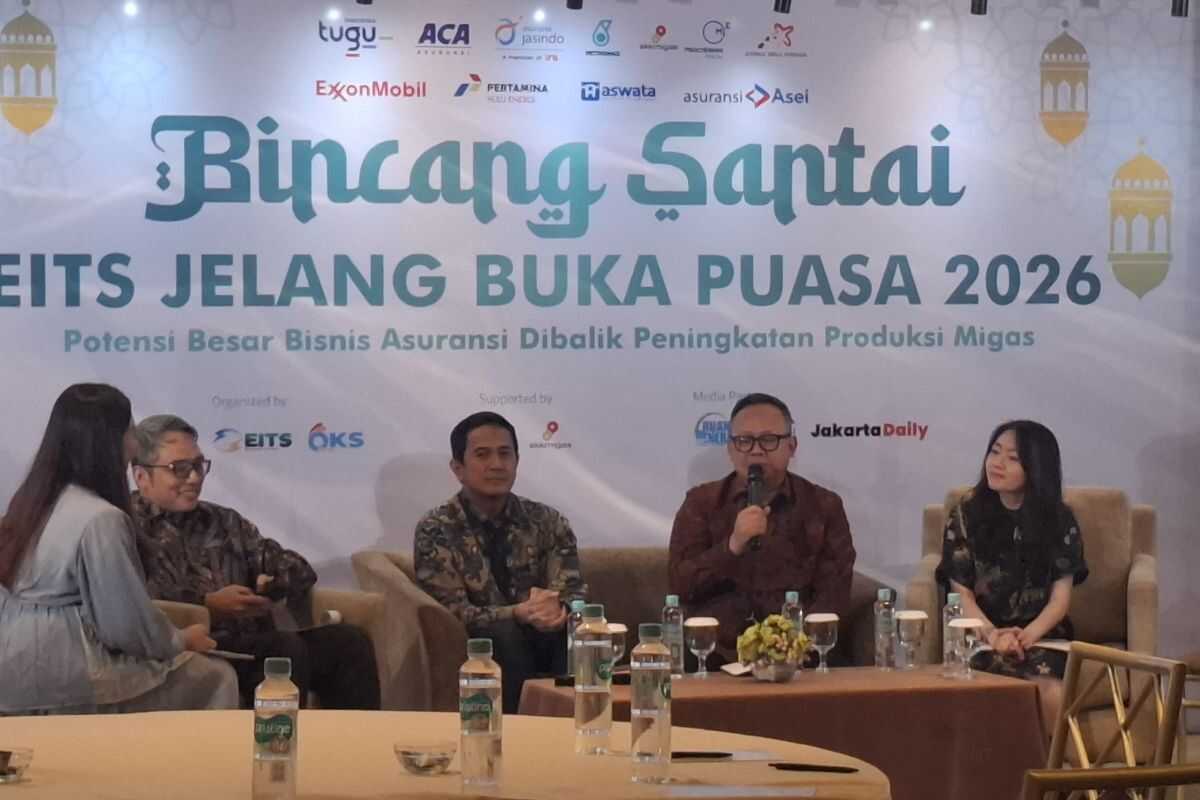
The Special Work Unit for Upstream Oil and Gas Activities (SKK Migas) is relying on an insurance consortium scheme to protect Indonesia’s large, geographically dispersed oil and gas assets. This step forms part of risk management strategy in upstream oil and gas, given construction and operation of oil and gas infrastructure require substantial investment and carry high risk.
Through the consortium scheme, several insurance companies are brought together to jointly underwrite the protection of assets, increasing the capacity of coverage and making it more efficient.
Achmad Rezki Isfadjar, Head of the Taxation, Insurance, and Treasury Division at SKK Migas, said the consortium is a solution because the value of oil and gas assets is so large that it cannot be borne by a single insurer. Through the consortium, a number of top Indonesian insurers are gathered to shoulder the risk together.
‘In this way, the insurance protection needs for the upstream oil and gas industry can be met more effectively,’ he said at the Casual Talk at EITS ahead of Ramadan Iftar 2026: Great Potential in Insurance Business Behind Rising Oil and Gas Production, Jakarta, Thursday (5/3).
He notes that capex in upstream oil and gas infrastructure requires very large capital expenditure and carries high risk. The scale of capex does not automatically eliminate risk; thus risk management strategy including insurance is needed.
He adds that upstream assets spread from Sabang to Merauke are state assets of enormous value requiring adequate protection. However, not all assets are insured. This is part of risk management strategy; SKK Migas performs a screening to identify which assets require insurance and which can be self-insured by the companies.
Rezki explained that insurance arrangements apply not only to assets that are already operational but also for projects being prepared or to be built. Various ongoing upstream projects require protection with large capacity; thus robust support from the insurance market is needed.
‘Therefore, SKK Migas encourages a consortium-based insurance arrangement so that market capacity can be gathered optimally,’ he said.
In practice, all insurance needs from various working areas (WK) of oil and gas are consolidated first into a single large package before being taken to the global insurance market to obtain the best price. After receiving offers from the market, the package is then divided back according to the needs of each WK, given that each WK has its own legal entity and risk characteristics.
Rezki added that this approach also applies to handling claims. The consortium is tasked with ensuring the claims process can be handled optimally so that oil and gas operations are not disrupted when incidents occur.
He also revealed that since the scheme’s adoption in the early 2000s, the value of oil and gas assets has continued to rise as industry activity has increased. However, the rise in assets does not always correspond to a rise in premiums in a linear fashion. This is because the insurance letting process is conducted via competitive tender, including involving international reinsurance markets such as London, thereby achieving cost efficiency.
In SKK Migas’s notes, the premiums paid so far have even exceeded the value of claims made. This implies that for the global reinsurance industry, particularly in London which is a centre for underwriting upstream oil and gas risk, the sector remains a profitable business.
Rezki cited, for example, that in certain years the value of claims rose two to three times the average premium, reaching more than USD 160 million.
‘That amount is certainly very large and would be burdensome if all losses had to be borne by themselves without insurance protection,’ he said.
Therefore, the presence of insurance is viewed as helping the state and the oil and gas industry to stay focused on achieving production targets. With risk protection, any incidents can be compensated through the insurer’s payouts, reducing the impact on operating costs and ultimately on the state’s finances.
Going forward, the demand for insurance protection is expected to continue rising in line with expanding assets and activity in the oil and gas sector. Rezki cites the acceleration of drilling programmes, which previously averaged 200–300 wells per year but in 2023 rose to around 700–800 wells, approaching 1,000 wells per year across various working areas. This increase in activity automatically increases risk exposure.
Thus, adequate insurance protection is seen as crucial to anticipate potential large losses that could occur if operations are not sheltered by a proper risk management scheme.
The successful drilling and early production testing of Gemah-81 well owned by PetroChina International Jabung is regarded as a tangible contribution to the upstream sector.
SKK Migas targets eight strategic upstream oil and gas projects to be onstream in 2026 with investment of USD 478 million, adding 8,457 barrels of oil per day and 389 million standard cubic feet per day.
The Environment Working Committee of Commission XII of the Indonesian House of Representatives conducted a working visit to the Onshore Processing Facility (OPF) Saka Indonesia Pangkah Limited (PGN SAKA) in Gresik.
SKK Migas reiterates its commitment to strengthening the use of domestic goods and services in the upstream oil and gas sector.