
Protect the National Music Ecosystem, the Ministry of Culture Holds the 2026 National Congress of Composers
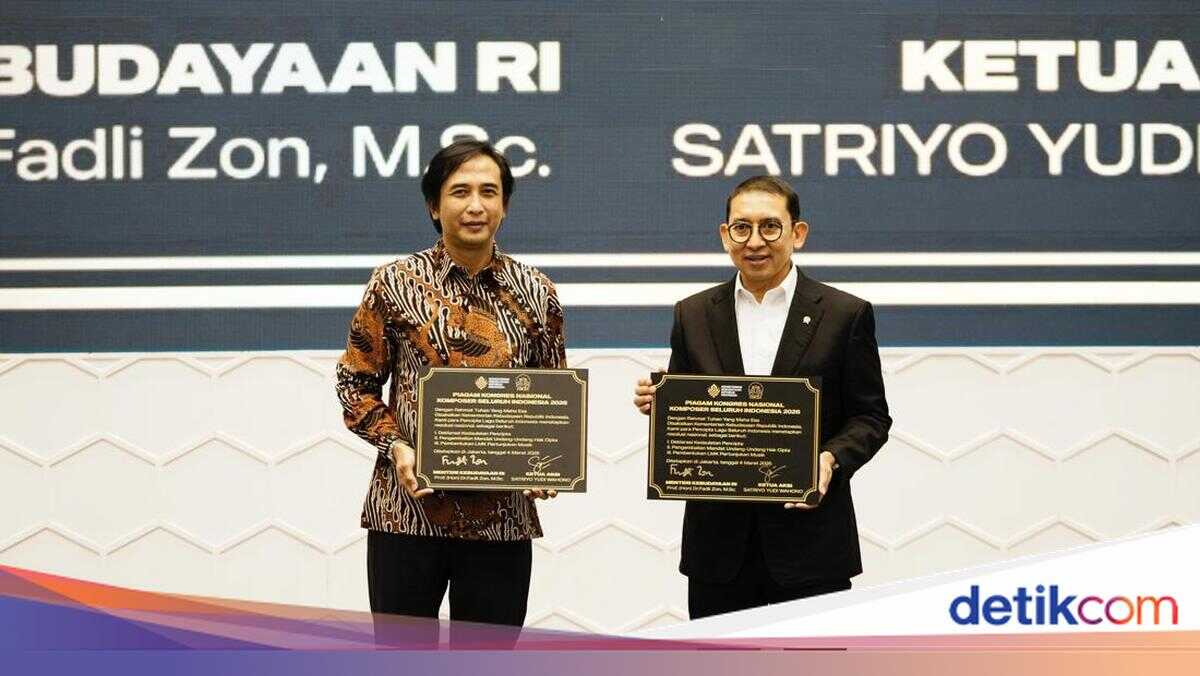
The Ministry of Culture (Kemenbud) of the Republic of Indonesia organised the 2026 National Congress of Composers Across Indonesia in collaboration with the Association of Composers Across Indonesia (AKSI). The forum served as a space for songwriters and composers from across the country to discuss strengthening creators’ positions in copyright governance and updates to the national music ecosystem.
Culture Minister Fadli Zon said the government strongly supports the strengthening of the music ecosystem, including through this congress. He stated that music is also part of the constitutional mandate in Article 32(1) of the 1945 Constitution, which explicitly orders the state to advance national culture amidst global civilisation, a mandate further elaborated in Law Number 5 of 2017 on the Advancement of Culture.
Within this framework, the arts, including music, are a strategic object of cultural development with both cultural and economic dimensions.
‘Music is an important part of human life and also a crucial element in the advancement of national culture. So we certainly support this congress as part of an effort to create a healthy and fair music ecosystem,’ Fadli Zon said in a written statement on Thursday (5 March 2026).
He made the remarks during the congress held at Building A, Culture Ministry Complex, Jakarta, on Tuesday (4 March).
He also highlighted that the debate regarding creators’ position in music governance has persisted for some time and has been a self-critique. Fadli Zon stressed that creators are the initial owners of the rights inherent in their works, and thus any regulation should not lessen those private rights.
The Ministry will provide input in discussions of copyright regulation to ensure the creation of fair solutions for all ecosystem players, including creators, performers, producers, labels, and other stakeholders.
‘The songwriter essentially has full rights over their songs; this is common sense that we must establish together,’ he added.
He added that through open and participatory dialogue, the government encourages the formation of mechanisms that do not need to restart from scratch but can refer to best practices in various countries. According to him, strengthening music governance should aim to create a win–win solution while also promoting Indonesian music as a key part of the cultural economy and the national cultural industry with global competitiveness.
‘The National Congress of Composers Across Indonesia is expected to be a national consolidation moment for songwriters to strengthen copyright sovereignty and build music governance that is fairer, more transparent, and legally certain,’ said Fadli Zon.
He said the resolutions produced are expected to serve as moral and normative references in policy renewal, while also clarifying the position of creators as the primary subjects in Indonesia’s music ecosystem.
‘Through ongoing and participatory dialogue, the government, via the Ministry of Culture, remains committed to continuing to foster a fair music ecosystem and to supporting the strengthening of Indonesia’s cultural economy at both national and global levels,’ he stated.
Meanwhile, AKSI Chairman Satriyo Yudi Wahono said the congress arose from the collective restlessness of composers over imbalances in the music industry. He explained that since 3 July 2023, AKSI has been actively pursuing copyright protection in music performances, including direct license rights and the right to determine the mandate for management of works.
He stated that the National Resolution established at this congress would serve as a moral, cultural, and normative reference for building fair, transparent, and civilised music governance.
‘We want to ensure that no more songs are performed on stage without legal certainty and fair recognition for their creators,’ Yudi said.
Meanwhile, AKSI’s Chairman of the Board of Trustees, Ahmad Dhani, expressed support for the composers’ struggle and the importance of regulatory clarity in the discussion of revising the Copyright Act. He stressed that respect for creators’ rights is a fundamental principle in the music industry ecosystem.
‘The rights of composers are non-negotiable. This struggle is not for a select few, but to ensure justice for all songwriters,’ Dhani said.
The summit culminated with the reading and signing of the National Resolution Charter of the National Congress of Composers Across Indonesia by the Minister of Culture and AKSI’s Chairman. The charter essentially contains three main points: (1) a declaration of the sovereignty of creators’ exclusive rights as private personal rights; (2) reaffirmation that the authority of collective management bodies is sourced from and limited by the Copyright Act; and (3) a push to establish a special Collective Management Organisation for music performances operating under explicit mandates from the creators, not as rights holders.
The signing of the charter symbolised a shared commitment between the government and the composer community to strengthen national music governance that is fair and to provide legal certainty for all ecosystem players.
Present at the event were, among others, the Director-General of Intellectual Property from the Ministry of Law, Hermansyah Siregar; Deputy for Creative Media at the Ministry of Creative Economy, Agustini Rahayu; and other AKSI officials. Also accompanying the Minister of Culture were the Director-General for Development, Utilisation, and Cultivation of Culture, Ahmad Mahendra; Senior Advisor to the Minister for Economic and Cultural Industries, Anindita Kusuma Listya; Advisor to the Minister for Inter-Agency Relations, Ismunandar; Special Staff to the Minister for Cultural Diplomacy and International Relations, Annisa Rengganis; and other officials of the Ministry of Culture.