
Prosperous Teachers, Healthy Schools: The Foundation of Quality Education
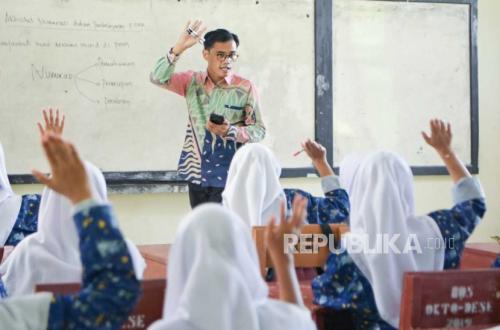
Education is not merely about the transfer of knowledge, but also about health, encompassing physical, mental, and social aspects. In this context, teachers and students are not just participants in the learning process, but individuals who require a healthy environment to grow and develop optimally.
Unfortunately, the reality on the ground reveals an irony that has not yet been fully resolved. The phenomenon of honorary teachers in Indonesia reflects a serious social health issue.
On one hand, they are the spearhead of education shaping the nation’s future. On the other hand, many of them live in economic uncertainty, with minimal social protection and high work pressure. Such conditions not only impact their financial well-being, but also their mental health.
Teachers’ mental health
From a health perspective, prolonged economic pressure can trigger chronic stress, anxiety, and even depression. Research conducted by Pamungkas and Wibowo (2024) indicates that teachers’ welfare significantly influences their psychological stability.
Teachers with decent income and supportive work environments tend to have lower levels of burnout. Conversely, uncertainty in status and income exacerbates the risk of emotional exhaustion, which ultimately affects the quality of teaching.
Teachers’ mental health is a crucial foundation for creating healthy learning. Psychologically prosperous teachers are better able to create positive, empathetic, and inspiring classroom atmospheres. In the long term, this will shape an educational climate that is not only academically intelligent, but also emotionally healthy.
On the other hand, educational infrastructure issues also have an equally important health dimension. The Indonesian Legal Aid Foundation (2024) notes that disparities in educational facilities remain a classic unresolved problem. The lack of amenities, poor school building conditions, and unequal access to inclusive education pose real challenges.