
Prospective OJK Chief Proposes 100 Banks to Channel Mortgage Loans
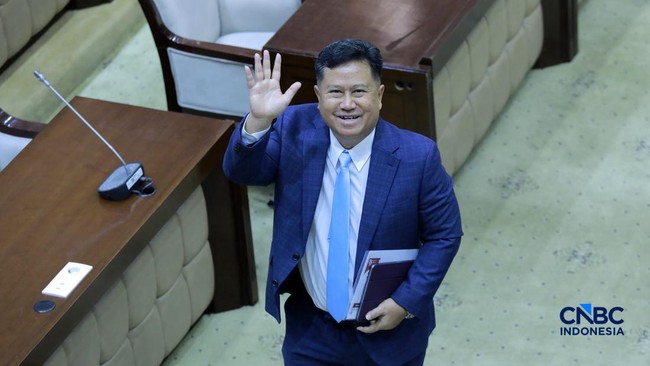
Jakarta, CNBC Indonesia - Agus Sugiarto, a candidate member of the OJK Board of Commissioners, seeks to strengthen the regulator’s role in supporting national development. He has announced a programme to mobilise the banking industry to support President Prabowo Subianto’s three million homes government initiative.
He presented this proposal whilst undergoing a fit and proper test as a candidate OJK Board of Commissioners member before the House of Representatives’ Commission XI on Wednesday, 11 March 2026.
Agus, currently an Independent Commissioner at PT Danantara Asset Management, proposed a National Mortgage Credit (KPR) programme involving 100 banks and potentially rural banks (BPR). He suggested participating banks allocate a small portion of their mortgage portfolios for the special programme with lower interest rates and simplified procedures.
Agus explained that this allocation would represent only about 5% of the banking sector’s total mortgage portfolio, positing it would not burden the industry. Under this scheme, lower interest rates would be set to make mortgages more affordable to the public.
“Here, we want to show that the OJK is involved through banking. We involve one hundred banks, even reaching out to rural banks if necessary, so that the broader public can receive support and own homes with the backing of this national mortgage programme,” Agus stated at the House of Representatives building on Wednesday, 11 March 2026.
According to him, this initiative is necessary for Prabowo’s three million homes programme to materialise. Furthermore, Agus highlighted that the OJK possesses various tools to provide support.
“If I were to lead, I would pursue this. The OJK exists as part of the national economic ecosystem. Although the OJK is independent from government policy, it remains part of a unified ecosystem and national system that must support national development as a whole,” Agus concluded.
Additionally, Agus also sought to encourage banking participation in food security programmes. He noted the need to promote credit distribution to food sector companies that faced obstacles in accessing credit.
“Likewise, for food security. There may also be issues with credit provision to companies related to food security,” he said.
Agus mentioned the state-owned food holding company ID FOOD as a potential instrument for strengthening the food sector ecosystem. He subsequently referenced regulations concerning Risk-Weighted Assets (ATMR) in banking, which he suggested could be reconsidered to encourage financing to this sector.
“Specifically regarding ATMR, this also needs to be revisited. Whether there is still room? I believe there is still room for this,” he said.