
Prosecutors Question Independence of Expert in Chromebook Corruption Trial
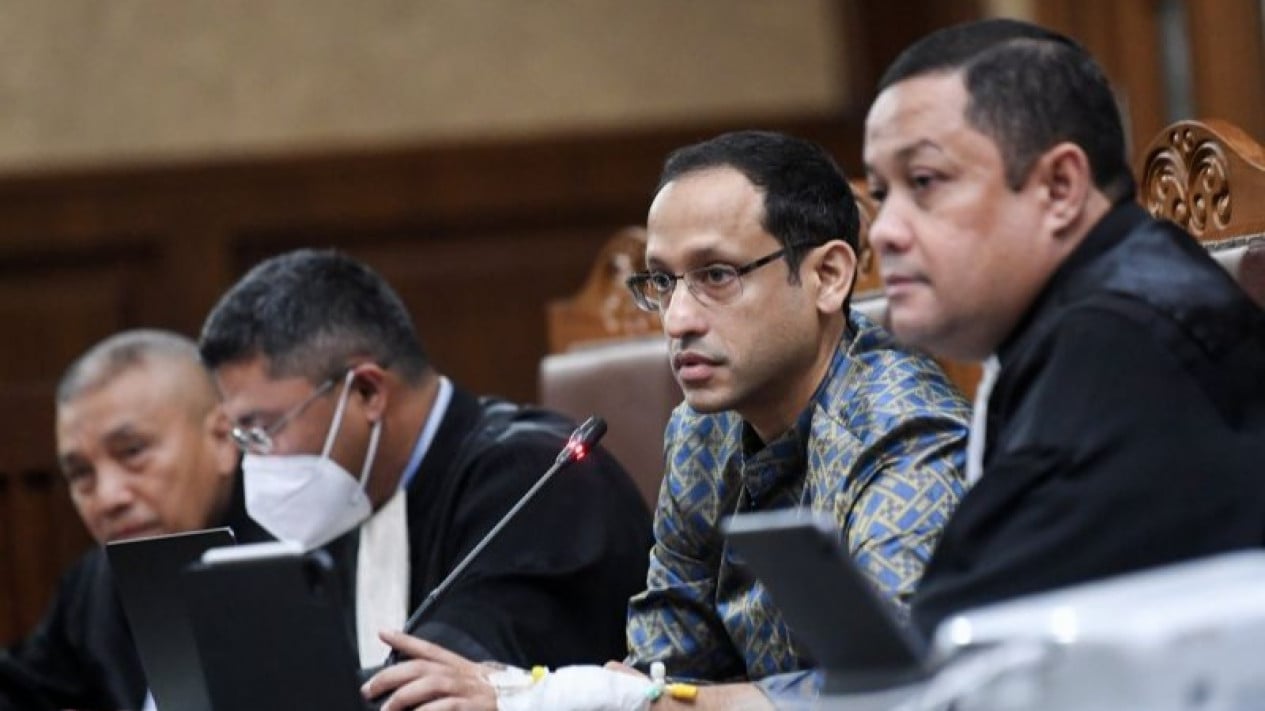
Prosecutors (JPU) questioned the independence of the expert, former Chairman of the Supreme Audit Agency (BPK) RI Agung Firmansyah, who was deemed not objective. This was stated by prosecutor Roy Riady during the trial for alleged corruption in the procurement of Chromebooks, with the defendant being former Minister of Education, Culture, Research, and Technology Nadiem Anwar Makarim, at the Corruption Court in Central Jakarta on Wednesday, 6 May 2026. Prosecutor Roy Riady said that they questioned the expert’s independence in the trial by referring to the Criminal Procedure Code (KUHAP). “The KUHAP does not recognise the term of an expert who lightens the case. An expert provides opinions based on their expertise to help clarify a matter,” said Roy. In the trial, the prosecutors also highlighted the basis of the opinions provided by the expert. Roy stated that the testimony was compiled based on documents received from the defendant’s legal advisors. He added that there was a difference in views regarding the boundaries of authority between auditors and law enforcement officials, particularly in assessing whether there was any unlawful act. “In fact, he fully understands, from his experience as BPK Chairman and senior auditor, that interpreting an unlawful act is the domain of law enforcement, not the domain of an auditor,” he said. Additionally, the prosecutors raised the method used by the expert in providing testimony, including the absence of calculations of state financial losses as is customary in audit processes requested by law enforcement officials. “The expert gave opinions that contradict what he has previously provided or practised, in issuing audit reports on state financial losses at the request of law enforcement authorities, including requests from investigators from both the Prosecutor’s Office and the Corruption Eradication Commission (KPK),” he said. The prosecutors also noted parts of the expert’s testimony that were considered outside the core of the case when answering questions in the trial. Nevertheless, Roy conveyed that they still respected the expert’s presence in the trial. At the end of the trial, the prosecutors submitted several objections, including regarding the expert’s independence, the limited basis for compiling the opinions, and conclusions that were said not to fully rely on the facts of the trial. “This is where the expert’s independence is tested, the expert’s professionalism is tested as a former official, an auditor who, in my opinion, is a role model for me—I learned a lot from him in the past. But for me, this is a dynamic of the trial,” he concluded.