
Prosecutors Probe Defendant in LNG Corruption Case on Contents of 'Update USA LNG' Meeting
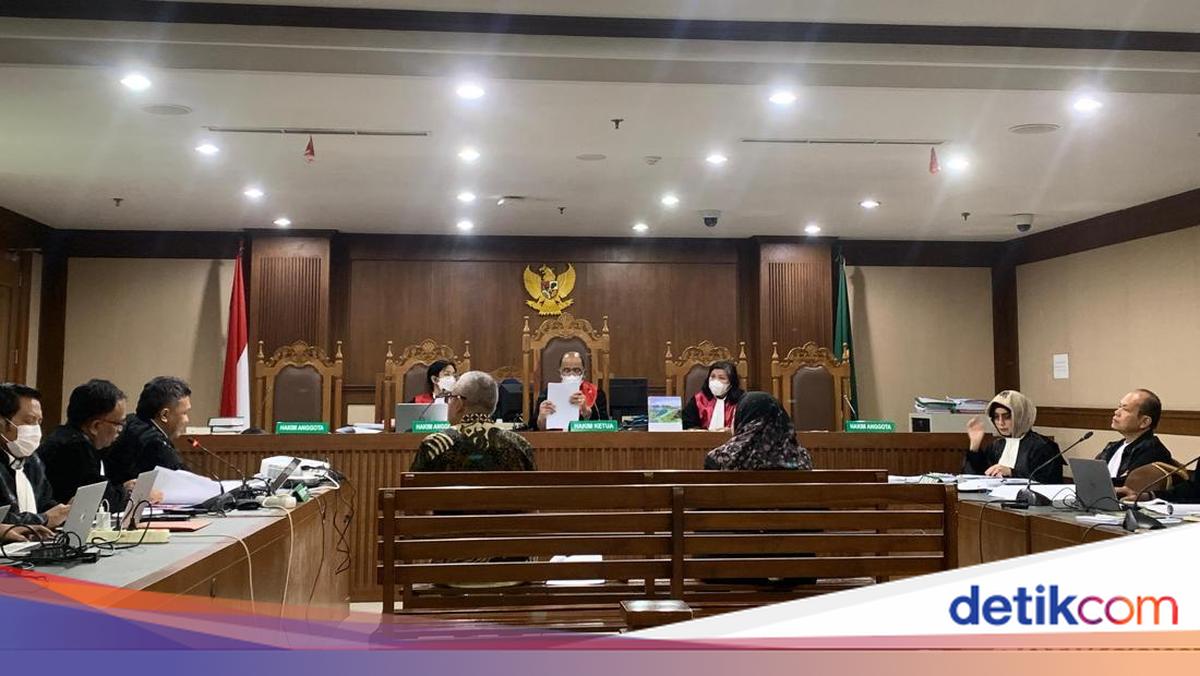
Prosecutors are delving into a meeting titled ‘Update USA LNG’ in the alleged corruption case concerning the procurement of liquefied natural gas (LNG), or liquefied natural gas. The meeting took place in 2013.
The contents of the meeting were questioned by prosecutors to the defendant in the alleged LNG corruption case, former Gas Director of PT Pertamina, Hari Karyuliarto, at the Central Jakarta Corruption Court on Monday (6/4/2026). Hari stated that the meeting was part of the war room, which did not solely discuss the American company, Corpus Christi Liquefaction LLC (CCL).
“Defendant, several facts have already been revealed in this trial, one of which is a meeting held on 11 July 2013 titled ‘Update USA LNG’. So, how did that meeting come about?” asked the prosecutor.
“I believe that was also part of the War Room. So it wasn’t just discussing Corpus Christi, but other projects as well,” replied Hari, who was examined as the defendant.
The prosecutor asked about the contents of the meeting. Hari said the meeting discussed, among other things, key term sheets, infrastructure readiness, and risk mitigation plans.
“So, what was discussed in that meeting?” asked the prosecutor.
“What we discussed in that meeting was the key term sheet, then infrastructure readiness, then risk mitigation plans if our infrastructure couldn’t accommodate it. Because at that time, the infrastructure we had was only Nusantara Regas, where Nusantara Regas has a capacity of 400 MM or 3.7 million tonnes per year. Meanwhile, the Government had only allocated half of it, 200 MMSCFD or 1.5 million tonnes per year. So from this alone, there was still a shortage of 2.6 million MTPA,” replied Hari.
“Whereas at that time, on the other side, during the War Room, the construction of infrastructure at Pertamina Arun Gas, or PT Arun, had to be revitalised. And the result of that revitalisation would be infrastructure that could be used to store and regasify LNG into gas for the Aceh and North Sumatra regions. And from these two capacities, the LNG from Bontang was not sufficient,” he continued.
Hari said that during his tenure, he was like ‘begging’ for LNG. He mentioned that at that time, no domestic LNG was flowing to Pertamina.
“Especially in my time, it’s like I was already ‘begging’ for LNG from the Government but was never given any. Until I left Pertamina, not a single drop of domestic LNG ever flowed to Pertamina. That is the dark history of Pertamina,” said Hari.
Hari stated that at that time, there was also a boom in LNG production in America with competitive prices based on the Henry Hub figures. For information, Henry Hub is the main natural gas pipeline intersection point in Erath, Louisiana, USA, which serves as a benchmark for global liquefied natural gas (LNG) prices.
“And then at that time, there was a boom in LNG production in America with sales referring to the gas price in America which was very competitive, namely referring to the Henry Hub index,” he said.
He assessed that at that time, the potential for fulfilling LNG was very much in need of LNG from America. He also explained the domestic LNG figures at that time.
“And therefore, in the war room, it was certainly approved or we all understood that the potential for fulfilling domestic LNG needed by the Processing Directorate or needed by the existing infrastructure very much required LNG from America,” said Hari.
“And in terms of price, even though the Processing Directorate issued a price after I left, but when I was at Pertamina, my colleague, the Processing Director, also gave an estimate of 12 to 13 dollars per MMBtu. That was very feasible if supplied from American LNG. Because domestic LNG was around 13-14 dollars at that time.
Looking at the situation, Hari was convinced that the negotiation for LNG from America needed to be continued.
“And therefore, if American LNG is landed, calculated as landed in Indonesia, the price would not exceed 10.5 dollars, even below that. And therefore, there was confidence that this negotiation needed to be continued. That’s it, Sir,” said Hari.
Prosecution
Previously, the Corruption Eradication Commission (KPK) public prosecutors charged two new defendants in the LNG procurement corruption case, causing a state loss of USD 113 million. The two defendants were former Gas Director of PT Pertamina, Hari Karyuliarto, and former VP of Strategic Planning Business Development of Pertamina’s Gas Directorate, Yenni Andayani.
The charging hearing was held at the Central Jakarta Corruption Court on Tuesday (23/12/2025). Both were charged with committing the act together with former Pertamina President Director Galaila Karen Kardinah or Karen Agustiawan, who had already been found guilty earlier in this case.
“Committing acts of enriching themselves or others or a corporation, namely enriching Galaila Karen Kardinah alias Karen Agustiawan by Rp 1,091,280,281 (Rp 1 billion) and USD 104,016, and enriching the corporation Corpus Christi Liquefaction LLC by USD 113,839,186 (USD 113 million),” said the prosecutor.
The prosecutor said the loss figure was based on the investigative audit report of the Indonesian Audit Board (BPK RI). The prosecutor said the gas purchase was carried out on the grounds that domestic gas stocks were limited, so Pertamina needed to buy gas from the US.
The prosecutor said the principal permit related to the LNG procurement was issued by Karen without guidelines for implementing LNG procurement. The LNG procurement, said the prosecutor, was carried out based on best practices that Pertamina always did as an LNG seller on behalf of the state.
After going through various negotiation processes and internal discussions, the gas purchase was then made by Pertamina to Corpus Christi Liquefaction LLC. However, said the prosecutor, Pertamina did not yet have fixed LNG buyers in the domestic market that would absorb or buy LNG from that American company.
The prosecutor said the LNG purchase was not accompanied by final economic analysis or calculations. That condition caused an excess or oversupply of LNG.
“Whereas it should have been in accordance with the interim risk study related to the LNG volume i