
Proposal for Moratorium on Aluminium Smelters, ESDM's Response
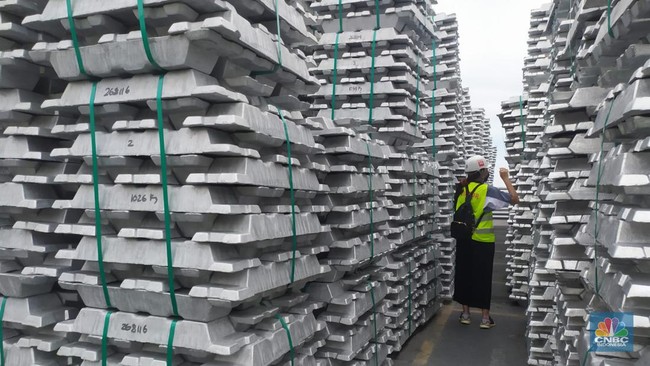
Jakarta, CNBC Indonesia - The Ministry of Energy and Mineral Resources (ESDM) has responded to the recent proposal for a moratorium on the construction of alumina and aluminium smelters.
Director General of Minerals and Coal (Dirjen Minerba) at the Ministry of ESDM, Tri Winarno, emphasised that the government has not yet carried out a specific study regarding the proposal.
He explained that smelter development has so far been divided into two schemes: standalone smelters and those integrated with downstream industries.
“Not yet, not yet. So far, smelters are divided into two: one related to standalone, and the other integrated. The standalone ones fall under the Ministry of Industry,” Tri said at the RI DPR Building on Wednesday (15/4/2026).
Previously, PT Indonesia Asahan Aluminium (Inalum) highlighted the importance of a policy for a moratorium on the construction of alumina and aluminium smelters, especially amid projections of a surge in bauxite needs in the coming years.
Inalum’s President Director, Melati Sarnita, said the issue was discussed during a working visit in Pontianak, West Kalimantan. According to her, the discussion stemmed from a presentation by the Ministry of ESDM on the state of national bauxite resources and reserves as of 2024.
Based on data used by Inalum, Indonesia’s proven bauxite reserves currently stand at around 1 billion tonnes, with total reserves at 2.8 billion tonnes.
“These figures were then reviewed in several analyses and publications regarding the forecast for Indonesia’s alumina refinery capacity over the next 10 years,” Melati said during an RDP with Commission VI of the RI DPR on Tuesday (31/3/2026).
According to Melati, based on data from Wood Mackenzie and Fastmarkets, there are around 13 companies planning to build alumina refineries in Indonesia over the next 10 years.
Meanwhile, the installed capacity of alumina refineries in 2026 is estimated at around 9 million tonnes per year. However, this capacity could rise to 29.8 million tonnes per year if all projects are realised.
“From these figures, we recalculated the estimated bauxite needs required for the alumina refineries on this list,” she said.
Melati revealed that for existing refinery facilities, bauxite needs amount to around 29-36 million tonnes per year. If all refinery projects operate, the demand could increase to 80-94 million tonnes per year.
This capacity increase, according to her, will add pressure on Indonesia’s bauxite reserves due to the intensity of usage from alumina refinery smelters.
In this regard, it has the potential to reduce the resilience of domestic proven bauxite reserves to less than 10 years of usage and total bauxite reserves to 28 years of usage.
“This is a major concern for us because one of our investments, the Mempawah aluminium smelter, has an economic life of 30 years. This is also for the forecast of Indonesia’s primary aluminium smelter capacity,” she said.