
Proposal for 100% MinyaKita Distribution via SOEs: Trade Minister Says No Problem
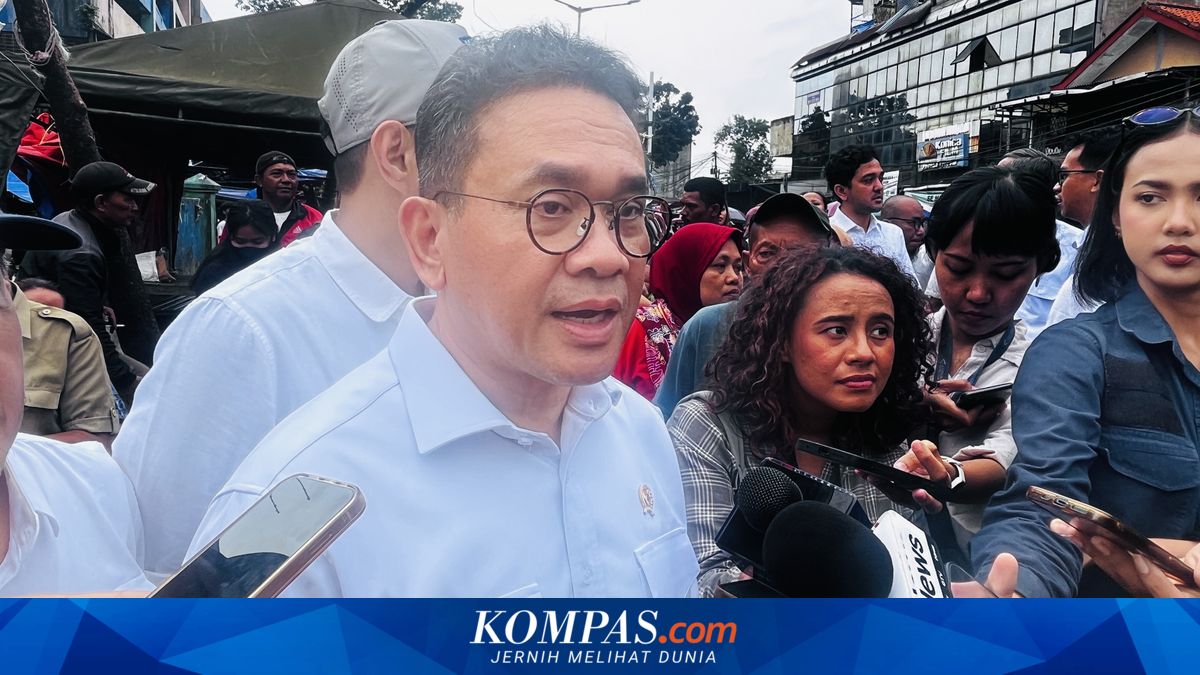
JAKARTA - Trade Minister Budi Santoso, known as Busan, has stated that he has no issue with 100 per cent of MinyaKita being distributed through state-owned enterprises (SOEs).
Busan explained that Trade Ministerial Regulation (Permendag) Number 43 of 2025 only sets a minimum distribution of MinyaKita through SOEs at 35 per cent.
“In the regulation, it’s a minimum of 35 per cent. So whether it’s 65 or 70, there’s no problem,” Busan said when met at JIExpo, Jakarta, on Thursday (16/4/2026).
Busan stated that if the proposal is implemented, the Ministry of Trade will facilitate producers in fulfilling their obligations through food SOEs.
He mentioned having phoned the President Director of PT Perum Bulog, Ahmad Rizal Ramdhani, and the President Director of ID Food, Ghimoyo.
“Currently, distribution through Bulog alone is already high, above 35 per cent,” Busan said.
Nevertheless, Busan also highlighted the role of private distributors involved in MinyaKita distribution so far.
His side views government distribution of MinyaKita through SOEs and the private sector as unproblematic.
“We are also empowering many private distributors. So everyone runs together, no problem,” he said.
According to him, producers can still cover the highest enforced price (HET) even though crude palm oil (CPO) prices are high due to the war in West Asia.
“It’s still possible now. Yes, it’s still possible; that’s its function to stabilise prices so that other prices don’t rise,” Busan said.
MinyaKita is the Trade Ministry’s brand for fulfilling the domestic market obligation (DMO) for cooking oil that producers must meet.
Agriculture Minister Andi Amran Sulaiman previously proposed increasing the volume of MinyaKita distribution through SOEs, even up to 100 per cent.
According to Amran, distribution through SOEs could effectively keep MinyaKita selling prices in line with the HET.
Increasing the distribution volume of cooking oil through SOEs, according to Amran, is a strategy similar to efforts to control meat prices.
“(Through) SOEs, it’s easier to control. If there’s a price increase, the SOEs take responsibility,” Amran said on Wednesday (15/4/2026).