
Property Sector Strategy Amidst Turbulence
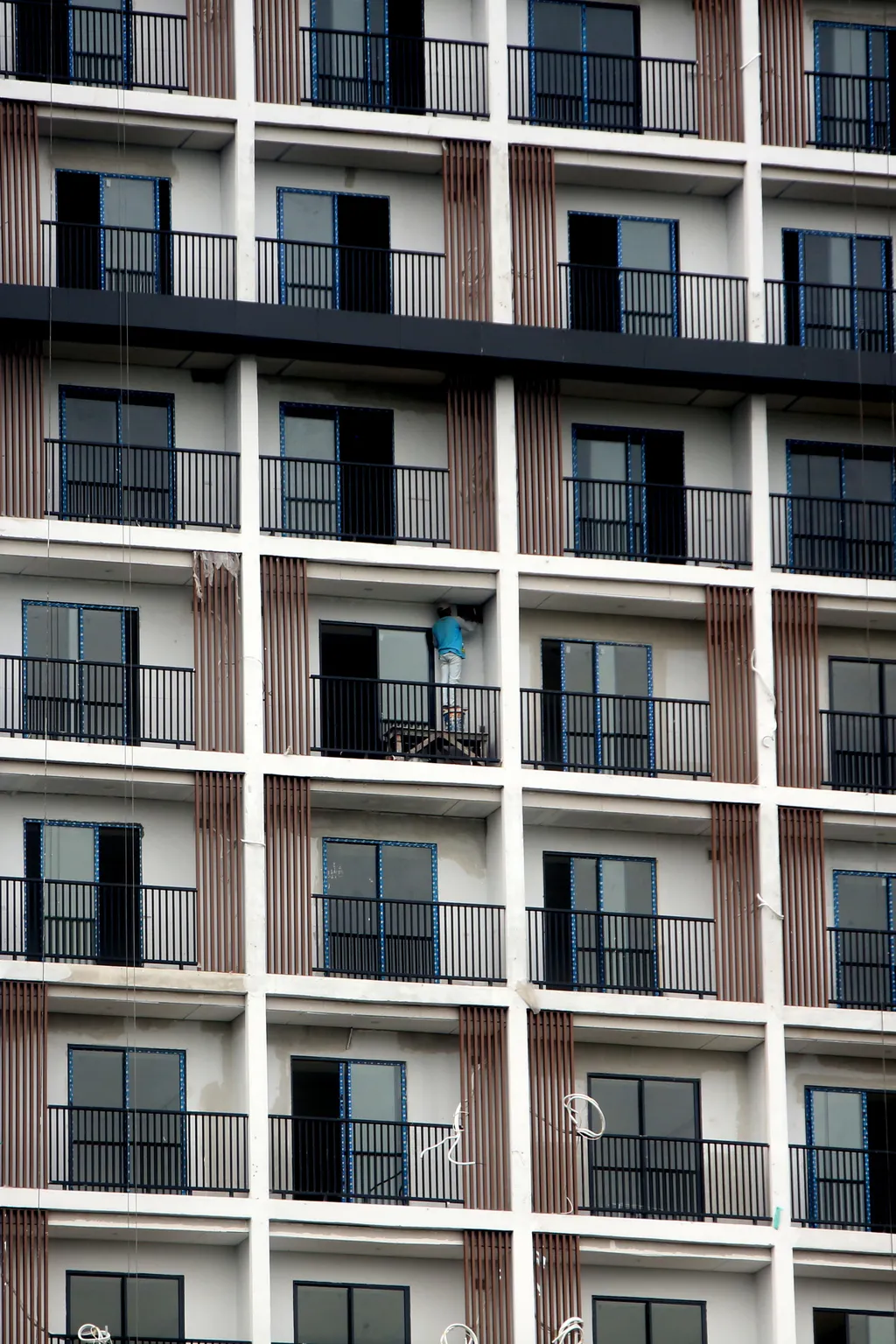
The escalation of the US-Israel and Iran conflict serves as an external catalyst for rising energy prices, inflation, and exchange rates that are expected to slow down the property industry.
By Brigita Maria Lukita G.
14 Apr 2026 18:00 WIB · English
The impact of the war in the Middle East affects market sentiment and the increasingly complex economic risks in Indonesia. The repercussions may spill over into the property industry, markets, and sectors related to property.
Market tightening is reflected in the apartment sector. Developers are postponing expansion and prioritizing the absorption of ready-to-occupy units. The market is more concentrated in the middle and upper-middle segments.
“Global geopolitical pressures and rising material prices will impact the prices of new projects going forward,” said Colliers Indonesia Head of Research Ferry Salanto in a media briefing for Q1 (January-March) 2026 last week.
Colliers Indonesia projects that only around 3,100 apartment units will enter Jakarta by 2029. This supply represents an 80 percent decrease compared to the period of 2020-2025. The appeal of apartments as an investment option is increasingly declining. To stimulate the market, developers are offering price discounts, free furniture, and low-interest apartment ownership loans.
Pressure is also predicted to persist in the hospitality sector until mid-2026, influenced by global pressures. Amid weakening demand and rising operational costs, industry players are once again adopting efficiency strategies to maintain performance.
The Secretary General of the Central Executive Board (DPP) of Real Estate Indonesia, Raymond Arfandy, who was contacted separately, stated that the property industry has been driving 185 sectors related to property, ranging from building materials, furniture, to household appliances. However, the property industry is also vulnerable to the impacts of economic conditions and purchasing power.
The impact of the Israel-United States war with Iran and the complex geopolitical situation may affect energy fluctuations. The uncertainty of supply and oil prices should be monitored as it impacts logistics costs and production expenses, thereby driving up the prices of products and materials from sectors related to property.
“If the raw material prices increase, the property sector will inevitably be disrupted. The effect is not only on the supply side but also on the demand side. Consumers and investors will postpone their purchases,” said Raymond when contacted on Tuesday (31/3/2026).
Raymond added that the commercial property market faces many challenges. Investment in the property sector is weakening because investors are still delaying and observing market conditions (wait and see). Over the past ten years, property investment has been deemed to no longer generate significant business turnover and returns. Markets dominated by end users are vulnerable to the impact of the economic slowdown.
“Previously, property value increases could reach 20 percent per year. The property market is no longer what it used to be, which was considered to generate a promising business prospect and business turnover. Buyers are now more focused on their needs and capabilities, rather than being driven by investment,” said Raymond.
Colliers Indonesia, a property consultancy, predicts that the property segment reliant on business and investment activities will be more sensitive to the impacts of economic turbulence. This segment includes upper-middle-class apartments that are frequently purchased by investors, properties with speculative purchases, as well as hotels based on meetings, incentives, conventions, and exhibitions (MICE) that depend on consumption and business activities.
Ferry Salanto stated that the war between Iran and the US and Israel is not a direct factor determining the direction of the Indonesian property market. However, the escalation of tensions has the potential to act as an external catalyst through the channels of rising energy prices, inflation, exchange rates, and credit interest rates.
“In a negative scenario, if the conflict escalates, there will be an increase in oil prices that will trigger inflation, followed by an increase in interest rates, resulting in a deeper slowdown in the property market,” said Ferry last week.
The property world is no longer like it used to be, when it was considered to produce a convincing business prospect and business turnover.
Developers with high leverage or those using a greater proportion of debt than equity to finance their projects could also experience negative impacts. Vulnerabilities also affect the lower-middle class housing sector, which is sensitive to rising mortgage interest rates and inflation in basic necessities.
Conversely, in a positive scenario (bull case), if geopolitical tensions subside within a relatively short period of time, market sentiment could potentially recover and property activity could return to normal within the next few quarters.
Raymond added that the slowdown in the property market needs to be anticipated with a number of concrete and strategic breakthroughs. The government needs to open a discussion space with industry players to map out the needs and solutions for maintaining supply and demand.
The government has introduced fiscal incentives, including Government-Borne Value Added Tax (PPN DTP), for the housing sector. Other fiscal incentives should be considered to stimulate investment, such as a tax amnesty for property investors.
In the public housing sector, the government needs to ensure that the energy crisis and economic slowdown do not erode the purchasing power of the community. If consumer purchasing power is disrupted, the industry will find it increasingly difficult to operate and recover. “Government stimulus is necessary to maintain the purchasing power of the community,” he stated.
Ferry believes consumers and investors need to implement strategies to deal with market sh