
Promoting the Nickel Battery Industry, Indonesia Targets Energy Independence
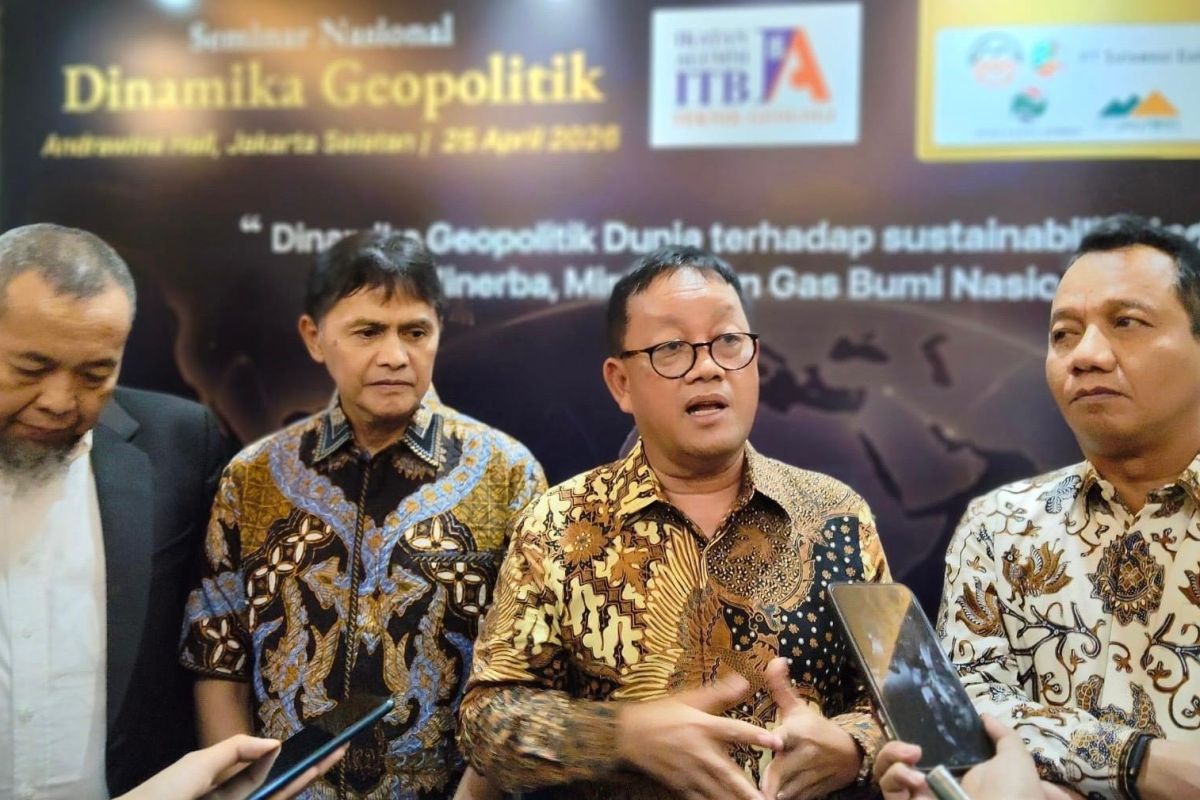
The Ikatan Alumni Geologi Institut Teknologi Bandung (IAGL ITB) is encouraging the government to strengthen the nickel-based battery industry ecosystem as part of a grand strategy towards national energy independence amid global geopolitical pressures.
IAGL ITB General Chairman Abdul Bari, in a statement in Jakarta on Saturday, emphasised the importance of integrating energy policies that not only focus on increasing oil and gas production (lifting) but also on downstream processing of strategic resources such as nickel.
According to Bari, strengthening the nickel battery industry ecosystem is crucial because the commodity serves as the main raw material in the development of electric vehicles and energy storage systems.
“Our recommendations are, first, to increase oil lifting. This can be done through fiscal incentives for oil companies to conduct exploration and aggressive exploration in oil. Second, downstream processing of coal is absolutely mandatory because we must shift to energy that we have ourselves. The same applies to nickel. Nickel as storage for EVs is also important for us, so that achieving energy independence and sovereignty will be faster,” explained Bari.
He elaborated that the national oil needs reach around 1.7 million barrels per day, while domestic production is only about 605,000 barrels per day.
“Therefore, strategic steps are needed and to strengthen cooperation between academics, government, and industry players to determine focused and strategic policy directions,” said Bari.
As a mitigation step, IAGL ITB is pushing for accelerated aggressive oil and gas exploration to maintain energy production sustainability in the medium and long term. However, at the same time, the organisation assesses that optimising nickel and coal must run in parallel as national energy pillars.
Bari explained that Indonesia has very large nickel potential, with the capacity to generate electricity up to 50 GWh per year and a total potential of more than 1 TWh.
In addition, developing the nickel battery industry ecosystem is seen as able to provide significant added value, while accelerating the transition to clean electricity-based energy in Indonesia.
On the other hand, coal still has a strategic role in maintaining national energy resilience. Indonesia has coal resources of 97 billion tonnes with proven reserves of around 32 billion tonnes.
According to him, the utilisation of coal should be directed not only as fuel for power plants but also through downstream processing such as gasification into dimethyl ether (DME), quality improvement, and the application of more environmentally friendly technology.
Meanwhile, Deputy Chairman of Commission XII of the Indonesian House of Representatives Sugeng Suparwoto stated that the government continues to strive to maximise oil and gas lifting, including optimising idle wells and exploring new untapped basins.
“As often underlined by geologists, there are 128 basins that have been explored, but only 60 basins have been exploited; there are still 68 basins that have not been touched,” he said.
He added that battery industry development is part of the nickel downstream processing that the government continues to promote gradually within the industrial ecosystem chain.
“Indeed, the downstream of all downstreams is industry, one of which is batteries, but today we are already producing NPI (nickel pig iron) for steel, stainless steel, and other products. So, in the context of industry, everything is indeed gradual,” he revealed.