
Promoting Community Independence Through CSR and ESG Programmes
Amid growing demands for businesses to move beyond mere growth, corporate social responsibility (CSR) and environmental, social, and governance (ESG) programmes have become key metrics for communities assessing a company’s contribution to local environments. In the mining sector, success is measured not just by regulatory compliance but by a company’s ability to empower communities, create economic opportunities, protect the environment, and generate long-term impacts in operational areas.
ABM Investama Tbk (ABMM) Director Achmad Ananda Djajanegara stated that within ABMM’s sustainability framework, CSR is a crucial part of the ESG structure, particularly the social aspect aimed at supporting business continuity. “At ABMM, we view CSR as part of the ESG framework, especially the social component, to bolster business sustainability. While ESG has a broader scope, our targeted CSR programmes ensure business growth is accompanied by community strengthening, improved welfare, and tangible impacts. This approach is implemented by the ABMM Group to operationalise sustainability,” he said in Jakarta on Tuesday (26 May).
Iwan Hermawan, Director of PT Reswara Minergi Hartama (Reswara), highlighted that Reswara’s CSR and ESG strengths lie in consistent leadership, governance, and corporate integrity, ensuring measurable, accountable, and impactful field programmes. “CSR and ESG are not just corporate obligations but a means to ensure our presence genuinely benefits communities. We want each programme to leave lasting capacity, opportunities, and independence, not just temporary activities,” he said.
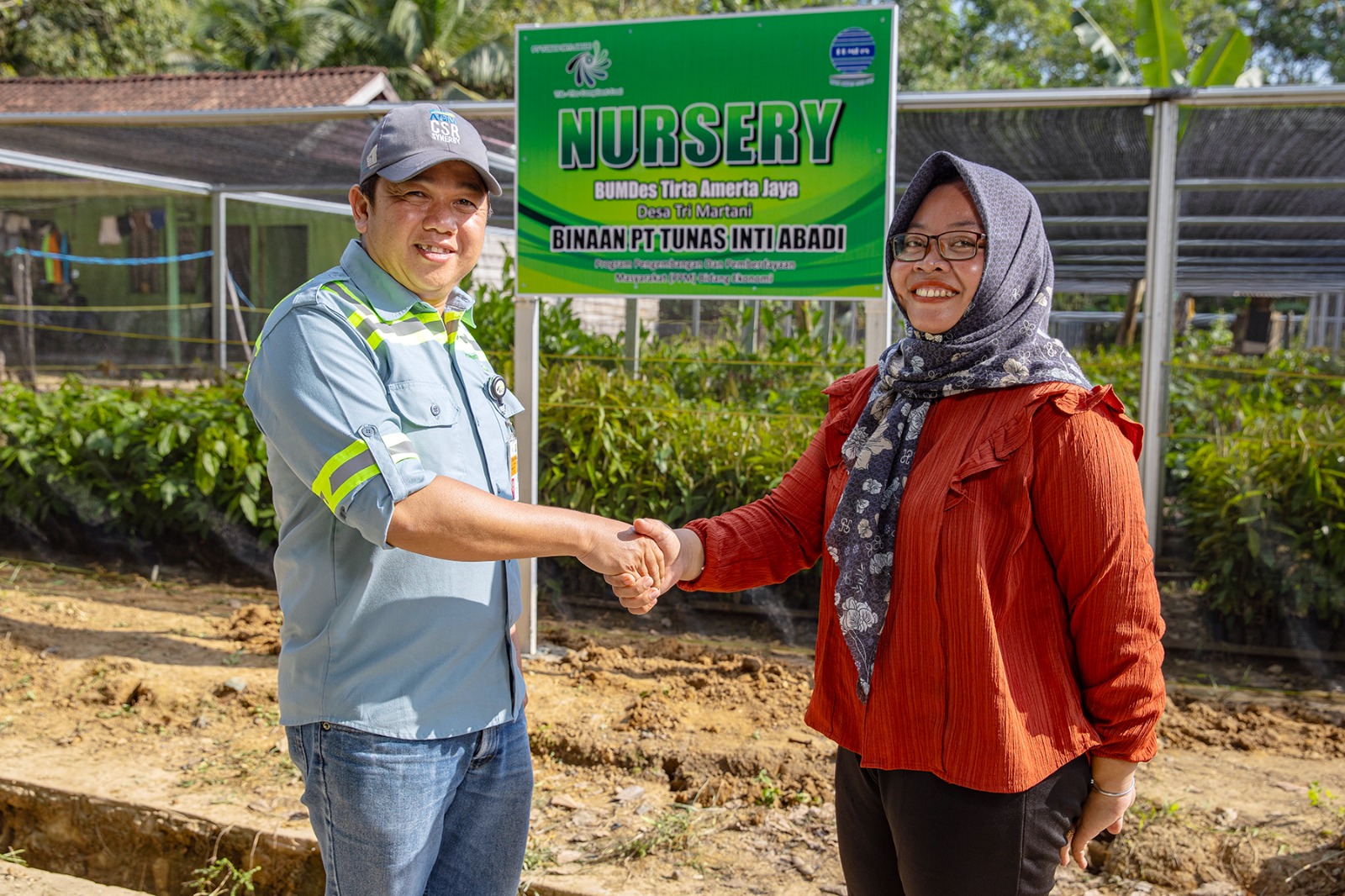
For Reswara, operational growth must align with improved community living standards and environmental protection. Therefore, CSR and ESG policies must adopt substantive approaches to foster social and economic community independence. A prime example is Reswara’s subsidiary PT Tunas Inti Abadi (TIA) in South Kalimantan’s Tanah Bumbu, which has reclaimed 901.26 hectares of land and rehabilitated 1,745.10 hectares of river basins—100% of required targets—with 563,268 trees planted in its IUP area.
In economic empowerment, Reswara runs the Aranio Coffee development programme in Tiwingan Lama Village, Banjar Regency, integrating land revitalisation with local coffee farmer capacity building. A Social Return on Investment (SROI) measurement of 3.38 reflects broader socio-economic benefits. Reswara also empowers women through local UMKMs, supporting the distribution of Sasirangan batik in Bunati Village, Sungai Loban Subdistrict.
“Reswara reaffirms its commitment to strengthening long-term impact-focused CSR and ESG programmes,” he added. “The company continues consistent environmental restoration, community empowerment based on local needs, and ensuring sustainability agendas align with business strategies.”
This approach earned Reswara the Top CSR Awards 2026 Corporate Level #4 Stars, with Iwan Hermawan receiving the Top Leader on CSR Commitment 2026 award from Top Business Magazine. “The recognition reflects our consistency in embedding CSR and ESG into long-term business strategy, focusing on community empowerment, environmental restoration, and integrated governance across all operations,” he concluded.
Government and businesses share the goal of achieving sustainable development. Representative of Kelompok Sumpal Palawija Makmur Suyanto noted farmers previously experienced reduced yields due to suboptimal harvests. PT Perusahaan Gas Negara Tbk (PGN) has launched mass circumcision programmes across operational areas and continues strengthening inclusive UMKM empowerment with social impact. Over 50 students from SD Cipicung 05 Cileungsi received interactive learning materials through the CSR EduCARE Journey programme with 1000 Guru. The Industropolis Batang Special Economic Zone has reinforced its status as a sustainable industrial zone after securing four awards at the TOP CSR Awards 2026. PT PLN Energi Primer Indonesia (PLN EPI) and YBM PLN EPI conducted social activities at YRMD Tebet Orphanage. PTPP aims to expand ESG implementation to subsidiaries, strengthen Scope 1, 2, and 3 emissions measurement, and improve energy and material efficiency in strategic projects.