
Promoting an Integrated Hajj Ecosystem, Indonesia Exports Spices and Ready-to-Eat Food
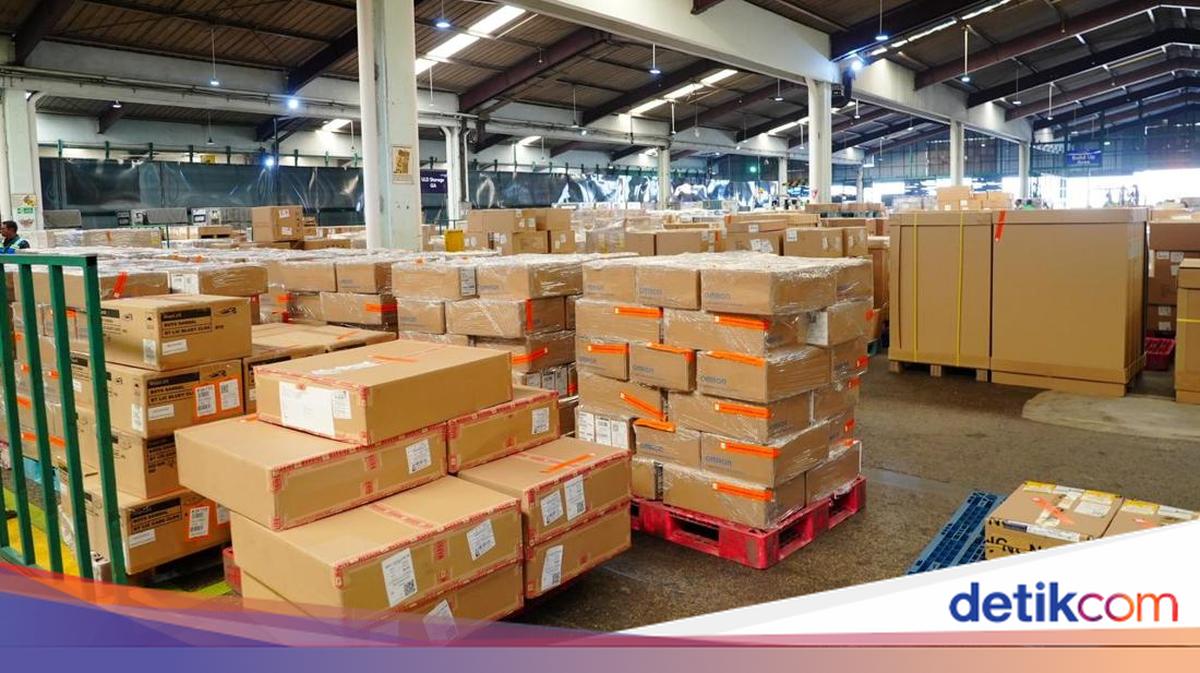
The Indonesian government has released exports of spice pastes and ready-to-eat (RTE) foods to meet the logistical needs of Indonesian Hajj pilgrims. This step is part of the government’s efforts to promote the use of national products for Indonesian Hajj pilgrims.
To support the delivery process, the government is encouraging synergy between PT Garuda Indonesia and PT Pos Indonesia to provide Hajj logistics support with efficient and competitive logistics costs.
In the initial stage, the inaugural shipment will send 100 tonnes of spice pastes and RTE foods, carried out in stages from 2-6 April 2026. Meanwhile, for the subsequent stage, 130 tonnes are scheduled within the period of 17-29 April 2026.
“This momentum of synergy between ministries/institutions and SOEs in Hajj logistics delivery starting in 2026 is just the initial step; in the future, it will be further optimised for several other collaboration potentials such as the delivery of Hajj and Umrah souvenirs as well as the delivery of food for the needs of Umrah pilgrims throughout the year, which will undoubtedly have a direct impact on curbing the widening of the national services balance deficit and economic growth,” said Deputy for Coordination of SOE Business Management and Development in the Coordinating Ministry for the Economy, Ferry Irawan, in a written statement on Thursday (2/4/2026).
He conveyed this at the Export Release Event for Spice Pastes and RTE Foods: Synergy of SOEs in Supporting the 2026 Hajj Logistics Ecosystem in Tangerang, on Thursday (2/4).
As is known, strengthening the Hajj and Umrah economic ecosystem is currently one of the government’s focuses in maintaining the balance of national foreign exchange. This aligns with the directives of President Prabowo Subianto to curb the outflow of foreign exchange (cash outflow) while increasing the inflow of foreign exchange (cash inflow).
Currently, Indonesia remains the country with the largest number of Hajj pilgrims in the world. With more than 200,000 Hajj pilgrims per year and around two million Umrah pilgrims per year, Indonesia has a large annual economic ecosystem potential, encompassing hospitality, transportation, logistics, consumption, and other supporting services.
Based on data from Indonesia’s Balance of Payments, the services balance deficit in 2025 reached USD 19.8 billion, with transportation services as the largest contributor. Part of the transportation services deficit stems from pilgrims’ expenditures utilising various logistics and consumption services from foreign providers.
The larger the portion of Hajj logistics, consumption, and transportation services that can be fulfilled by national providers, the greater the potential foreign exchange savings that can be achieved. Therefore, by utilising various existing potentials, Indonesia is expected to be able to take a strategic position in that economic value chain while ensuring that money circulation occurs domestically.
Nevertheless, to optimise that potential, synergy is needed between ministries/institutions, SOEs, and other stakeholders to build an integrated Hajj and Umrah economic ecosystem. Through this collaboration, the quality of services for pilgrims is expected to improve further, while also providing positive contributions to the national economy.
Strengthen the Hajj Ecosystem, Maximise Economic Impact
On the same occasion, the Director General of Hajj and Umrah Economic Ecosystem Development, Jaenal Effendi, stated that it is time for Ministries/Institutions and SOEs to collaborate in realising an integrated Hajj and Umrah ecosystem. In this way, the benefits will not only be felt by the pilgrims but also by Indonesian society through the multiplier effect in the integrated economic value chain.
The strengthening of the Hajj logistics ecosystem through synergy between Ministries/Institutions, SOEs, and other stakeholders is expected to continue not only to support Hajj implementation but also Umrah implementation. In this regard, catering services, transportation, trade, and other supporting services, including Hajj and Umrah souvenirs for Indonesian pilgrims, can involve Indonesian service providers.
Meanwhile, the Special Staff for Regional Development in the Coordinating Ministry for the Economy, Haryo Limanseto, stated that they will follow up on discussions regarding the strengthening of the Hajj ecosystem.
“We will follow up on the meeting between the Coordinating Minister and the Deputy Minister of Hajj so that we can jointly strengthen the Hajj ecosystem to provide more added value to the national economy, and starting now, when talking about Hajj and Umrah, we are not only talking about the ritual aspects alone,” he concluded.
For information, attendees at the event included Assistant Deputy for SOE Development in Infrastructure and Logistics in the Coordinating Ministry for the Economy, Yuli Sri Wilanti, Secretary of the Director General of Hajj and Umrah Economic Ecosystem Development, Cecep Khairul Anwar, Director of Hajj and Umrah Economic Ecosystem Partnerships, Tri Hidayatno, Representative of the Main Service Office of Customs at Soekarno-Hatta International Airport, President Director of PT Pos Indonesia (Persero), and Director of Commerce at PT Garuda Indonesia (Persero) Tbk.