
Prolonged Drought and Forest Fires: Report from the RI Operational Development Control Secretariat 1996-1998
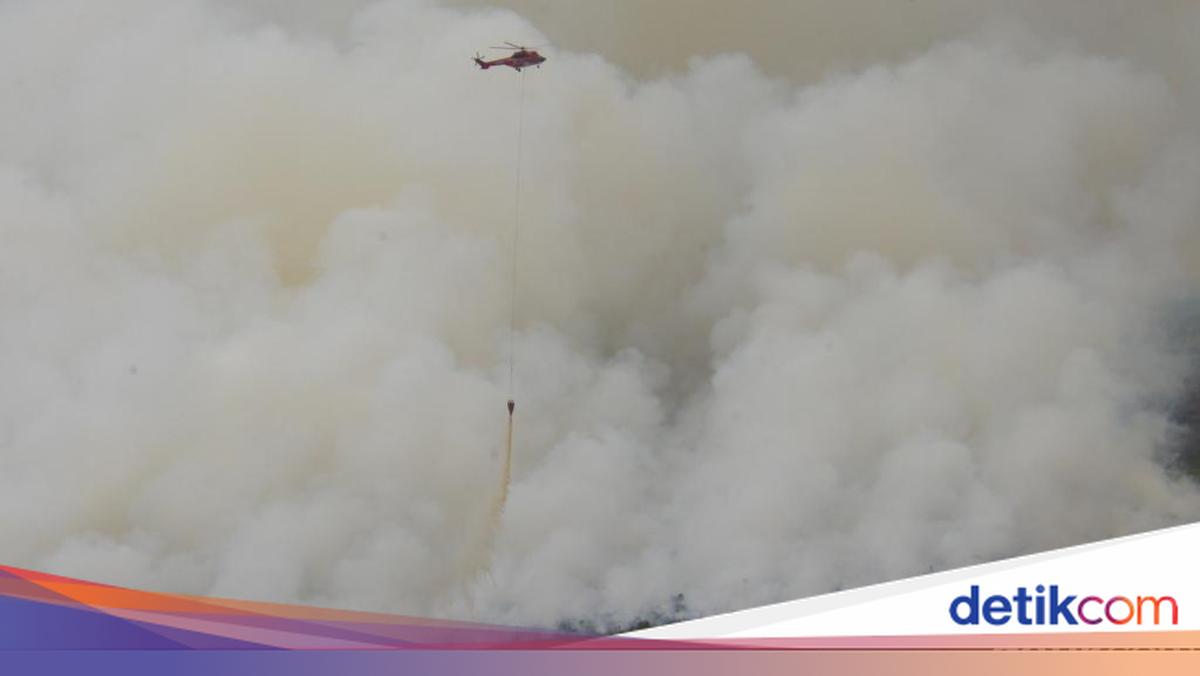
Indonesia is once again entering the annual cycle that warrants vigilance: the prolonged dry season which has the potential to trigger forest and land fires (karhutla). This phenomenon is not new; in the historical experience of national development, particularly during the 1996-1998 period, forest fires reached a large scale that impacted not only the environment but also the economy, public health, and regional diplomatic relations.
As a country with a vast tropical ecosystem, Indonesia is in a unique position that is vulnerable to fires on one side, while often becoming the object of disproportionate international pressure on the other.
Natural Phenomenon or Human Error?
Scientifically, forest fires in Indonesia are the result of a complex interaction between natural factors such as El Niño and global climate anomalies. Prolonged drought makes peatlands easily combustible. Human factors include land clearing through slash-and-burn methods, negligence in the plantation industry, and weak spatial planning oversight.
However, field experience shows that in 1997-1998, natural factors played a dominant role, with the El Niño phenomenon so strong that it caused extreme drought across Southeast Asia. In other words, not all fires can be simplified as “human error”. The approach proven effective at that time was:
Containment Strategy. Instead of extinguishing all fire points, which is technically difficult, the strategy focused on creating firebreaks, isolating vulnerable areas with priority on vital regions. This approach is realistic because it is based on resource limitations.
Local Mobilisation involving surrounding communities, cross-agency coordination (TNI-Polri, local government, forestry).
Fires are understood as a systemic phenomenon requiring quick (velox) and accurate (exactus) reading, not merely administrative reaction. Ironically, at the operational level, there were counterproductive weaknesses against the President’s policy, namely the criminalisation of many small farmers, even impoverished ones who only had their labour.
Many traditional farmers were arrested by rogue law enforcers and prosecuted as main perpetrators, even though they are part of an economic system without alternative land-clearing technology.
- Some forestry and plantation business actors became targets of extortion by rogue officials, resulting in distorted law enforcement. The focus shifted from solutions to exploiting the situation.
Geopolitical Dimension: Regional Pressure and Diplomacy
Indonesia’s forest fires at that time triggered protests from neighbouring countries, particularly Malaysia and Singapore, due to transboundary haze. There was insufficient awareness that the haze was a regional phenomenon, not purely national.
Many countries in the region have similar vulnerabilities, but what emerged was international pressure with double standards. In this context, the Indonesian President’s decision to apologise to kindred and neighbouring nations can only be understood as a diplomatic step.
Critical Reflection: State, Narrative, and Sovereignty
There are three main lessons for future generations:
Narrative is Power, so whoever controls the narrative controls global perception. Indonesia at that time tended to be reactive and did not build a counter-narrative based on scientific data.
The Danger of Simplification, which views fires merely as “human mischief” while ignoring global climate factors, thus sacrificing the weak groups of our nation.
Sovereignty in diplomacy has the potential to weaken bargaining position, thus opening room for ongoing external pressure. With indications of prolonged drought currently, Indonesia needs to avoid repeating old mistakes, so as not to fall into the same hole.
Necessary Strategic Steps
Early Warning System based on global climate
Preventive approach, not repressive
Protection of small farmers from criminalisation
Clean law enforcement free from rents, purely functioning as a tool of justice (not a tool for profit-seeking).
Data-based diplomacy and narrative sovereignty
Conclusion
Forest fires are not merely a matter of fire, but a matter of policy, justice, and sovereignty. The 1996-1998 experience provides valuable lessons that the state must not fail to distinguish between natural phenomena and human errors, between justice and opportunism, and between diplomacy and surrender.
If these lessons are ignored, every dry season will not only be an ecological threat but also a threat to the nation’s dignity.
AM Hendropriyono. Secretary of Operational Development Control RI (1996-1998).