
Profiting from War
By Ahmadie Thaha, Columnist
When war erupts in the Middle East, people typically think immediately of the weapons industry. Our imaginations fill with fighter jets, hypersonic missiles, military contractors, and arms companies whose share prices skyrocket.
Meanwhile, Donald Trump has claimed the United States has won the war — perhaps intending to end it swiftly. However, Iran wishes the conflict to continue until Israel disappears from the face of the earth.
Unlike most observers, Robert Kiyosaki views war from a somewhat different angle, even a rather cheeky one, as his thinking seemingly plays atop the suffering caused by conflict. He is not particularly interested in who fired the first missile. Instead, he focuses on one simple question: when the smoke of war is still billowing or perhaps already cleared, who will become wealthier?
This is Kiyosaki’s long-standing habit. As author of Rich Dad Poor Dad, a phenomenal book on financial freedom and passive investing, he always views major global events not as political drama but as the flow of money. In his books, he frequently uses the terms “win or lose”, including regarding this war. Yet his actual meaning is not winning the war, but rather “profiting” from it.
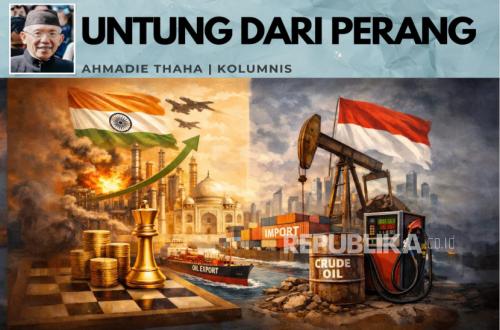
According to his investor’s logic, war is not merely a human tragedy — though it certainly remains one — but also an economic event that redirects the flow of global capital. In the latest conflict surrounding Iran, Kiyosaki identifies nations with the potential to become economic “winners” or those who profit from war. One notably interesting candidate is India.
Why India? To understand Kiyosaki’s logic, we must examine three geopolitical economic engines that people often overlook: energy, logistics, and economic diplomacy.