
Profile of Sultan Subang, BEBS Stock Price Manipulation Suspect Causes Rp14.5 Trillion Loss
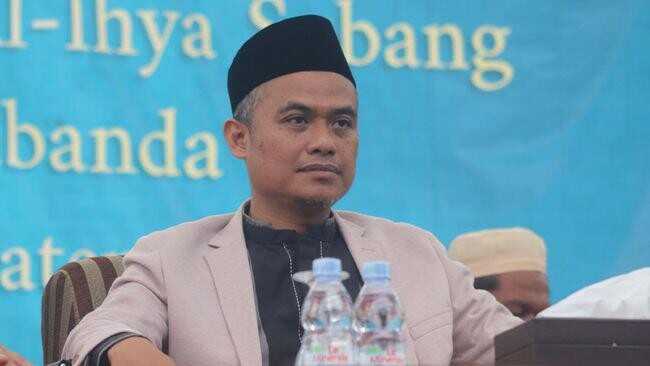
Jakarta, CNBC Indonesia - The ultimate beneficiary owner or controller of the construction issuer Berkah Beton Sadaya (BEBS), Asep Sulaeman Sabanda, has been named a suspect in a BEBS stock price manipulation case. The figure widely known as the Sultan of Subang has become a suspect together with one of the directors of Mirae Asset Sekuritas Indonesia. The alleged capital market crime occurred between 2020 and 2022 and is suspected to involve Asep as the beneficial owner of PT BEBS and MWK as former Director of Investment Banking Mirae, as well as the Mirae group, with modus operandi including insider trading, IPO manipulation, and fictitious transactions. The series of transactions is believed to have caused BEBS share prices on the regular market to rise by around 7,150 percent. The investigator for the Financial Services Sector Investigation Team, Daniel Bolly Hyronimus Tifaona, disclosed that the total profit from these illegal activities is estimated at Rp 14.5 trillion. “That involved about 2 billion shares at a share price of around Rp 7,000 or so. The total is Rp14 - 14.5 trillion; we have frozen it. Trading is not allowed in the meantime,” Bolly said at a press conference, Wednesday (4/3/2026). For information, PT Berkah Beton Sadaya Tbk (BEBS) controlled by Asep Sulaeman Sabanda (ASS) officially listed on the Indonesia Stock Exchange (BEI) on 10 March 2021 by offering 2 billion shares at Rp 100 per share, raising Rp 200 billion in the IPO. PT. Mirae Asset Sekuritas Indonesia (MASI) was the sole underwriter for this IPO. Not long after the IPO, BEBS shares surged significantly, prompting the company to approve a 1:5 stock split. At the peak, BEBS shares touched Rp 1,490 per share, or equivalent to Rp 7,450 per share before the stock split. In other words, the total IPO shares (2 billion shares pre-split/10 billion shares post-split) held at the peak price (Rp 7,450 per share before the stock split/Rp1,490 per share after the stock split) would yield a total profit of up to Rp 14.7 trillion after deducting the initial IPO capital of Rp 200 billion. Profile of Sultan Subang. Before the topic gained national prominence, Asep Sulaeman was known to have started his business in poultry farming in his village. His business journey began during the monetary crisis that hit Indonesia and parts of Asia. The 1997–1998 financial crisis left Asep Sulaiman Subanda distressed. The slow pace of the economy affected his family, who bred chickens. As a result, to ease the burden, he left the Sekolah Tinggi Ilmu Administrasi Subang and began to build his business. For Asep, trading was not new because while studying at Pondok Pesantren Gontor he often sold goods on the pavement in Malioboro. He also always helped his father sell chickens, so his experience in business was already relatively independent. Like his father, Shobur Tadjudin, he also was involved in chicken farming. At 25, he rented his parents’ land to raise 10,000 chickens. The birds were raised and sold by himself. He earned a profit of Rp 10 million. This success led him to expand his chicken sheds. He later housed 60,000 chickens. Unlike before, this business was not prosperous. “Asep even lost Rp 70 million because many chickens died from illness,” wrote Akses magazine (July 2007). To cover the losses and restart the business, he began borrowing money. Due to his father’s prominent name, he found it easy to obtain hundreds of millions in loans. From here he bought 80,000 chickens. Unfortunately, the poultry business collapsed. The debt then mounted to Rp 180 million. “From this he was nicknamed ‘Si Banyak Utang’ (The One with Many Debts),” wrote Zuhud Rozaki in The Big 4 In Live (2013). At this moment Asep despaired. He could not continue to run the business, and paying debts was impossible. “That debt is not much. Compared to your future, it is nothing. Do not sell your future. Even if all your father’s wealth is gone, it would still mean nothing compared to your future hope,” his father said, quoted by Akses magazine (July 2007). Thanks to his father’s words, he began paying off his debts. In 2001 he stopped working alone and chose to build partnerships. A total of 600 farmers spread across Subang, Purwakarta, Bandung, Indramayu, Sumedang, Bandung, Garut, and Malang. These farmers then managed the poultry farming until it was ready for the market. For five years there were 2.2 million broiler chickens marketed by Asep. He earned Rp 6 thousand for each chicken. The rest went to the farmers. This success enabled him to settle debts and build the Santika Group, a business network that supplied seeds, feed, medicines and technical guidance, including marketing. By 2007, Asep owned 32 hectares of land across seven locations, all used for poultry farming capable of housing millions of chickens. It is said that this ownership was the second largest in Southeast Asia after Charoeon’s in Thailand. From selling chickens, Asep earned the nickname Sultan Subang due to his wealth. Now, he has not only traded chickens but has expanded into new sectors. Asep is the President Director of PT Sumber Energi Alam Mineral (SEAM GROUP). According to the company’s official site, SEAM Group is a conglomerate spanning four main sectors: infrastructure, poultry farming, property and integrated energy. So Leader of BEBS. Asep’s name suddenly gained traction after appearing at KSEI and it was learned that he had been accumulating BEBS shares that had risen significantly from the IPO price. As of 14 January 2022, Asep is known to have amassed 481.65 million shares.