
Profile of Mohammad Ghalibaf, Iran's Parliament Speaker Rumoured to be Negotiating with the US
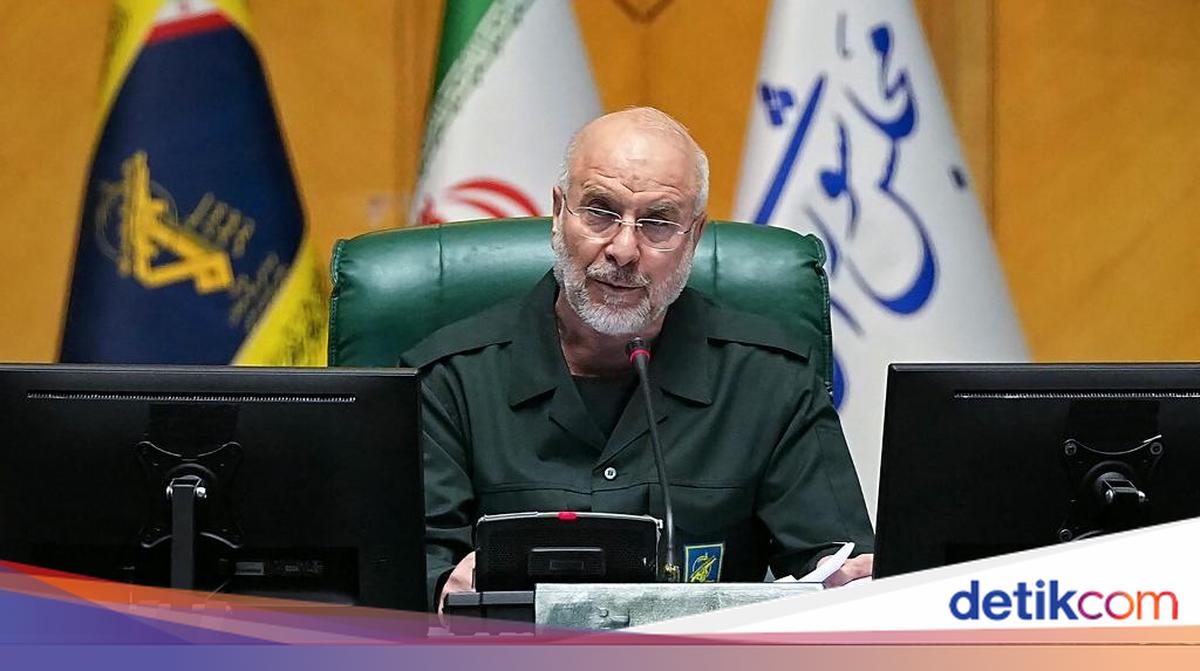
Rumours regarding communications between Iran and the United States have emerged amid the intensifying conflict in the Middle East. The name of Mohammad Bagher Ghalibaf has been implicated following reports naming him as a key figure allegedly serving as an indirect link to Washington.
Al Jazeera reports that several media outlets in the United States and Israel claim that envoys from President Donald Trump, namely Steve Witkoff and Jared Kushner, have established contact with Ghalibaf. Indeed, on Monday, 17 March 2026, in Washington DC, Trump stated that a “very good and productive conversation” had taken place regarding efforts to resolve the Middle East conflict, and he ordered a five-day delay on attacks against Iranian facilities.
If true, such communications would represent a major step, given the openly hostile relations between Iran and the US to date. Moreover, the ongoing conflict has drawn in global interests, particularly concerning energy routes and stability in the Gulf region. However, the claims were immediately denied by Iran. The Iranian Foreign Ministry described the statement as an attempt to calm volatility in the energy markets.
Ghalibaf himself, via his official X account @mb_ghalibaf, affirmed: “No negotiations have been conducted with the United States, and fake news is being used to manipulate financial and oil markets and to escape the deadlock faced by the US and Israel,” he stated on Monday, 17 March 2026.
This statement illustrates that Iran is not only denying the rumours but also viewing them as part of an information strategy. In Iran’s political system, negotiations with the United States are not a personal decision but must receive approval from the supreme leader and the National Security Council. Thus, structurally, it is unlikely that official talks could occur without coordination at the highest levels of the state.
So, who exactly is Mohammad Bagher Ghalibaf? Read about his profile in the description below!
Negotiation Issue Amid the Heated Iran-US Situation
The issue of negotiations between Ghalibaf and Washington arose amid the escalation of Iran-US relations. On Saturday, 15 March 2026, Donald Trump issued a 48-hour ultimatum to Iran to reopen shipping routes in the Strait of Hormuz, one of the world’s most vital energy pathways, or face attacks on its electricity facilities.
This move immediately heightened global tensions. Iran responded with threats of retaliation against energy and water facilities in Israel and the Gulf region, potentially triggering a broader energy crisis.
In such a situation, Ghalibaf spoke out strongly, even warning parties perceived to support the US, including global financial sectors.
Two days later, on Monday, 17 March 2026, Trump again claimed that communications were underway. He even told reporters that his side was “dealing with a very respected figure—not the supreme leader,” without naming names. Media outlets such as Axios and Politico subsequently linked the statement to Ghalibaf.
However, the claims were once more denied by Tehran. This situation reveals a narrative war between Washington and Iran, where one side asserts the existence of communication channels, while the other insists there are no negotiations at all.
Ghalibaf’s Career Path: From the Battlefield to the Centre of Power
Mohammad Bagher Ghalibaf is a figure shaped by a strong combination of military and political experience. He was born on 23 August 1961 in Torqabeh, near Mashhad, a region that played an important role in the 1979 Iranian Revolution.
When the Iran-Iraq War broke out in 1980, he joined the Islamic Revolutionary Guard Corps (IRGC), which was then still a revolutionary militia. He quickly rose to commander in 1982, making him part of Iran’s early generation of military elites.
This experience not only shaped his career but also built a strong power network, including his closeness to Ali Khamenei.
After the war, he held various important positions, such as:
Commander of the IRGC Air Force (1997-2000)
Head of the National Police (2000-2005)
Mayor of Tehran (2005-2017)
As mayor, he was known for promoting the city’s modernisation, building infrastructure, and expanding public spaces. However, his top-down leadership style also reflected his military background.
In 2020, he became Speaker of the Iranian Parliament, replacing Ali Larijani, a strategic position that directly involves him in national decision-making, including security and economic issues. According to information from The Hill, following Larijani’s departure, Ghalibaf took over responsibilities as a strategic decision-maker.
Ghalibaf’s name has also been recorded as participating in several presidential contests since 2005, according to The Jerusalem Post. However, the results were nil. Ghalibaf’s best “achievement” was second place in the 2013 election.
According to Encyclopedia Britannica, this combination of military and political roles makes Ghalibaf one of the most influential figures in Iran, especially amid the leadership vacuum due to recent conflicts.
Ghalibaf’s Controversies and Anti-US Rhetoric
Ghalibaf’s career is also overshadowed by a long history of controversies. He is known to have been involved in handling student demonstrations in 1999 and 2003, which became key moments in Iran’s history of political repression.
In several statements, he even acknowledged his involvement in crackdowns on demonstrators, though on other occasions he claimed to have rejected certain orders, such as the use of live ammunition.
Additionally, reports from United Against Nuclear Iran highlight allegations of corruption involving him, particularly during his tenure as Mayor of Tehran. These cases include the misuse of public assets to controversial property schemes.
Amid the 2026 conflict, Ghalibaf has emerged as one of the