
Profile of Ayatollah Ali Khamenei: Traces of Power and the End of Iran's Supreme Leader's Era
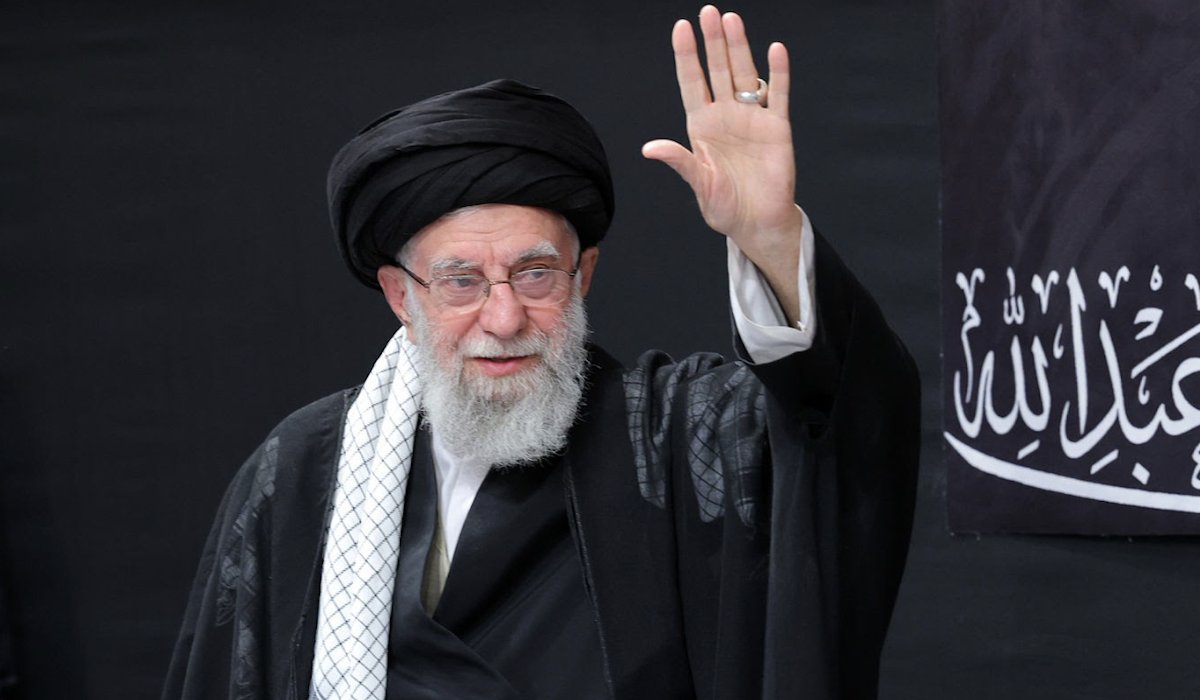
The death of Iran’s Supreme Leader, Ayatollah Ali Khamenei, in a combined attack by the United States and Israel on Saturday, 28 February 2026, represents the most dramatic turning point for the Islamic Republic in the past four decades. The 86-year-old cleric was not merely a head of state, but the singular symbol determining Iran’s ideological direction, military strategy, and foreign policy since 1989.
Khamenei’s death has opened a Pandora’s box regarding the future of succession in Tehran, amid regional conflict escalation reaching a critical point.
Ayatollah Ali Khamenei was born on 19 April 1939 in Mashhad. He grew up in a modest religious environment. His theological education began in his birthplace before he moved to Qom, the centre of Shia learning, where he encountered Ayatollah Ruhollah Khomeini.
During the 1960s, Khamenei became a leading activist in the movement opposing Shah Mohammad Reza Pahlavi. His courage led to his repeated imprisonment by SAVAK, the Shah regime’s feared secret police. The experience of exile and torture during the struggle shaped his later hardline stance towards Western influence.
Following the 1979 Islamic Revolution, Khamenei’s political career advanced rapidly. He served as President of Iran for two terms (1981–1989) during the Iran-Iraq War. During this period, he survived an assassination attempt that left his right hand permanently disabled, a wound he often referred to as a badge of honour for the revolution.
The turning point in his power came in June 1989. Following Khomeini’s death, the Assembly of Experts appointed Khamenei as Supreme Leader (Rahbar). Through constitutional revision, his position was strengthened with absolute authority surpassing both the president and parliament, making him the controller of the Islamic Revolutionary Guard Corps (IRGC) and all judicial institutions.
Under Iran’s constitution, if the Supreme Leader dies, the Assembly of Experts must immediately convene to elect a successor who will hold power for life.
Under his command, Iran developed massive regional influence through the strategy of the Axis of Resistance. Khamenei successfully built a transnational alliance network encompassing Hezbollah in Lebanon, Hamas in Palestine, militias in Iraq, and Houthi groups in Yemen.
On the nuclear issue, Khamenei displayed a fluctuating but principled stance. Although he approved the JCPOA agreement in 2015, he hardened Iran’s position after the United States unilaterally withdrew in 2018. Until his final days, he maintained that Iran’s nuclear programme was a sovereign right that could not be compromised by Western economic sanctions pressure.
Though politically robust, Khamenei’s era was not free from internal turbulence. Iran faced a series of major protests, ranging from the 2009 Green Movement to mass action following Mahsa Amini’s death in 2022. Entering late 2025, economic pressure from sanctions and inflation sparked a new, broader wave of demonstrations. Security authorities reported thousands of deaths in efforts to suppress anti-government actions, indicating an ever-widening gap between Iran’s younger generation and the conservative values maintained by Khamenei’s system.
Khamenei’s death in a sophisticated military operation claimed by Donald Trump marks the end of a charismatic clerical leadership that had lasted more than three decades. The world now awaits how the Assembly of Experts will determine his successor amid threats of further strikes and uncertainty over domestic stability.
Khamenei’s legacy is a nation with wide military influence in the Middle East, yet also economically isolated and socially divided. A new chapter in Iranian politics now begins without the figure who has hitherto served as the sole compass for the Islamic Republic.