
Profile of Ali Larijani: The Figure Behind Iran's Diplomatic Rebuttals against the United States
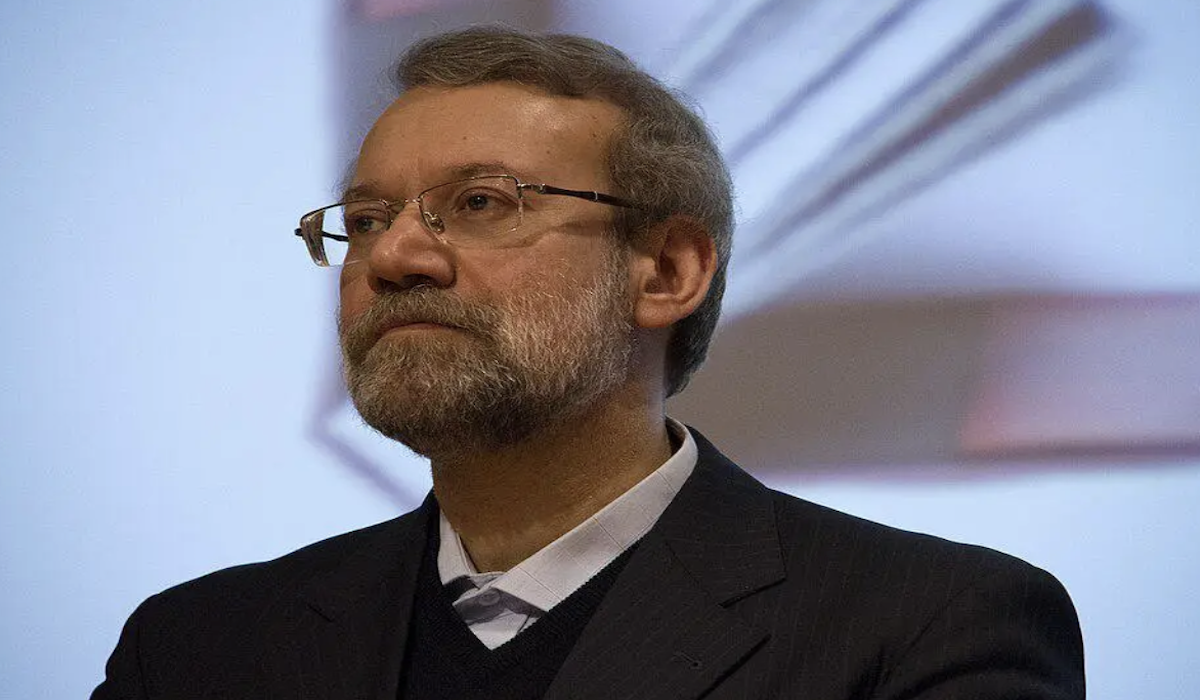
A brutal and devastating attack by Israel and the United States on Iran on Saturday, 28 February, shocked the world. Ali Larijani suddenly became the focus of global attention in early March 2026. As Secretary of Iran’s Supreme National Security Council (SNSC), he now stands at the forefront of confronting military escalation with the United States and Israel.
In the midst of reports of the death of Iran’s Supreme Leader, Ayatollah Ali Khamenei, from airstrikes, Larijani emerged as a figure who de facto controls Tehran’s national stability. Known as a brilliant yet cold diplomat, Larijani now holds a crucial role in determining whether the Middle East will plunge into open warfare or remain within a corridor of controlled tensions.
Ali Ardashir Larijani was born on 3 June 1958 in Najaf, Iraq. He does not come from an ordinary family; his father was Ayatollah Mirza Hashem Amoli, a great Shia scholar. His family’s strong roots in the religious world of Qom gave Larijani legitimacy rarely possessed by other secular politicians in Iran.
His education reflected a unique combination of science and philosophy. He holds a bachelor’s degree in Computer Science and Mathematics from Sharif University of Technology, but later pursued Western philosophy, earning a PhD from the University of Tehran. His expertise in philosophy, particularly the thought of Immanuel Kant, is often reflected in his methodical and calculated diplomatic style.
Before becoming known as the face of Iranian diplomacy, Larijani began his career in the Islamic Revolutionary Guard Corps (IRGC). This military experience gave him deep connections with Iran’s top generals, an extremely valuable asset in his current position.
Larijani became known to the international community when he served as the chief nuclear negotiator in the 2000s. He once made a famous statement criticising Western offers as an attempt to “trade pearls for bonbons”.
Although often regarded as a pragmatic conservative figure, Larijani’s stance hardened significantly in 2026. The failure of past diplomacy and the return of Donald Trump to the US presidency with an “Israel First” policy led Larijani to close the door on dialogue firmly. For Larijani, Iran’s nuclear technology sovereignty is a bottom line that cannot be negotiated.
As of March 2026, Larijani’s role went beyond that of a mere security adviser. Following massive airstrikes that shook Tehran in late February, he announced the establishment of a transitional leadership mechanism. In his statement on the X platform, he affirmed that Iran would not negotiate under military pressure.
His sharp criticism of Donald Trump, whom he accused of abandoning the “America First” slogan for “Israel First” interests, shows Iran’s total shift towards an active defence strategy. Larijani is now coordinating retaliatory drone and missile strikes against US bases in the Gulf as a response to the death of senior Tehran officials.
Larijani currently serves as Secretary of Iran’s Supreme National Security Council (SNSC) since August 2025 and is a member of the Expediency Council. Although he leads the transitional council, constitutionally Larijani cannot become Supreme Leader (Rahbar) because he is not an Ayatollah or high-ranking cleric.
Larijani believes diplomacy is impossible whilst the US conducts direct military attacks on Iranian territory and considers the current US administration as prioritising Israeli interests.
Geopolitical tensions in the Middle East, particularly those involving Iran, have the potential to trigger global economic repercussions. Pertamina is undertaking mitigation measures to maintain the stability of national energy supplies amid evolving dynamics in the Middle East region, namely the war between the US and Israel against Iran.
Member of Commission I of the Indonesian Parliament, Oleh Soleh, has urged the Indonesian Government to take a brave stance on the international stage by voicing strong sanctions against the US and Israel. Constitutional law expert Radian Syam views the Israel, US-Iran war situation as a test of whether the world still stands on the supremacy of law or is shifting towards the dominance of force.