
Professor Tholabi: Maintain Public Clarity, Zakat Remains a Pillar of Islam
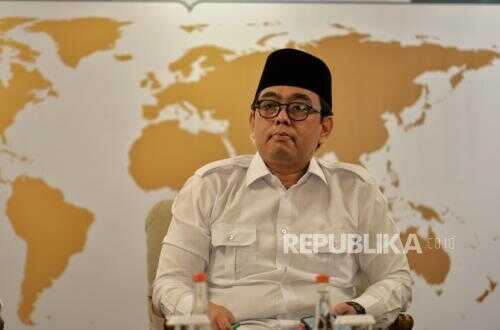
Jakarta — Ahmad Tholabi Kharlie, Professor and Vice Rector of UIN Syarif Hidayatullah Jakarta, emphasised that zakat remains an Islamic obligation whose status has not changed, amid controversy surrounding statements made by the Minister of Religion. He cautioned the public to maintain clarity in their thinking and avoid partial interpretations of statements.
He made these remarks when asked by media for his perspective on developments ahead of Ramadan. According to him, ongoing debate should be addressed rationally rather than emotionally, as the highly dynamic public sphere often accelerates the spread of opinion without adequate verification.
“Zakat is an individual obligation that is categorical in nature. Normatively, there is no room to change or relativise it within Islamic teaching,” he stated.
Professor Tholabi explained that the Quran explicitly and repeatedly commands the payment of zakat alongside prayer. This positioning demonstrates that zakat is not merely a social instrument, but an integral part of the structure of Islamic teaching that unites spiritual and social dimensions.
According to him, the clarification provided by the Minister of Religion actually reinforces that there is no shift away from zakat as a pillar of Islam. Therefore, the public should read the issue comprehensively and avoid building assumptions that exceed the substance of the statement.
He observed that the substance of the debate actually concerns strengthening the governance of Islamic philanthropy more broadly and in an integrated manner. In the context of developing Islamic economics, optimising waqf, infaq, and sadaqah is regarded as a strategic step to increase the impact of social welfare.
“The optimisation of waqf and other social instruments should be read as strengthening the Islamic economic ecosystem, not as a reduction in the role of zakat,” he said.
From the perspective of maqāṣid al-sharī’ah (the objectives of Islamic law), he continued, the integration of various philanthropic instruments is a strategy for expanding public welfare, maintaining balanced wealth distribution, and reducing economic inequality within society.
As Vice Rector of UIN Syarif Hidayatullah Jakarta, Professor Tholabi also emphasised the importance of maintaining public ethics during Ramadan. “Ramadan is a moment to strengthen solidarity and social concern, not to escalate controversy,” he said.
He called on the public to uphold attitudes of good faith, mutual verification, and maturity in addressing differing viewpoints in the public sphere.
“What must be preserved is social peace and unity of the Muslim community. Criticism is certainly important, but it must be based on complete information and conveyed proportionally,” he concluded.