
Professor Is Not "Guru Besar"
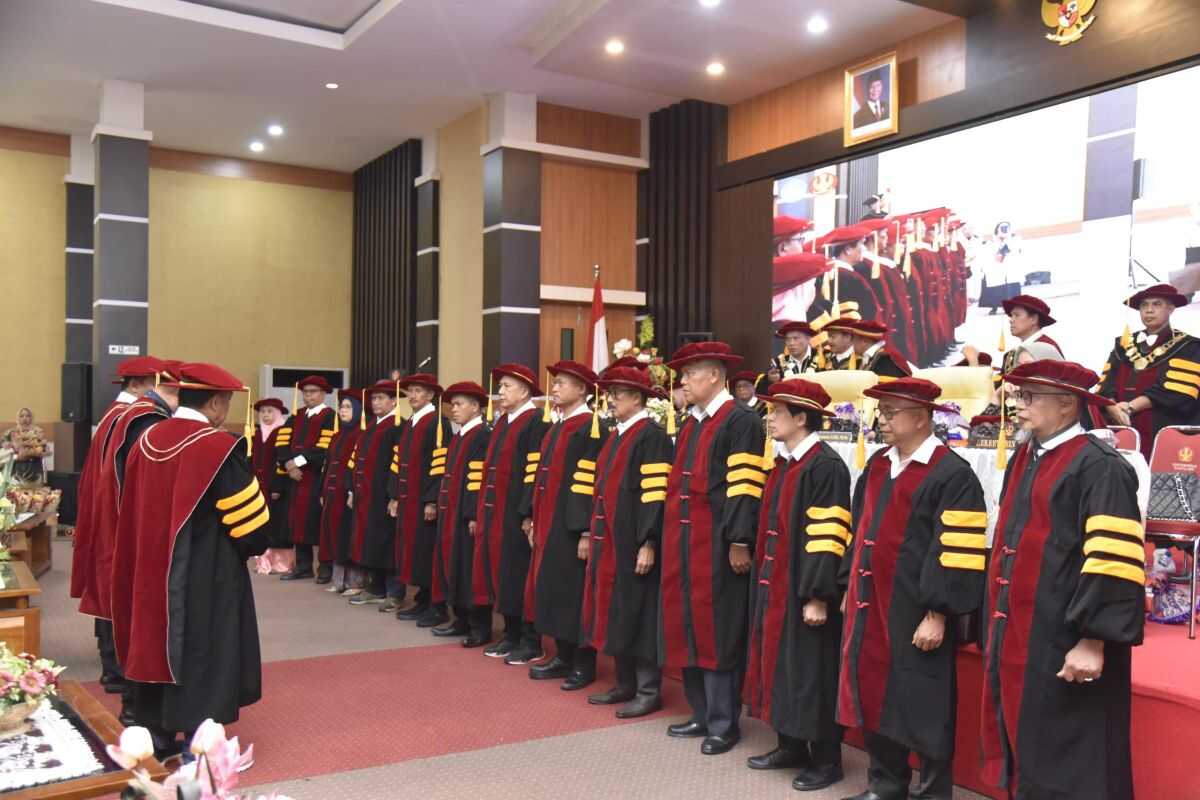
Jakarta (ANTARA) - The conferral of honorary professorships has long generated more controversy among the public than acceptance or recognition of their appropriateness.
A fundamental error we seldom dissect is the equating of “professor” with “guru besar” (great teacher). Yet ontologically and semantically, professor is not identical to guru besar.
Language constructs reality; it does not merely describe it. When we chose the term “guru besar” as the translation for the highest academic functional rank, we were constructing a sacred reality. Moreover, the consequences are profoundly serious — they can damage, even destroy, academic integrity.
The word “guru” in Indonesian culture carries broad and deep moral weight — one who is heeded and emulated. The word “guru” in Indonesian also has deeply rooted Sanskrit origins, meaning “heavy, venerable, weighty in knowledge and wisdom,” and is even considered a representation of the Divine, capable of dispelling darkness (gu) from one’s students (ru).
Meanwhile, the attribute “besar” (great) further reinforces the weight of spirituality, exemplarity, and wisdom that clearly transcends administrative-technical-structural dimensions. Indeed, in older Malay/Indonesian usage, something of high standing was often called “besar” (for instance, “tuan besar,” meaning great lord).
When the professorship — which is fundamentally an accumulation of research achievements and academic teaching in classrooms and laboratories (as reflected in its credit point requirements) — is packaged with the label “guru besar” (a moral-cultural status), distortion occurs.
People no longer focus their efforts on genuine expertise but instead chase social prestige and mystique. This is what drives the blind pursuit of this academic rank, even to the point of breaching ethical boundaries, because what is being hunted is the title of “a teacher revered by society,” not intellectual responsibility.
Historically, this equivalence is rooted in the post-independence effort to indigenise colonial terminology. During the Dutch East Indies era, the highest university position was called “hoogleraar” (literally “high teacher,” from hoog = high, leraar = teacher). Its Indonesian equivalent became “guru besar.” Unfortunately, this choice overlooked the fact that in its country of origin, hoogleraar was a position with research-based duties (Tauchid Komara Yuda, 2025), not a lifelong title of mystical nobility. When identified with “professor,” the term underwent hyper-sacralisation.
We have become trapped in a linguistic romanticism that is no longer relevant to the times. Today there are research professors at the National Research and Innovation Agency (BRIN) who formally have no obligation to teach students on campus, or honorary professors who are often appointed for contributions deemed to lie outside the academic world.
If they do not teach, then semantically, where does the “guru” (teacher) element reside? Is it not absurd and an affront to our own common sense when we utter the term “honorary guru besar”? Attaching the designation “guru besar” in this context is not merely a functional misnomer — it also proves that the label has shifted into nothing more than a social trophy, no longer an educational mandate.