
Production Cut: Indonesia Secures 150 Million Tonnes of Coal for Domestic Supply
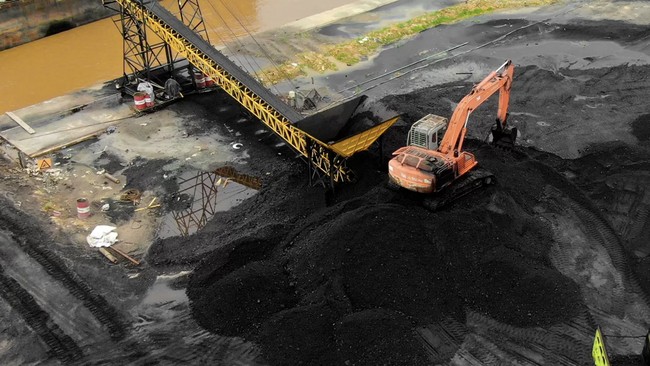
Jakarta — Indonesia’s Ministry of Energy and Mineral Resources (ESDM) is ensuring that coal supplies for domestic needs remain prioritised, even as the government evaluates production levels in its 2026 Work Plan and Budget (RKAB) at approximately 600 million tonnes.
The Director General of Minerals and Coal (Minerba) at the ESDM Ministry, Tri Winarno, stated that his office has secured approximately 150 million tonnes of coal for domestic requirements through the Domestic Market Obligation (DMO) scheme. This figure corresponds to the requirement for a 30% domestic supply obligation of total coal production.
“We’re securing 150 million tonnes first. Later, for smelters, that is not recognised as DMO. Hopefully, if there’s any shortage later, we can increase it,” Tri said at the ESDM Ministry on Tuesday (10 March 2026).
The DMO allocation is primarily designated for strategic sectors such as power generation and the fertiliser industry, which are heavily dependent on domestic coal supplies.
Previously, the Indonesian Association of Private Power Producers (APLSI) commented on the current state of coal supply for Coal-Fired Power Plants (PLTU). Essentially, there has been a reduction in supply from mining operators this year.
Ferry Dwi Nugraha, Deputy Chair of the APLSI’s Primary Energy Value Chain Committee, stated that coal supply reductions from suppliers occurred due to unclear production targets in the 2026 Work Plan and Budget (RKAB).
“Two months ago there was disruption, but it’s becoming normal now because we’ve assigned certain coal producers,” Ferry explained at the CNBC Indonesia Mining Forum, “How is Indonesia’s Mining Industry Doing?”, on Friday (6 March 2026).
Should coal supplies continue to face interruptions, Ferry warned that power plants could experience shutdowns, potentially cutting capacity by half or, in the worst case, leading to blackouts.
“That’s probably still far off; PLN will consider it first before any blackouts. PLN could activate fuel oil generators, possibly using petroleum, but not for long because coal power generation costs Rp1,200/kWh while fuel oil is Rp5,000/kWh,” Ferry explained.