
Pro-Israel Lobby in America Begins to Face Resistance, Tired of Being Exploited?
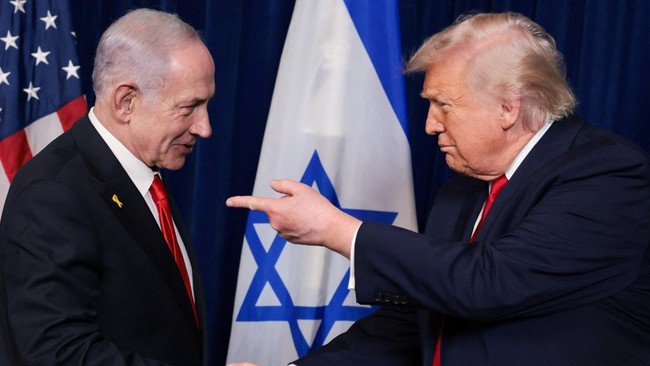
Public support in the United States (US) for Israel is now weakening, with increasing criticism from Democrats and even some Republicans, as well as concerns that the Iran conflict benefits Israel more than America.
Nearly two decades ago, John Mearsheimer and Stephen Walt published the book “The Israel Lobby and US Foreign Policy”.
They argued that a loose coalition of pro-Israel advocacy groups has a significant influence on American policy debates, sometimes steering decision-makers towards actions like support for the Iraq War that harm America.
The backlash at the time was swift, with critics calling the work weak, naive, and even antisemitic. However, now as America fights alongside Israel against Iran, views on US-Israel relations are changing, and the book is selling well again.
The organisation currently receiving the most attention, as before, is the American Israel Public Affairs Committee (AIPAC), the largest pro-Israel advocacy group in America.
For about 70 years, this organisation has worked to strengthen ties between the two countries. Like other domestic lobbying groups, AIPAC does not accept funds from foreign governments, including Israel.
Instead, it relies on donations from American citizens, many from the Jewish community. The organisation is highly effective, routinely attracting senior figures from both the Democratic and Republican parties to its conferences. However, as American public opinion shifts, AIPAC’s strategies are changing, with risks that could harm their own goals.
American support for Israel has long been a bipartisan consensus. But as Israel’s government has moved further to the right under Benjamin Netanyahu, the Democratic Party has become increasingly critical, with the trend accelerating since the Gaza war.
Recently, the Republican Party has also begun to reassess the relationship, with some viewing it as misaligned with “America First” principles. The percentage of Americans viewing Israel positively has declined in recent years, reaching its lowest point in nearly 40 years in February, according to Gallup.
The war with Iran is not helping. Earlier this month, Joe Kent resigned as head of the National Counterterrorism Centre, claiming that Donald Trump had been tricked into starting the war by “Israel and its powerful lobby in America”.
These concerns are also felt by the public. The latest Economist/YouGov survey shows that a majority of Americans believe Israel will benefit from this war, while America will be harmed. One in three respondents stated that the pro-Israel lobby has too much influence over the government.
Meanwhile, AIPAC is changing its approach. Concerned about the election of several harsh critics of Israel in 2018, the organisation has become more aggressive in electoral politics, not just influencing how members of Congress vote, but also who gets elected.
In 2022, they launched the United Democracy Project, a super PAC that can raise unlimited funds. After spending only $150,000 in the previous decade, they poured $100 million into the 2022 and 2024 election cycles.
This year alone, AIPAC has spent more than US$30 million to defeat “opponents” in Democratic primaries, focusing on House races in New Jersey, North Carolina, and Illinois.
However, as support for Israel has become a contentious issue, they have formed intermediary groups with neutral names like “Elect Chicago Women”. Their advertisements do not mention Israel. In New Jersey, for example, such groups attacked Tom Malinowski for allegedly voting “with Trump and the Republican Party to fund ICE”.
These new tactics have produced mixed results. In Illinois, only two of four AIPAC-backed candidates won. A candidate they supported in North Carolina, Valerie Foushee, rejected AIPAC’s support during the campaign. And although Malinowski lost in New Jersey, a pro-Palestinian activist won the seat.
Malinowski himself was considered relatively moderate on Israel issues. “They are absolutist and it’s becoming a boomerang,” said Matt Bennett from the Third Way think tank. Senior Democratic figures are beginning to reject AIPAC funds. However, this does not seem to bother the organisation.
In a social media post celebrating victories in Illinois, they stated that “supporting Israel is good policy and good politics”. If that is the case, said Lara Friedman from another think tank, they should not hesitate to openly state that position to voters.
AIPAC states that “like many other groups”, they will “continue to use various tools to engage in this election”. However, using intermediary groups places them alongside industries like oil, tobacco, and crypto that employ similar tactics. An additional risk for AIPAC is that this approach could reinforce antisemitic stereotypes about hidden influence in policymaking at a time when such views are gaining traction.
US-Israel Relations Growing Stronger, Increasingly Terrifying
The increasingly close US-Israel relationship is also seen as increasingly aggressive.
Since 1967, when Israel expanded its territory in the Middle East, Washington has viewed Tel Aviv as an important partner in countering global influence, especially during the Cold War. Since then, military cooperation between the two countries has continued to grow, both through open and covert operations, becoming one of the most solid alliances in modern geopolitics.
In recent years, US support has remained strong, even increasing. Under the leadership of Joe Biden and Donald Trump, Wa