
Private Farizal Romadhon and Brutality Against Peacekeepers
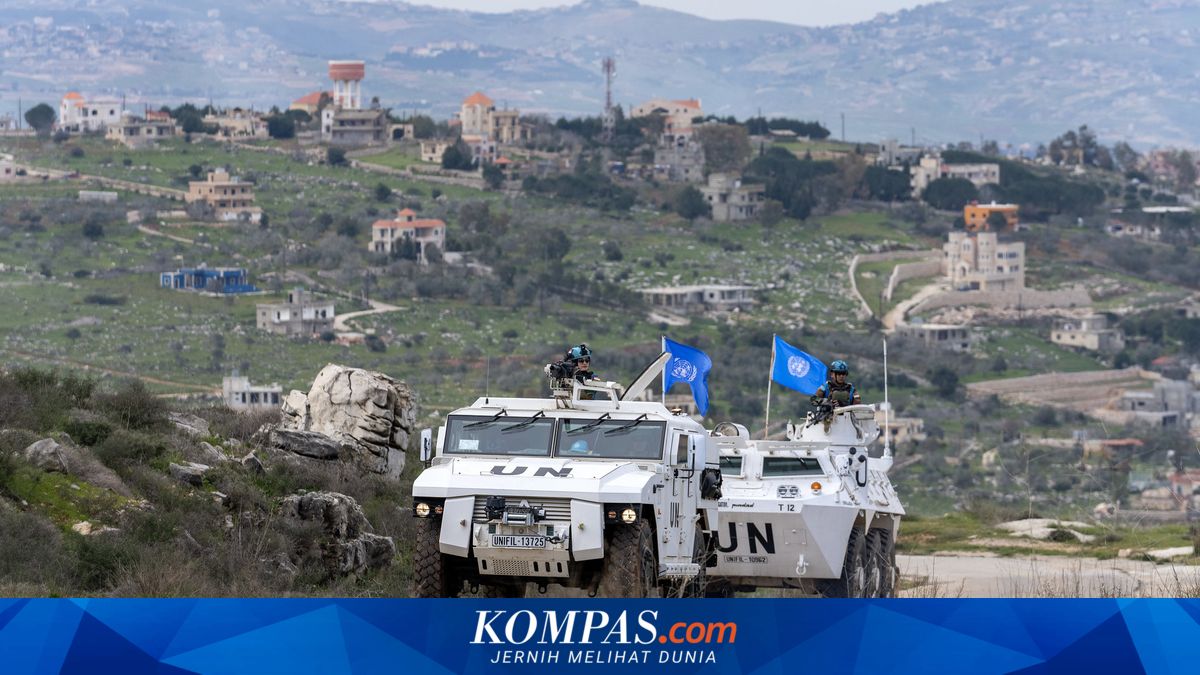
If the world doubts, or worse, refuses to address the Israeli Defence Force’s (IDF) attacks on peacekeeping forces in Lebanon, we are witnessing the further collapse of international law’s authority. For decades, global leaders and actors have built an illusion that there are rules of engagement, boundaries, and red lines that must not be crossed.
Peacekeeping forces are deployed as symbols of neutrality—referees ensuring conflicts do not descend into total chaos. But what happens when the referee themselves is attacked?
Attacks on peacekeeping forces are not merely humanitarian tragedies. They are a tacit announcement that rules are no longer respected and symbols of neutrality are targeted. If the world fails to react to such equivalent dangers, it would be utterly naive.
From the war in Iran to Israel’s attacks on peacekeeping forces, international institutions have a moment to rise. The war in Iran lacks broad support from the international community, and Israel’s brutal acts (IDF) that led to the death of an Indonesian peacekeeper are under global scrutiny.
These two events should serve as strong signals for international (multilateral) institutions to apply pressure. But that signal will soon weaken if brutal actions—like military attacks by the Israel Defense Forces—are not immediately confronted with firm legal consequences. As a result, the world will soon enter a dangerous phase: the normalisation of brutality.
Without firm law enforcement, global institutions will become mere discussion forums, not legal authorities. Bodies like the International Criminal Court will appear more as symbols than real enforcement tools. The world will revert to global jungle law: might makes right.
Violations left unchecked today set precedents for greater violations tomorrow. Today, peacekeepers are attacked. Tomorrow, it could be civilians on a larger scale. The day after, brutality against humanitarian personnel could become even more uncontrollable.
Brutality works like a domino effect. It does not stop at one point. It spreads, infects, and ultimately becomes the new norm if not halted.
The attack on peacekeeping forces in Lebanon must be a moment of proof: will international institutions continue to talk or finally act? Does international law still have teeth, or is it truly toothless?
If the world can respond firmly—through independent investigations, collective diplomatic pressure, and proper law enforcement—this could be a turning point. The authority of the international system could be restored. Global trust could be rebuilt.
But if not, we must be honest that the world is truly in a deplorable new era. An era where law is no longer the determinant, but a mere accessory. An era where brutality is no longer the exception, but the style and paradigm.
The death of Praka Farizal Romadhon, a peacekeeping member, can no longer be read as merely a national tragedy. It is a global signal. A signal that the system long considered capable of managing conflicts is losing its control.
When peacekeeping forces, under UN mandate, are no longer respected, the world is truly losing the last fence separating limited conflict from boundless chaos.
Thus far, we have believed there is a distinction between combatants and non-combatants, between warring parties and neutral parties. Peacekeepers hold the most sacred position in that line. They are no one’s enemy, but protectors of all. Yet, when they become targets, that line collapses. There are no longer clear boundaries. Everyone becomes vulnerable.
Once one major violation is left without consequences, it becomes a precedent. Other countries—or even non-state actors—will interpret that attacking international symbols does not always carry serious risks. In this logic, the safety of peacekeepers is no longer determined by law, but by luck.
Furthermore, this creates a profound psychological effect. Countries sending peacekeeping troops will begin to ask: why do we send soldiers if the world cannot guarantee minimal protection for them? If this question strengthens, one by one, countries will withdraw. And when that happens, the world will lose the most important instrument for preventing conflicts from escalating.
This is an opinion column; the entire content and views are the personal opinions of the author and do not reflect the editorial stance.