
Priority Deciles for Social Assistance Recipients in 2026 and New Criteria: Check It Out!
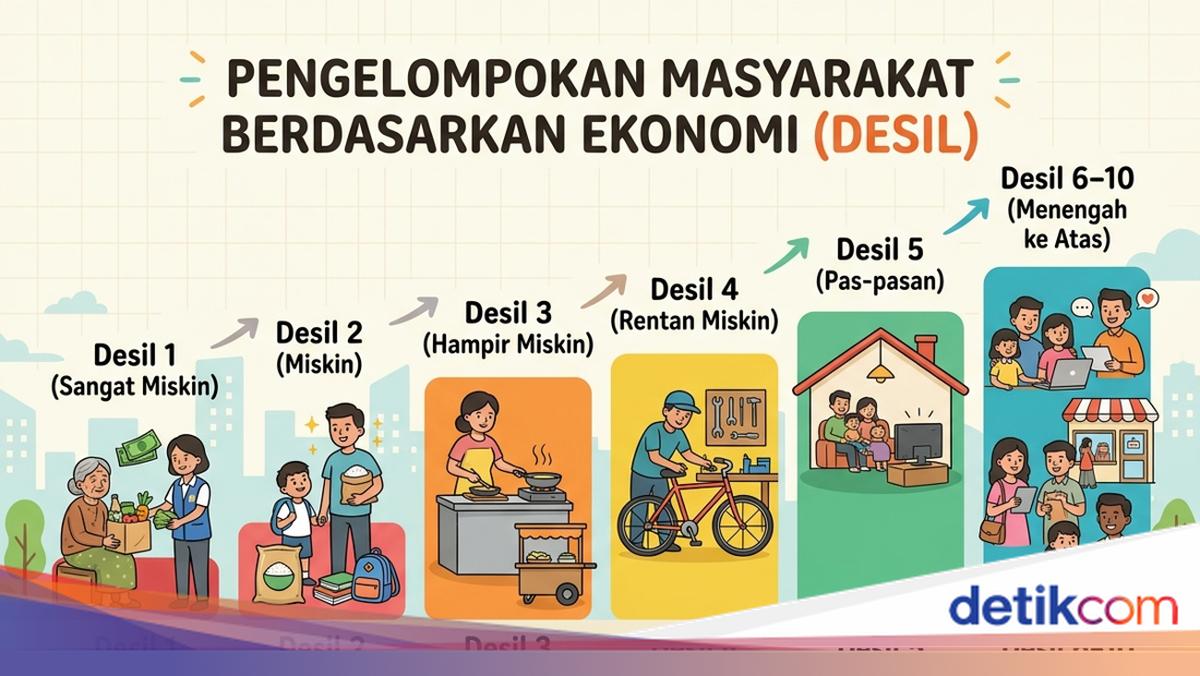
As the database transitions from the Integrated Social Welfare Data (DTKS) to the National Single Social and Economic Data (DTSEN), the government is now using a new grouping system as a reference for determining social assistance (bansos) recipients. This system is known as deciles, which divides the population’s welfare levels into 10 groups, from decile 1 to decile 10.
Although it has begun to be implemented, the term decile is still not widely understood by the public. Many people remain confused about the meaning of deciles, their levels, and how they relate to the chances of receiving bansos.
However, knowing one’s decile position is very important to understand whether a person is a priority recipient of assistance or not. From this, the public can determine their chances of receiving bansos based on their recorded social and economic conditions in government data. Below is an explanation of the definition of deciles, the priority decile levels, and how to check them.
What Are Deciles in Social Assistance?
Deciles in social assistance (bansos) are an important indicator used by the government to assess an individual’s or family’s eligibility for assistance. Referring to the 0% Pocket Book: Benefits and Recipients of the 2026 Welfare Support Programme by the Presidential Staff Office Team, simply put, deciles are a welfare ranking system for the population based on household social and economic conditions.
This ranking is compiled based on data recorded in the National Single Social and Economic Data (DTSEN). Through this data, the government can group the population from the poorest to the most prosperous, making the distribution of assistance more targeted.
Priority Order of Deciles for Social Assistance Recipients in 2026
Based on the 0% Pocket Book: Benefits and Recipients of the 2026 Welfare Support Programme by the Presidential Staff Office Team, one of the main requirements to become a bansos recipient is to be in a certain decile group. For example:
Staple Food Social Assistance is prioritised for people in deciles 1-4
PBI (Premium Assistance Recipients) covers people in deciles 1-5
This means that the lower the decile number, the higher the priority for receiving social assistance.
From the Compilation of Common Questions and Answers on the Integrated Database by the National Team for Accelerating Poverty Reduction and the official website of Ngunut Village, Gunungkidul Subdistrict, here is a detailed breakdown of the deciles:
- Decile 1 (Very Poor)
This group consists of people with the lowest economic conditions, in the bottom 10%. Characteristics include:
No permanent employment
Uncertain income
Difficulty meeting basic needs
- Decile 2 (Poor)
This group is slightly above decile 1 but still vulnerable. It falls in the bottom 10-20%. Characteristics:
Highly affected by price increases
No savings or economic reserves
- Decile 3 (Nearly Poor)
This group is not extremely poor but is at risk of falling into poverty. It falls in the bottom 20-30%. Characteristics:
Vulnerable to layoffs
Falls into poverty if there is an increase in the price of basic necessities
Falls into poverty if there is an economic shock
- Decile 4 (Vulnerable to Poverty)
Economic conditions are relatively stable but still at risk in emergencies. This group is in the bottom 40% of households. Characteristics:
Vulnerable during disasters or serious illnesses
Can be affected by sudden income drops
Still eligible for bansos under certain conditions
- Decile 5 (Just Making Ends Meet)
This group is at the safe economic threshold but not fully prosperous. General characteristics:
Has permanent employment
Income sufficient for daily needs but with minimal savings
- Deciles 6-10 (Middle to Upper)
This group is considered sufficiently prosperous and is not a priority for social assistance. Characteristics:
Stable income
Relatively safe from poverty risks
In general, priority bansos recipients in Indonesia are in deciles 1 to 5. However, the chances of receiving assistance decrease as the decile number increases. Therefore, this decile system is key to ensuring social assistance is distributed fairly and on target.
Latest Criteria for Bansos Recipients
Cited from detikNews, the government has set the latest criteria for social assistance (bansos) recipients in 2026 based on the decile system in DTSEN. Here are the details:
- Recipients of the Family Hope Programme (PKH) Social Assistance
Decile: 1-4
Quota: 10 million families
Not all people in deciles 1-4 automatically receive PKH. This assistance is prioritised for the lowest decile groups.
- Recipients of Staple Food Assistance (BPNT)
Decile: 1-5
Quota: 18.2 million families
Similar to PKH, staple food assistance distribution focuses more on the lowest deciles although it covers up to decile 5.
- Recipients of National Health Insurance Premium Assistance (JKN/PBI)
Decile: 1-5
Quota: 96.8 million individuals
Not everyone in deciles 1-5 will receive this assistance as it still considers priorities and quota availability.
Important Notes
Data in DTSEN is continuously updated to make bansos distribution more accurate and targeted.
Bansos recipient quotas are limited, so not all eligible individuals may receive benefits.