
PRIMA: Strengthening Merah Putih Cooperatives Must Also Bolster National Industry
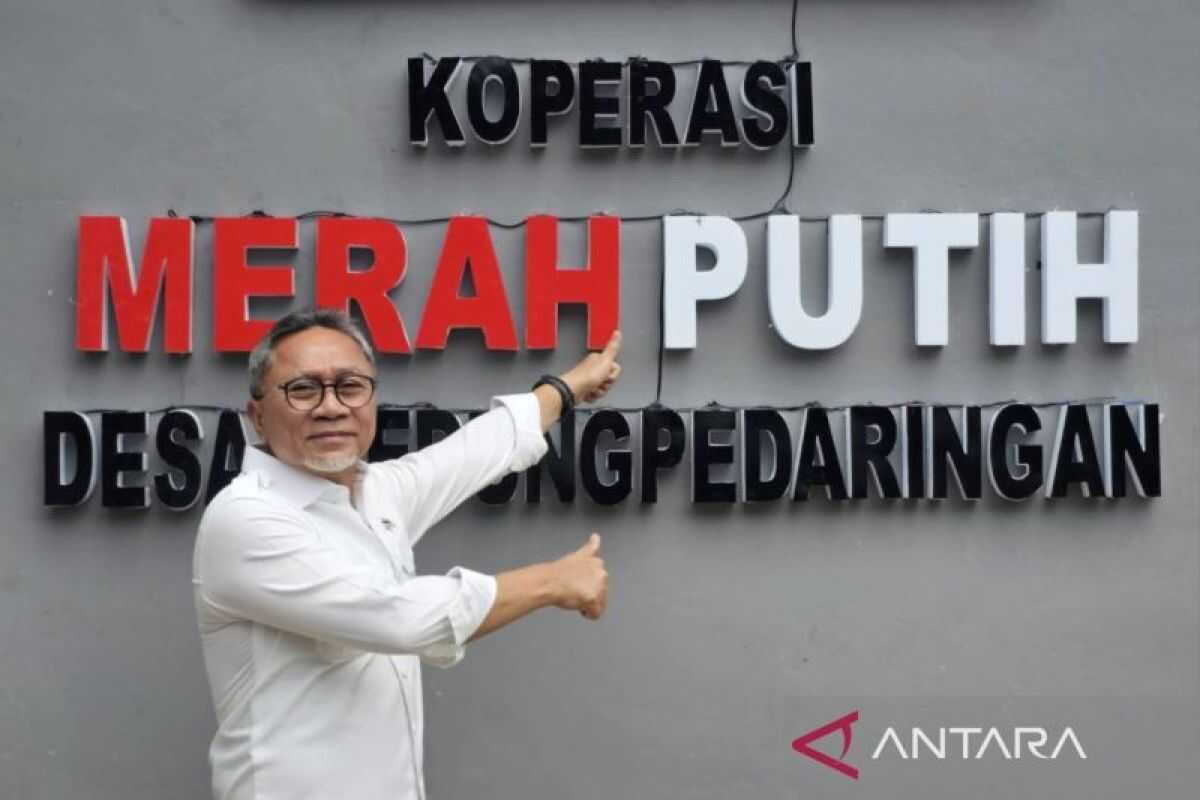
Jakarta (ANTARA) - The Treasurer General of the Central Executive Board of the Partai Rakyat Adil Makmur (PRIMA), Ahmad Herwandi, has said that strengthening the Village/Sub-district Merah Putih Cooperative programme (KDKMP) must also bolster the national automotive industry.
“We support the strengthening of village cooperatives as a distribution tool and driver of the people’s economy. However, state expenditure of more than Rp24 trillion must be viewed strategically. We must not allow the intention to strengthen villages to instead weaken national industry,” Herwandi said in a statement in Jakarta on Tuesday.
Herwandi was responding to plans to import 105,000 pickup trucks from India for KDKMP operational needs.
He affirmed that his party fully supports the strengthening of KDKMP as a logistics and food distribution instrument at the village level. However, he cautioned that vehicle procurement policy must not be separated from the national industrialisation strategy.
Data from the Ministry of Industry shows that national vehicle production capacity reaches approximately one million units per year, including light commercial vehicles such as pickups. The requirement of 105,000 units for the village cooperative programme represents only about 10 per cent of that capacity.
For Herwandi, this figure forms the basis of the argument that the national automotive industry genuinely has the ability to meet the programme’s needs.
He estimated that if procurement were carried out through local production, the resulting economic impact could reach approximately Rp27 trillion through multiplier effects on the components industry, labour force, and manufacturing supply chain.
“If national capacity is one million units per year, then the need for 105,000 units is very feasible to produce domestically. This is not merely a matter of procurement technicalities, but a matter of commitment to our own industrial ecosystem,” he said.
Herwandi assessed that the plan to import fully built-up (CBU) vehicles from Indian manufacturers such as Mahindra & Mahindra and Tata Motors risks transferring the majority of added value overseas.
If procurement is conducted through fully built-up imports, opportunities for increasing local content, creating jobs, and technology transfer would be limited.
According to him, without policy consistency, Indonesia risks becoming merely a consumer market rather than a strong regional production base.
“State expenditure should serve as a lever. If we import in fully built-up form, the added value is largely enjoyed by other countries. Yet we have a sufficiently strong industrial base,” he said.
Beyond industrial considerations, PRIMA also highlighted potential after-sales service issues. Cooperative operational vehicles will be used in areas with diverse geographical conditions, including remote regions.
Herwandi explained that fully built-up imports without a strong domestic production or assembly base risk creating limitations in authorised workshop networks, spare parts availability, and high maintenance costs due to exchange rate fluctuations.
“If spare parts must await imports, cooperative operations could be disrupted. This is not simply about buying vehicles, but about ensuring the sustainability of village logistics distribution,” Herwandi said.
Conversely, he continued, if procurement is carried out through domestic production or assembly schemes, after-sales service networks, local technician training, and spare parts distribution could grow in the regions.
“Villages must be strong, and industry must also be strong. Both must progress in tandem as a strategy for national economic sovereignty. Large-scale state expenditure must deliver maximum benefit, both for people in villages and for workers and industry domestically,” he said.
Herwandi also presented five PRIMA recommendations regarding the plan: first, prioritising domestic production as long as capacity is available; second, promoting local assembly schemes if cooperation with foreign manufacturers proceeds; third, progressively applying local content (TKDN) requirements; fourth, ensuring the establishment of a national after-sales service network before procurement takes place; and fifth, integrating the village cooperative programme with the national industrialisation strategy.