
Price Hike Prompts Expert Warning on Engine Damage Risks and Swollen Repair Costs from Mixing Fuel
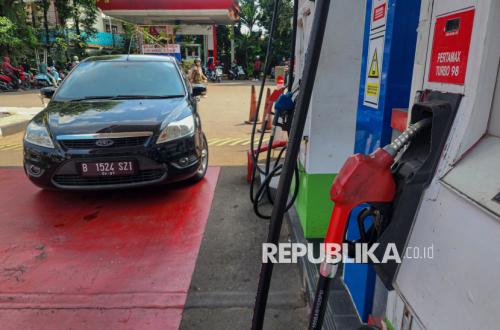
The increase in non-subsidised fuel oil (BBM) prices amid geopolitical dynamics in the Middle East region is prompting some vehicle users to economise, including by switching or mixing fuel types. However, automotive expert Yannes Martinus Pasaribu from Institut Teknologi Bandung warns that such measures pose risks to engine performance and durability, ultimately leading to higher maintenance costs.
According to Yannes, switching from high-octane BBM to a lower grade can directly impact vehicle performance.
“The main risk of using lower-octane BBM is that the engine becomes hotter, power drops dramatically, and fuel consumption actually increases,” he said when contacted from Jakarta on Monday (20/4/2026).
He added that over 10,000–20,000 kilometres, this condition can cause carbon deposit build-up in the combustion chamber and injectors. The result is rough idling, stuttering acceleration, and higher emissions.
This risk is even greater for vehicles with high specifications. Yannes explained that vehicles with turbochargers or high compression ratios are more susceptible to internal engine component wear, such as piston rings, when using BBM not matching their specifications.
Besides switching fuel types, the practice of mixing fuels is also not recommended.
“Mixing BBM with different characteristics is not advised because they have varying additive compositions, densities, and combustion properties,” said Yannes.
He explained that combining two types of BBM can produce unstable octane ratings. In the medium term, this can lead to performance decline, uneven combustion, and sporadic knocking or engine pinging sounds.
Additionally, it can form deposits that clog filters and increase the potential for damage to high-pressure injection systems like common rail or gasoline direct injection (GDI).
“Damage to these components in the long term can result in repair costs of up to tens of millions of rupiah,” he stated.