
Preventing Zombie Co-operatives
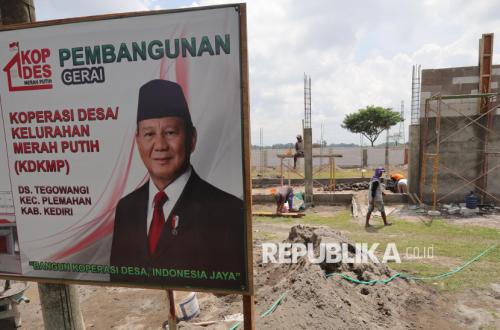
For decades, the nation has pinned high hopes on cooperatives as the pillar of the national economy. That mandate is enshrined in Article 33 of the 1945 Constitution, which states that Indonesia’s economy should be organised as a joint venture based on the principle of kinship. Yet in reality, that noble ideal has not consistently translated into practice.
The current Cooperative Act—Law No. 25 of 1992—has been deemed no longer relevant to contemporary developments. One crucial point that has long been neglected is the absence of a pre-cooperative phase, i.e., an incubation period for community groups before they are officially registered as a cooperative. In the National Cooperative System (Sistem Perkoperasian Nasional, SPN) Bill, which is being finalised by the government and the House of Representatives, recognition of pre-cooperation is becoming an increasingly important issue to be pursued.
Pre-cooperation: A Social-Economic Laboratory That Has Long Been Missing
In substance, a cooperative is formed by a group of people rather than a collection of money. The social capital within a cooperative becomes more important. Therefore, the nurturing of social capital should take precedence over gathering money-form capital. It is in the pre-cooperative phase that this social capital is built.
In international literature, pre-cooperation is understood as a forum for shared learning before entering the real world of cooperatives. In this phase, members are reinforced with the fundamental values of the cooperative such as democracy, transparency, and mutual aid. Pre-cooperation also prevents the emergence of ‘instant’ cooperatives that are oriented solely toward administrative formalities.
Some best practices of pre-cooperation include those in India. Pre-cooperation in India is known as Self Help Groups (SHG). Before becoming formal credit cooperatives, they operate as informal groups for at least six months. They learn simple bookkeeping and internal discipline.
Erik Boettcher, a world expert on cooperatives, divides cooperative organisations into three categories. Area I: legal as a cooperative but the spirit of the cooperative is dead; Area II: legal aspects and the spirit of the cooperative are alive; Area III: the spirit of the cooperative is alive but not yet legally recognised as a corporate body. Indonesia’s problem has long been the proliferation of ‘zombie cooperatives’ — legally registered, but socially lacking a culture of member participation. They are stuck in Area I: cooperatives that exist on paper but are dead in practice.
By recognising pre-cooperation in the law, the state provides a healthier path for Area III groups to grow into true cooperatives in Area II. In other words, pre-cooperation ensures the cooperative structure is built on a strong social foundation, not merely on legal formalities. By acknowledging Area III, zombie cooperatives can be avoided, because they are not rushed into Area II before entering Area III first.
Preventing the Birth of ‘Zombie’ Co-operatives
It would be too easy to establish a cooperative, making this model a soft target for abuse. In practice, it is enough to collect nine photocopies of ID cards and a notary’s signature for a cooperative to be declared formally established.
As a result, ‘zombie cooperatives’ appear — they have a name but no life.
These zombie cooperatives are often used as vehicles for crime, such as Ponzi schemes, usurious lending disguised as cooperatives, and manipulation of public funds. The impact is broader: the public loses trust in cooperatives as an instrument of people’s economy.
Through the pre-cooperative phase, the new bill provides a much stricter early warning system. Groups must prove real activities, such as member meetings, economic participation, and member education on the basics of cooperatives, before obtaining legal personality. Funds raised during the preparation phase are also protected as ‘initial pre-establishment capital’ with legal legitimacy.
Systemic Impacts on the National Economy
Recognition of pre-cooperation is not merely about administration; it will bring positive domino effects for Indonesia’s economic development:
First, a user-friendly formalisation. Farmer groups, market traders, and joint venture groups can have initial legality enabling them to open collective accounts or access the People’s Credit Bank (KUR), without having to become full cooperatives immediately. These groups are scattered across the archipelago in forms such as gapoktan, RT savings groups, and Unit Pengelola Keuangan formerly part of the National Programme for Community Empowerment (PNPM Mandiri), among others.
Second, more orderly institutional integration. Thousands of groups nurtured by ministries can enter the national cooperative system through a clear transition pathway.
Third, a more credible deposit guarantee. With the incubation process, the Cooperative Deposit Insurance Agency only needs to handle cooperatives that are truly healthy and reputable.
Fourth, revitalisation of the role of local government. Regional cooperative offices have a legal basis to nurture community groups from the pre-cooperative phase and to use regional budgets (APBD) more effectively.
Laying the Foundations Before Building the Structure
Recognition of pre-cooperation in the Cooperative Bill is not merely an innovation; it is a correction of history. By providing an incubation period measured in semesters, or even years, as a national obligation, the country is laying a stronger foundation for the people’s economy. The indicator, of course, is not simply time; what matters is the indicator of social capital.
It is not necessary for every pre-cooperative to become a full cooperative. For some groups, the need may be merely to reach the pre-cooperative stage. However, for those seeking legal recognition as a cooperative, the pre-cooperative phase becomes a necessary step, so that the cooperative’s spirit is truly present, and not reduced to a zombie cooperative. For groups deemed ready to become cooperatives legally, the phase will have fulfilled its purpose.