
Preventing Measles in Adults with Vaccination
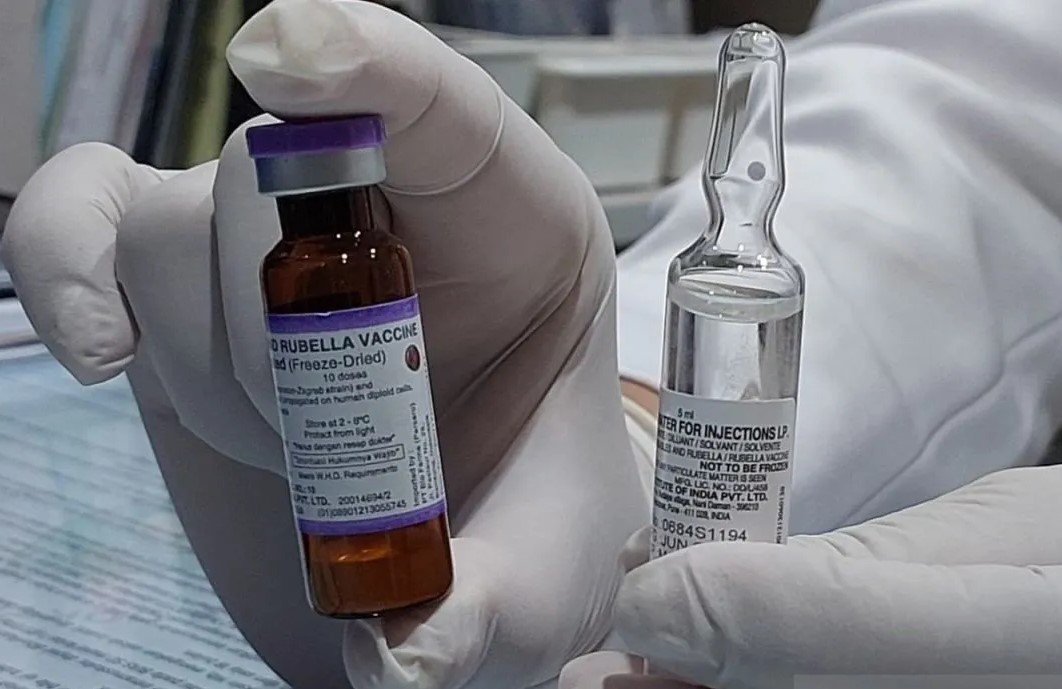
The government faces a policy dilemma with no truly comfortable solution. The death of a doctor participating in the Indonesian Doctor Internship Programme (PIDI) in Cianjur, West Java, from measles signals the need for protection of healthcare workers from infectious diseases. One measure that can be taken is administering measles vaccines to adults, especially healthcare personnel. Unfortunately, the current government measles vaccination programme is only available for children aged 9 months to 15 years. Meanwhile, there is no programme for adults or healthcare workers. “If I’m not mistaken, the MMR (Measles, Mumps, Rubella) vaccine can be given to adults. However, it has not been adopted into a national programme. So if you want immunisation for adults, you can seek it at private or public health facilities for adult measles vaccine, but you have to pay for it yourself,” said Director of Immunisation at the Ministry of Health, Indri Yogyaswari, during the UI Medicine webinar on Wednesday (1/4). She stated that measles vaccination for adults requires two doses with a minimum interval of 28 days. “For the price, it varies; we’ve heard some up to Rp700,000 per dose, while a friend recently found it for around Rp350,000 per dose,” she revealed. It is known that the Ministry of Health has not provided MR vaccine for adults because the BPOM has only authorised the MR vaccine for ages 9 months to 15 years and not yet for adults. Deputy Minister of Health Dante Saksono Harbuwono emphasised that measles vaccination for adults or healthcare workers requires an efficacy study from the BPOM. “So the most important thing about this vaccination is actually the indication letter. That’s for children, but there are actually studies for adults. We first request clarification from the BPOM that this vaccination does indeed have efficacy studies for adults,” said Dante. If the clarification letter is obtained, measles vaccination will immediately be carried out for healthcare workers, medical personnel, and doctors who have a high potential for infection. The government can also select 10 priority regions so that their healthcare workers can receive measles vaccines. CONSISTENT IMMUNISATION Member of Commission IX of the Indonesian House of Representatives Sri Meliyana urged the government to maintain consistency in immunisation as the main bastion of child health protection. The resurgence of measles cases is seen as inseparable from the weakening immunisation rates in several regions. “When we hear that 32 provinces have experienced a decline in immunisation rates, this is a warning to us all. Today we are facing measles,” said Sri Meliyana. According to her, immunisation is not just a routine programme but a protection system that must be maintained continuously. When there are gaps, such as delays or incomplete immunisation, the risk of spreading infectious diseases like measles will increase. “When immunisation is incomplete, children become more vulnerable. This is what we must prevent together,” said the Gerindra Faction legislator. Meanwhile, Member of Commission IX of the Indonesian House of Representatives Netty Prasetiyani regrets the still low national measles vaccination coverage. “The national measles-rubella immunisation coverage is currently still around 80-82 percent and has not reached the 95% herd immunity target,” said Netty. RAPID TRANSMISSION Professor from the Department of Child Health FKUI-RSCM, Hinky Hindra Irawan Satari, said measles is highly contagious, transmitted through the air. The disease can even cause very serious complications, even death. “Measles has an extraordinarily high transmissibility, where one case of measles can usually infect 12-18 children or people. Compared to COVID-19, which is only 2-3 people. Measles is far more severe, far more contagious. Thus, it easily causes extraordinary events,” she explained. Therefore, Hinky emphasised that measles immunisation is one of the most beneficial actions. She cited the period 2000-2004, where around 59 million deaths were prevented by measles immunisation. “So when a measles outbreak occurs, medical personnel must receive the vaccine. Healthcare workers should complete two doses one month apart; if unsure about complete immunisation, get vaccinated immediately. So immunisation is a prevention effort,” explained Hinky. MEASLES COMPLICATIONS Measles disease is not just rashes and fever; there are several complications, one of which is pneumonia. At least 1 in 20 child measles patients experience pneumonia with quite high mortality, namely 1 to 3 out of 1,000 children. Professor from the Department of Pulmonology and Respiratory Medicine FKUI-RS Persahabatan, Erlina Burhan, explained that measles transmission through droplets attacks epithelial cells in the respiratory tract, causing inflammation from the airways, then disrupting oxygen exchange, leading to shortness of breath. Because the alveoli contain fluid or mucus from inflammation. “This causes oxygen to have difficulty entering the blood, so the patient becomes short of breath, coughs, has fever, and because of the measles,” said Erlina. Pneumonia related to measles is divided into two: primary viral pneumonia and secondary bacterial pneumonia. Primary viral pneumonia occurs because the measles virus directly attacks the lungs. As a result, inflammation occurs so the lungs cannot optimally take in oxygen. Meanwhile, secondary bacterial pneumonia occurs due to bacterial infection during or after contracting measles. As a result, the body’s immunity decreases, and bacteria more easily infect the lungs, usually making the condition more severe. “The measles virus causes the immune system to have reduced ability to fight other germs that enter because immunity decreases. Thus, bacteria more easily infect the lungs and usually also because the immune system is w.”