
Preventing kidney failure helps save the environment
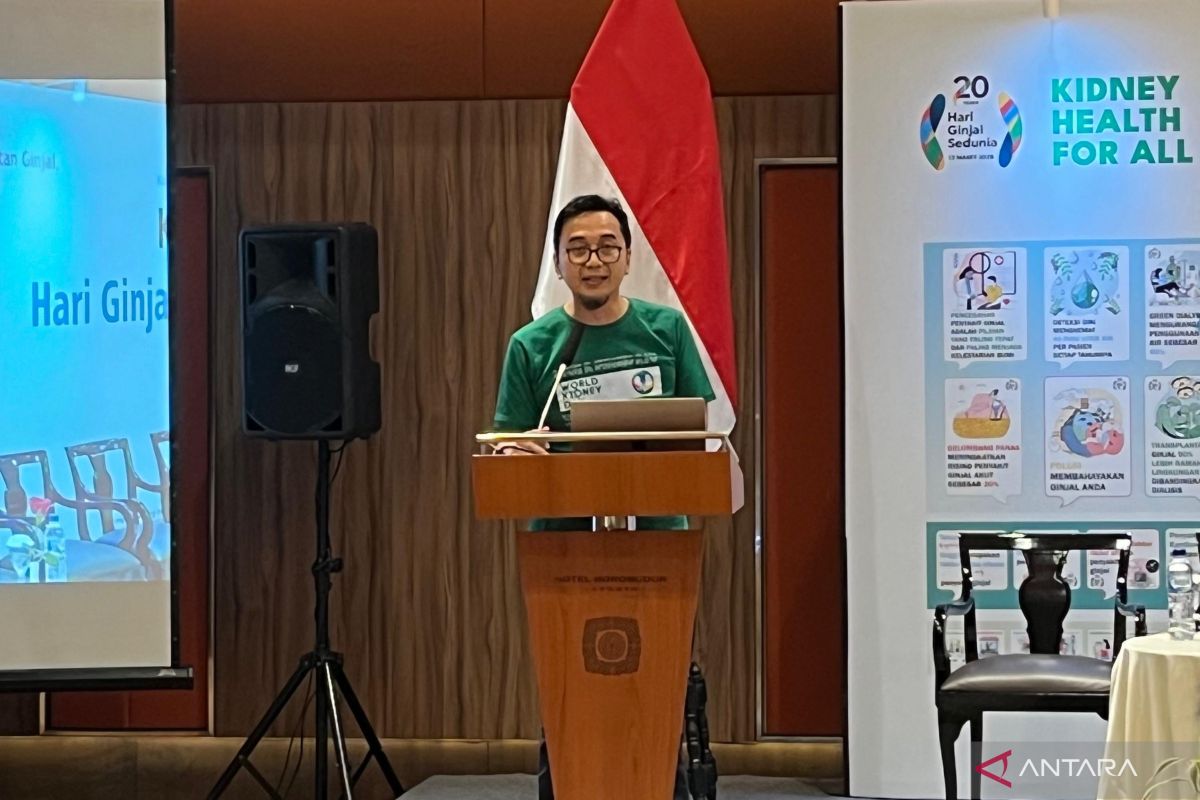
Jakarta — The chairman of the Indonesian Nephrology Association’s Executive Board, Dr. Pringgodigdo Nugroho, has highlighted the importance of preventing kidney failure as a means of protecting the environment.
During a health discussion marking World Kidney Day 2026 in Jakarta on Wednesday, Pringgodigdo emphasised that kidney replacement therapies such as dialysis generate substantial environmental impacts. “Kidney replacement therapy through dialysis and blood washing has a very high environmental footprint. So if we can prevent kidney disease, we ultimately also protect the environment,” he said.
Pringgodigdo explained that patients with end-stage kidney disease require kidney replacement therapy. This therapy does not cure damaged kidneys but merely replaces their diminished function. There are two main methods: dialysis and transplantation.
“Many patients, once they hear about blood washing from their doctor, refuse outright. They often avoid medical care in hopes of avoiding dialysis. This is the reality, so we must continue to raise awareness about the indications and necessity of haemodialysis,” he noted.
Haemodialysis, or blood washing, is typically performed two to three times per week for patients with kidney dysfunction. The procedure uses a machine to filter blood by circulating it outside the body through a dialyser—an artificial kidney—where toxins, excess fluid, and other waste are removed before the blood is returned to the patient.
Although effective, the therapy is resource-intensive. According to Pringgodigdo, the procedure requires significant infrastructure, water, and energy, all of which impact the environment. Several studies show that haemodialysis generates biomedical waste. Consequently, there is a need to promote the concept of Green Dialysis to reduce the environmental impact of this therapy.
World Kidney Day 2026 carries the theme “Caring for People, Protecting the Planet.” The campaign aims to promote more efficient, sustainable, and environmentally friendly healthcare systems.
Pringgodigdo emphasised prevention through early detection as essential. He hopes future technological advances will enable earlier detection of kidney disease through biomarkers. “Prevention, early detection, optimal therapy to slow progression to end-stage kidney disease, and equally important, public education. Caring for our kidneys from an early age for a healthier future and protecting the planet we love,” he concluded.