
Prevent Road Subsidence, Urban Planning Observer Says DKI Jakarta Provincial Government Must Audit Drainage System
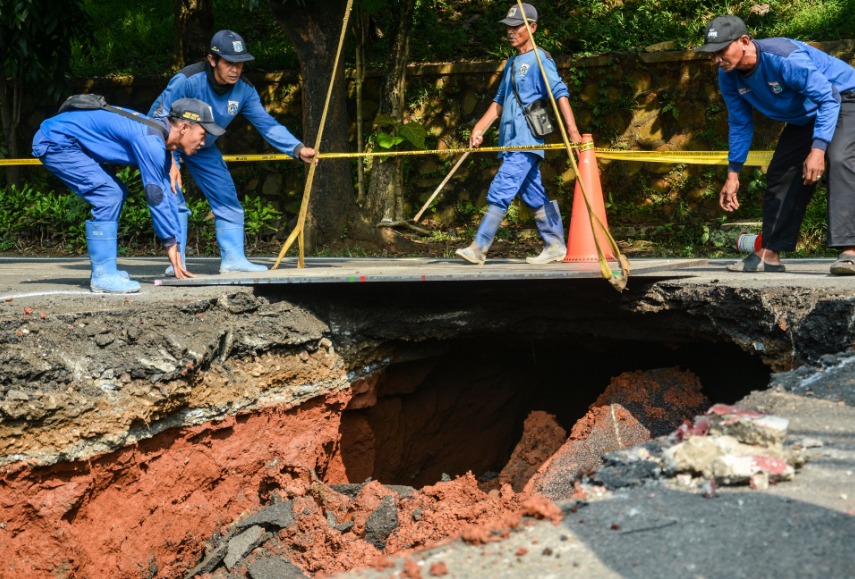
Urban Planning Observer from Trisakti University, Yayat Supriatna, has reminded the DKI Jakarta Provincial Government not to focus solely on short-term handling of the subsided road in Lenteng Agung, South Jakarta. Yayat stressed that the incident must serve as a momentum to conduct a total audit of the geological conditions and ageing drainage systems across the entire capital region. According to Yayat, partial handling at one point will not solve the root of the problem, given that the soil structure in Jakarta is generally unstable and continues to experience subsidence. “Understanding the conditions that occurred on the Lenteng Agung road cannot be mapped to that location alone. There must be mapping of the soil conditions around that area, whether there is a possibility of land movement, or the potential for subsidence not only on the Lenteng Agung road but also potentially affecting the surrounding railway network,” Yayat said when contacted on Thursday (4/6/2026). Yayat urged the DKI Provincial Government to exercise greater caution because the phenomenon of road subsidence due to ageing underground culverts also frequently strikes other major cities, such as Bandung. As a concrete preventive measure, he urged the involvement of cross-agency departments to detect threats beneath the asphalt of Jakarta’s arterial roads. “Hopefully there are no cracks or more alarming conditions along these roads,” he said. Yayat said that strict supervision of underground water channel leaks is also crucial for the relevant agencies. Unchecked drainage leaks will continuously trigger high water seepage that erodes the structural strength of the soil from within. “The weakened soil structure due to water seepage is then hit again by the thousand-tonne load pressure of vehicles, from light to heavy, every day. This must be prevented so that similar events do not recur in the future,” Yayat explained. Furthermore, Yayat asked the public to be proactive in reporting to the government if they see early signs of land subsidence or road cracking in their neighbourhoods. Jakarta’s soil contour, which is dominated by soft soil, is considered to pose a high risk. He asked the government to learn from the experience when Jalan R.E. Martadinata in North Jakarta dramatically collapsed entirely towards the sea in 2010. “A similar incident occurred around 2010 when Jalan R.E. Martadinata subsided, collapsing into the body of water because the soil turned out to be unstable. The potential for land or road subsidence could occur in various parts of Jakarta if the aspects of land subsidence, increasing soft soil conditions, and unstable soil conditions, coupled with the volume load of vehicles with excessive tonnage, are not taken seriously,” he concluded.