
Prevent 'Galodo', Government to Build Eight Sabo Dams in Tanah Datar, West Sumatra
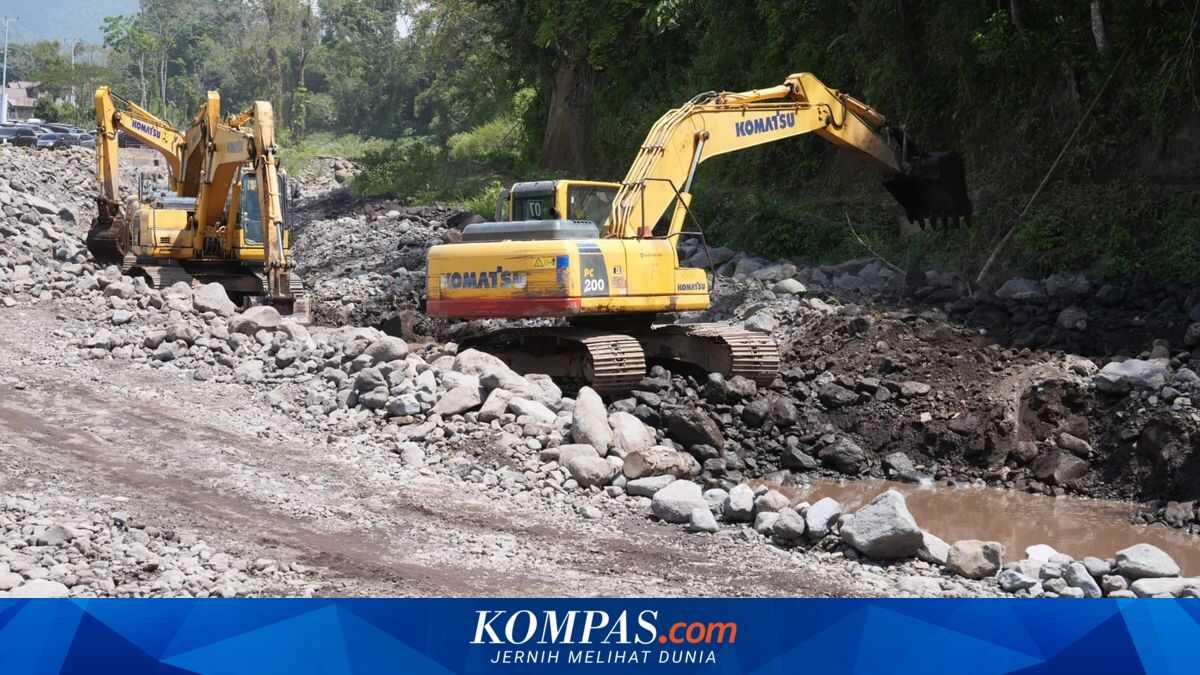
JAKARTA, KOMPAS.com - The government has begun constructing eight sabo dams to prevent the recurrence of ‘galodo’ or cold lava floods from Mount Marapi in West Sumatra. The sediment-control infrastructure project was marked by a groundbreaking ceremony by the Ministry of Public Works (PU) in Nagari Sungai Jambu, Pariangan District, Tanah Datar Regency, on Tuesday, 3 March 2026. The move forms part of the rehabilitation and reconstruction programme for infrastructure post-eruption and the lahar floods from Mount Marapi in 2024. In addition, sabo dam construction is also aimed at strengthening the mitigation system and handling lahar after hydrometeorological disasters in the region of West Sumatra. Minister of Public Works Dody Hanggodo emphasised that sabo dam construction is a manifestation of the state’s responsibility to protect communities from disaster risk. ‘Disasters can no longer be viewed as solely a sectoral task. This must be read as part of a national resilience strategy that directly touches people’s lives. Under the leadership of President Prabowo Subianto, energy, food security, and water resilience have become the main foundations of national development,’ said Dody. Overall, the Ministry of Public Works plans to construct 56 sabo dams on 24 rivers in the Mount Marapi area progressively as part of long-term handling of cold lava floods. In Phase I of the 2025–2027 fiscal year, eight sabo dams and one series of river training works will be built. The details are: five units in Tanah Datar and three units in Agam, as well as the river training works on the Batang Pagu-Pagu River(s) in Tanah Datar Regency. The eight sabo dams in this initial phase have a total sediment storage capacity of around 440,000 cubic metres and are targeted for completion by late 2027. Accelerating land provision by regional governments is one of the factors supporting project completion. One sabo dam on the Batang Malana River is of the oprit type with a width of 48.4 metres and a height of 8 metres, and has a sediment storage capacity of 12,950 cubic metres. The sabo dam is expected to protect agricultural land of about 9.56 hectares and residential areas with a total population of around 37,200. This infrastructure is also designed to keep the national road of roughly 2.1 kilometres in operation and not disrupted by lahar flows.