
Pretending to Sleep and Ignoring Priority Passengers for KRL Seats: An Empathy Crisis?
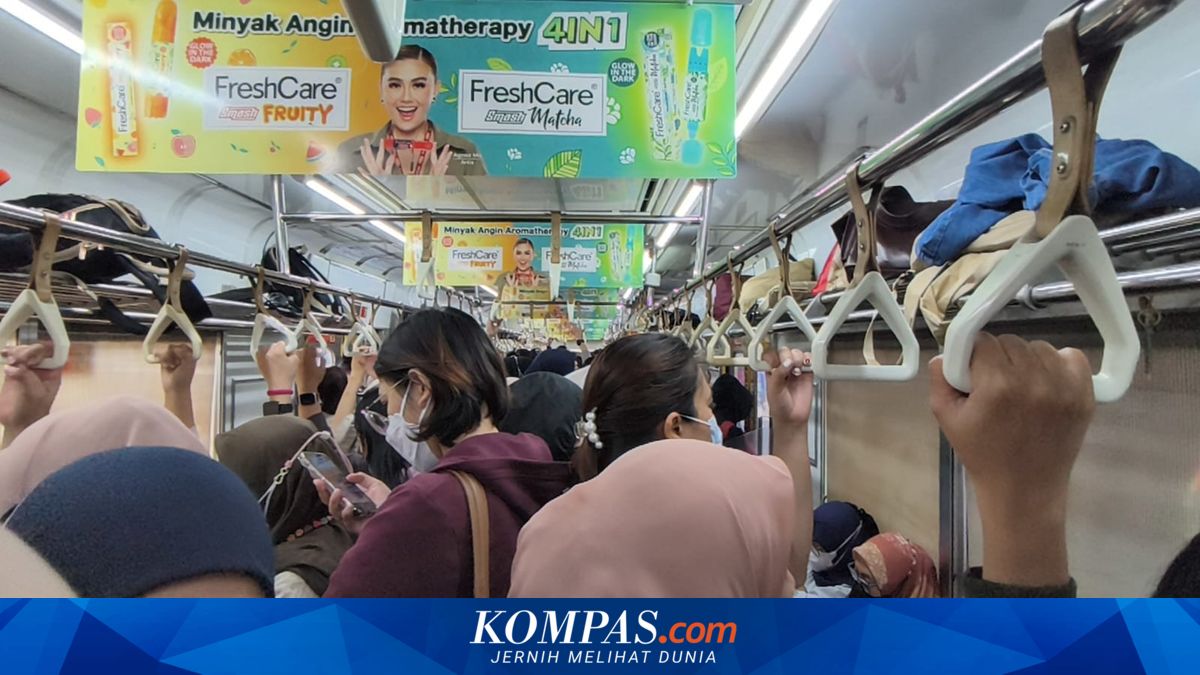
JAKARTA, KOMPAS.com – Every morning and evening, thousands of KRL Commuter Line passengers travel from the suburbs to the city centre. Amid the crowds, priority seats, which should be reserved for the elderly, pregnant women, people with disabilities, and children, often become a battleground. This phenomenon frequently leads to social tensions. Pretending to sleep and acting indifferently become strategies employed by some passengers to remain seated. However, on-the-ground observations show that many passengers do not comply with the rules, for example, by pretending to sleep. “This can be seen as a failure to understand and adhere to the social structures established for collective welfare,” said Rakhmat when contacted by Kompas.com on Thursday (9/4/2026). According to Rakhmat, this phenomenon also reveals an empathy crisis. Many passengers prioritise personal comfort without considering the conditions of others who need it more. He gave examples of behaviour among some women who pretend to sleep or appear tired while occupying priority seats. “Especially among women, sometimes they pretend to sleep, or act tired, or something like that,” he said. Rakhmat explained that in big cities, society tends to behave individualistically. This phenomenon can be explained through theories of social mobility and anomie. As a result, people focus more on personal interests than on vulnerable groups. “Priority seats are provided for vulnerable groups, such as the elderly, pregnant women, people with disabilities, and children. This reflects efforts to regulate social spaces to be more inclusive,” Rakhmat clarified. “This conflict shows an imbalance in the distribution of social resources that is uneven,” he added. An unbalanced power structure means that those who are physically fitter get priority over those who are weaker. According to Rakhmat, the neglect of priority passengers is also part of urban social culture. “When norms of solidarity and care for others are no longer reinforced, this behaviour can become more common,” he said. However, Rakhmat emphasised that this culture can be changed through social education, awareness campaigns, and firmer public policies. Overall, the issue of priority seats on the KRL reflects a complex problem involving social structures and an empathy crisis. “This is related to how urban society tends to place personal interests above attention to vulnerable groups,” he stated. Rakhmat stressed that social structures in big cities can also create tensions between individual rights and the needs of others, so solutions that touch on collective societal awareness are very much needed. Many non-priority passengers appear to sit comfortably in priority seats. Some wear masks and glasses, sleep in comfortable positions, or hold bags in front of them. Occasionally, elderly passengers are seen standing without expressing a request for a seat. Due to the extremely crowded train conditions, many passengers simply adapt to get home safely, even if they do not get a seat. According to Fahmi (30) (not his real name), a KRL staff member at Manggarai Station, the on-the-ground seat争夺 situation is often challenging. “We have frequently reminded passengers through announcements, but many still sit in priority seats. Some pretend to be busy with their phones or sleep, only standing when reminded multiple times,” said Fahmi. Staff can only reprimand politely, as there are no immediate sanctions if passengers refuse.