
Press Council refines Copyright Bill proposal to fortify press industry
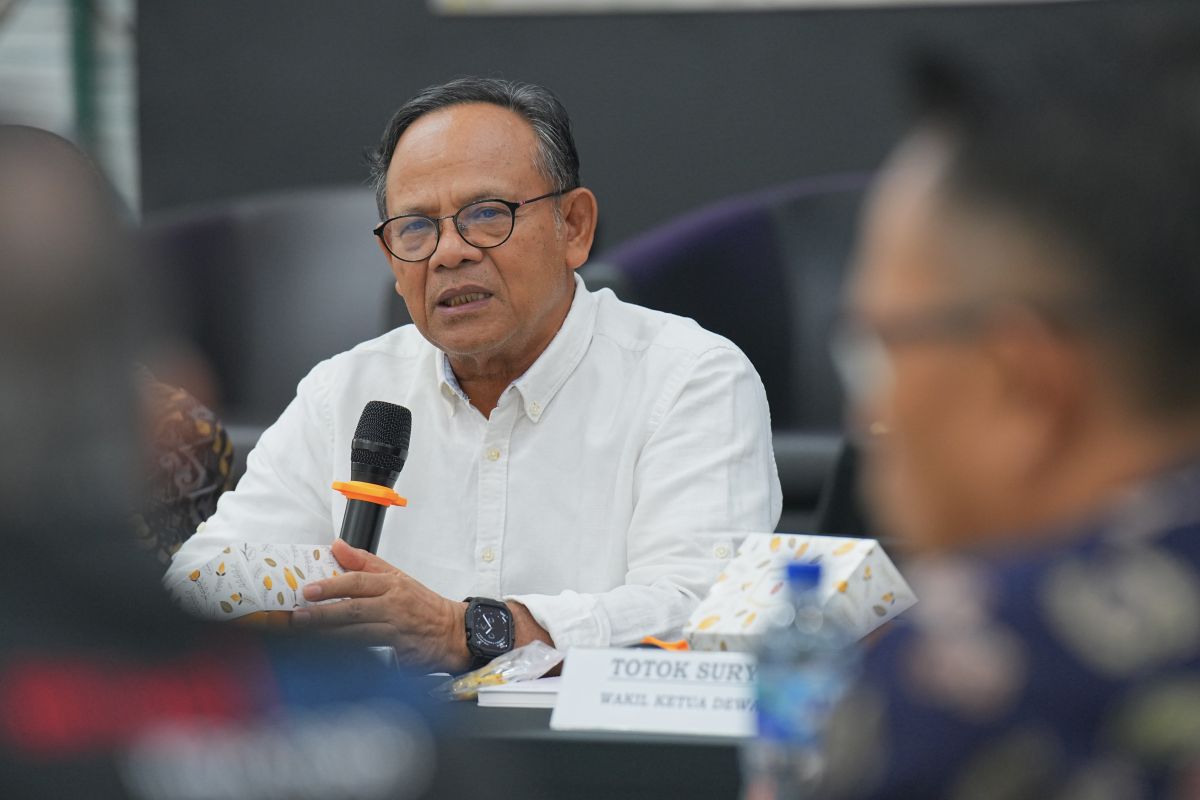
The Press Council is maturing a proposal concerning the regulation of journalistic works within the Bill on Amendments to Law Number 28 of 2014 on Copyright, in a bid to strengthen the press industry. The council gathered input through a public hearing with various press constituents at the Press Council Office in Jakarta on Thursday.
Press Council Chairman Komaruddin Hidayat stated that the forum was an effort to ensure changes to copyright regulations can meet the new challenges faced by the press industry in the era of digital platforms and artificial intelligence (AI). Journalistic works are the result of intellectual labour born through a professional process. Therefore, according to the Press Council, journalistic works possess economic value that deserves legal protection, just like other intellectual works.
Various key ideas emerged during the forum, including the urgency of explicitly defining journalistic works as a protected object within the Copyright Law. Additionally, there is a need for the recognition of the economic rights of press companies over the journalistic works they produce and publish, as well as clearer rules regarding the use of journalistic works by digital platforms, news aggregators, search engines, and AI.
The forum also highlighted the increasingly widespread use of journalistic works as material for indexing, information aggregation, displaying news snippets, and training artificial intelligence models. This practice is considered to have generated economic benefits for various parties, yet it has not been accompanied by a proportional compensation mechanism for press companies and the creators of journalistic works.
The forum also discussed the possibility of establishing a collective mechanism through a collective management organisation (LMK) to manage licensing and the distribution of economic value from the use of journalistic works. This mechanism is seen as potentially an important instrument to strengthen the bargaining position of the national press industry in its interactions with global digital platforms and AI development companies.
Conversely, he said, the regulation is directed at creating a healthy, sustainable, and equitable information ecosystem. “Protection of journalistic works ultimately protects not only press companies and journalists, but also safeguards the public’s right to obtain quality and trustworthy information,” he stated.
Meanwhile, Chairman of the Press Council’s Digital and Sustainability Commission, Dahlan Dahi, emphasised that the protection of journalistic works applies only to commercial use. Non-commercial use remains permitted. “For example, if journalistic works are used for education, research, or academic study,” said Dahlan.
The Press Council’s public hearing was attended by the Indonesian Journalists Association (PWI), the Alliance of Independent Journalists (AJI), the Press Companies Union (SPS), Indonesian Photojournalists (PFI), the Indonesian National Private Radio Broadcasting Association (PRSSNI), the Indonesian Local Television Association (ATVLI), the Indonesian Private Television Association (ATVSI), the Indonesian Cyber Media Association (AMSI), and the Indonesian Cyber Media Network (JMSI). Also present were the Press Legal Aid Institute (LBH Pers) and the Committee on the Responsibility of Digital Platform Companies to Support Quality Journalism (KTP2JB). The Press Council stated that the input obtained in the forum will serve as material to refine proposals to the government and the House of Representatives (DPR) during the deliberation of the Copyright Bill.