
Press Council Highlights Two Clauses in Indonesia-US Reciprocal Trade Agreement, Recommends Action to Government
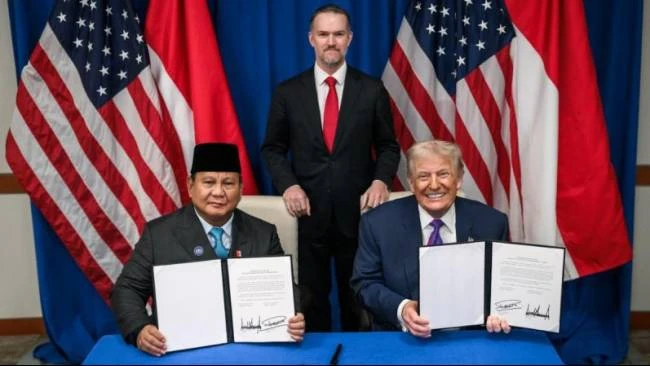
Jakarta – Indonesia’s Press Council has highlighted two clauses in the Reciprocal Trade Agreement (ART) between Indonesia and the United States, signed in Washington DC on 19 February 2026, which could directly impact the operation of Indonesia’s press.
“The Press Council has identified at least two clauses that could have direct consequences for Indonesia’s press sector, namely provisions concerning foreign investment and the government’s relationship with American digital platform companies,” said Press Council Chairman Komaruddin Hidayat in a written statement issued in Jakarta on Wednesday, 11 March 2026.
Regarding foreign investment, the Press Council raised concerns about Article 2.28 of the ART, which essentially requires Indonesia to permit foreign investment without ownership restrictions for investors in several sectors, including publishing. “The Press Council believes that under this provision, foreign capital for the media sector will be opened up to 100 per cent, specifically for investors from the United States. This is inconsistent with several Indonesian regulations,” Komaruddin explained.
The clause conflicts with existing rules permitting a maximum of 20 per cent foreign capital in broadcasting institutions. Komaruddin emphasised that Law Number 40 of 1999 on the Press does permit foreign investment in media through capital markets, but ownership must not be majority-held.
Regarding the relationship between US digital platforms and media, the Press Council raised concerns about Article 3.3 of the Indonesia-US agreement, which requires the Indonesian government to “refrain” from requiring US digital service providers to support domestic news organisations through licensing fees, user data-sharing, and profit-sharing arrangements. “The Press Council believes this trade agreement provision is inconsistent with Presidential Regulation Number 32 of 2024 on Digital Platform Companies’ Responsibility to Support Quality Journalism,” Komaruddin stated.
He emphasised Article 5 of Presidential Regulation Number 32 of 2024, which mandates digital platforms support quality journalism, including through cooperation with press companies. The Press Council believes the ART provision will render Presidential Regulation Number 32 of 2024 ineffective or prevent it from functioning properly.
Consequently, the Press Council has recommended that the government revoke the clause permitting 100 per cent foreign ownership in the publishing sector, as it conflicts with Law Number 32 of 2002 on Broadcasting and Law Number 40 of 1999 on the Press.
The Press Council has also recommended the government revoke Article 3.3 of the ART. “Because it is inconsistent with Presidential Regulation Number 32 of 2024 on Digital Platform Companies’ Responsibility to Support Quality Journalism,” Komaruddin said.
“This could be achieved by implementing policies enabling the press to develop healthily as a business, produce quality journalism and be protected from all forms of violence, so it can fulfil its function as mandated by the Press Law,” concluded the Press Council Chairman.